
ICANN’s Strategic Growth: Expanding Workforce to Meet Global Internet Demands
In a clear signal of its expanding global footprint and increasing responsibilities in the rapidly evolving internet landscape, the Internet Corporation for Assigned Names and Numbers (ICANN) has unveiled ambitious hiring plans. The non-profit organization, crucial to the stability and security of the internet’s unique identifier systems, is poised for significant workforce expansion across all its departments. This strategic growth is not merely an increase in numbers but a calculated move to bolster its operational capacity, enhance global stakeholder engagement, and navigate the complexities introduced by initiatives like the new Top-Level Domain (TLD) program. As the digital world continues its relentless expansion, ICANN’s commitment to strengthening its human capital reflects its dedication to effective internet governance and stewardship, ensuring a resilient and accessible internet for all.
A Period of Unprecedented Growth: FY 2013 Highlights
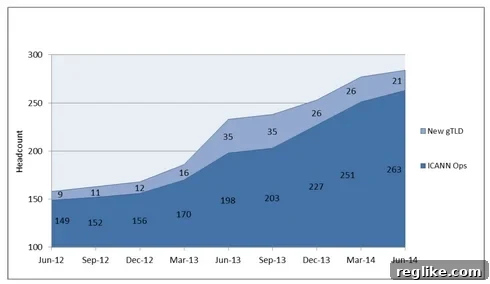
The fiscal year 2013 marked a pivotal period for ICANN, demonstrating a remarkable surge in its organizational strength and capacity. By the close of FY 2013 in June, the non-profit anticipated its employee count to reach an impressive 233 individuals. This figure represents an extraordinary nearly 50% increase compared to the 158 employees with which it commenced the fiscal year in June 2012. Such substantial growth within a single year underscores the escalating demands placed upon ICANN and its proactive approach to scaling its capabilities to meet the challenges of global internet management.
This rapid expansion was not a gradual accumulation but included focused and intensive recruitment efforts. The organization projected hiring 47 new individuals in a single quarter alone leading up to the end of FY 2013. A significant portion of this immediate hiring push, specifically 19 positions, was strategically allocated to the groundbreaking new Top-Level Domain (gTLD) program. This allocation highlights the intensive resources required to launch and manage such a monumental initiative, fundamentally altering the landscape of the internet’s naming system. The new gTLD program, designed to introduce hundreds of new domain extensions beyond traditional ones like .com or .org, necessitated a robust team to handle applications, policy development, technical implementation, and ongoing oversight, making this expansion a critical investment in the future of the internet.
Projecting Forward: FY 2014 Strategic Workforce Expansion
Looking ahead, ICANN’s strategic vision for expansion extends well into Fiscal Year 2014. The draft operating plan for FY 2014, concluding in June 2014, outlines further robust growth, with the organization planning to boost its headcount to a projected 284 employees. This sustained growth indicates a long-term commitment to strengthening its global operational framework and deepening its engagement with the diverse internet community. It signifies ICANN’s readiness to take on increased responsibilities and ensure the continuous, secure, and stable functioning of the global Domain Name System (DNS).
Key Departments Driving Future Growth
Several key departments are earmarked for substantial growth during FY 2014, reflecting ICANN’s evolving priorities and operational needs in an increasingly complex digital world:
-
Global Stakeholder Engagement Group: This vital group is projected to see significant expansion, growing from 23 to 29 employees. The Global Stakeholder Engagement Group is at the very heart of ICANN’s unique multi-stakeholder model. Its mission is to facilitate dialogues, gather community input, and foster consensus among governments, businesses, civil society, and the technical community worldwide. Its growth signals ICANN’s intensified focus on ensuring broad representation and participation in its policy development processes, which are absolutely crucial for legitimate and globally accepted internet governance decisions. This expansion will enable ICANN to better connect with its diverse global community, ensuring that policies are inclusive and reflect a wide range of perspectives.
-
Operations Team: The backbone of ICANN’s day-to-day functions, the Operations team is also set for notable growth, from 11 to 17 projected employees. This expansion is critical for maintaining the stability, security, and resilience of the internet’s core addressing systems, including the Domain Name System (DNS) and its underlying infrastructure. An enhanced operations team ensures that ICANN can effectively manage its technical infrastructure, respond swiftly to emerging threats like cyberattacks, and support the seamless functioning of critical internet services on a global scale. Their work is fundamental to preventing outages and ensuring the reliable flow of internet traffic.
-
DNS Industry and Technical Functions Teams: Both the DNS Industry team and the Technical Functions team are slated to receive five new employees each under the draft FY 2014 plan. The DNS Industry team plays a crucial role in understanding the evolving market dynamics of domain names, fostering competition among registrars and registries, and addressing issues pertinent to the commercial aspects of the domain name space. Meanwhile, the Technical Functions team is integral to ICANN’s commitment to the technical stewardship of the internet, ensuring the robust operation of the root server system and contributing to the ongoing development of internet standards and protocols. Their combined growth underscores the increasing technical sophistication and market interaction required to manage the global internet infrastructure effectively and innovate for future challenges.
No “permanent” department plans to shed employees in the coming fiscal year, emphasizing that ICANN’s overall growth trajectory is firmly upward, with strategic investments in every crucial area of its operations.
The Evolving Landscape of the New TLD Program
The new Top-Level Domain (TLD) program has been a monumental undertaking for ICANN, fundamentally reshaping the internet’s naming space and offering unprecedented opportunities for digital identity. Initially, it required a significant surge in dedicated personnel to manage the complex application, evaluation, and delegation processes for hundreds of new generic Top-Level Domains (gTLDs). However, as the program transitions from its intensive initial launch phase to ongoing management and oversight, there’s an expected recalibration in staffing levels specifically allocated to this program.
The draft plan indicates that the headcount dedicated exclusively to the new TLD program is expected to decrease from 35 at the beginning of FY 2014 to 21 by the end of the fiscal year. This shift reflects a natural progression as the bulk of initial applications are processed, and the focus moves towards supporting delegated TLDs, monitoring compliance, addressing ongoing policy issues, and managing the lifecycle of these new extensions, rather than the heavy lifting of new applications. It’s important to note that this reduction in specific TLD program staff does not signify a slowdown in ICANN’s overall mission or a retreat from the program itself. Instead, it represents an organizational adaptation to the maturity of this significant initiative, integrating its functions more seamlessly into the broader organizational structure.
Furthermore, even with this projected decrease from peak staffing, the number of employees dedicated to new TLDs at the end of FY 2014 (21) will still be notably higher than the 16 individuals allocated to new TLDs as of March of the preceding fiscal year. This continuous elevation above earlier baseline figures indicates that while the initial intense build-out phase may be receding, the new TLD program remains a core, ongoing function requiring dedicated resources and expertise within ICANN’s structure. The new TLDs represent a permanent expansion of the internet, and their ongoing management will continue to be a significant part of ICANN’s mission.
A Global Outlook: Hiring Beyond Borders
A significant aspect of ICANN’s hiring strategy, as inferred from its operational plans, is the expectation that much of the future recruitment will occur outside the United States. This anticipated global hiring spree is not merely a logistical choice but a strategic imperative deeply aligned with ICANN’s foundational principles and its multi-stakeholder model. As an organization with a global mandate for internet governance, ICANN serves a worldwide community of users, businesses, and governments. Therefore, decentralizing its workforce and fostering regional talent is crucial for several key reasons:
-
Enhanced Regional Engagement: Hiring in diverse geographical locations allows ICANN to better understand and respond to regional needs, cultural nuances, and policy environments. This localized presence facilitates more effective engagement with local stakeholders, fostering greater trust, participation, and more relevant policy outcomes.
-
Diverse Talent Pool: By recruiting internationally, ICANN can tap into a broader and more diverse pool of talent, bringing varied perspectives, languages, and expertise to its operations. This diversity is essential for addressing the multifaceted challenges of global internet governance and ensuring that decisions are made with a comprehensive global view.
-
Reducing Perceptions of US Dominance: Historically, ICANN has faced criticism regarding its perceived strong ties to the United States. Expanding its workforce globally is a tangible step towards mitigating these perceptions, demonstrating its commitment to being a truly international organization with distributed influence and operations, reinforcing its global legitimacy.
-
Operational Efficiency and Resilience: A globally distributed team can also enhance operational efficiency, allowing for round-the-clock coverage and improved response times to issues affecting different time zones. It also builds resilience, as operations are not concentrated in a single geographical area.
This global outlook underscores ICANN’s commitment to its mission of fostering a single, open, and globally interoperable internet. By building a workforce that mirrors the global nature of the internet itself, ICANN reinforces its legitimacy and effectiveness as a steward of this critical resource, ensuring that its operations and governance models are truly reflective of the global community it serves.
Implications of ICANN’s Strategic Workforce Expansion
The sustained and significant growth in ICANN’s workforce carries profound implications for the organization itself and the broader internet ecosystem. This comprehensive expansion signals several key developments:
-
Increased Capacity and Responsiveness: A larger, more diverse team significantly enhances ICANN’s ability to handle a greater volume of work, respond more swiftly and effectively to emerging challenges (such as evolving cybersecurity threats, complex policy disputes, or rapid technological shifts), and manage its expanding portfolio of responsibilities more effectively. This increased capacity is vital for maintaining pace with the internet’s dynamic nature.
-
Strengthened Internet Governance: By strategically investing in human capital across critical areas, ICANN is strengthening its ability to facilitate robust, inclusive, and transparent policy development processes. It reinforces its capacity to ensure the stable, secure, and reliable operation of the DNS, and champion the multi-stakeholder model of internet governance on a truly global scale. This human investment directly translates to better governance outcomes for the entire internet community.
-
Adaptation to a Dynamic Environment: The internet is a constantly evolving entity, with new technologies, threats, and policy challenges emerging regularly. ICANN’s proactive growth reflects its commitment to adapting to this dynamic environment, ensuring it continually possesses the diverse expertise and robust resources required to remain relevant, effective, and forward-looking in its stewardship role.
-
Enhanced Global Collaboration and Engagement: A larger, globally distributed team fosters better collaboration not only within ICANN itself but also with its myriad stakeholders, including governments, technical communities, civil society organizations, and user groups worldwide. This enhanced collaboration is essential for building consensus and finding globally acceptable solutions to internet governance issues.
However, rapid growth also presents its own set of challenges. ICANN will need to ensure that its organizational culture scales effectively, that new employees are properly integrated and aligned with its mission, and that its management structures remain agile, efficient, and capable of overseeing a larger, more distributed workforce. Maintaining transparency and accountability throughout this expansion will be paramount to upholding its legitimacy as a non-profit, public-benefit organization dedicated to the global public interest.
Conclusion: A Future-Ready ICANN for the Global Internet
ICANN’s planned workforce expansion, detailed through its impressive FY 2013 and FY 2014 projections, paints a clear picture of an organization committed to scaling its operations to meet the ever-growing demands and complexities of the global internet. From a nearly 50% surge in employees in FY 2013 to projected continued growth in critical departments for FY 2014, ICANN is strategically investing in its human capital. This growth, particularly the emphasis on global hiring and bolstering key areas like stakeholder engagement, operations, and technical functions, underscores ICANN’s unwavering dedication to its mission of ensuring a stable, secure, and unified global internet for billions of users worldwide.
As the internet continues its transformative journey, evolving in scope and impact, ICANN’s proactive approach to workforce development positions it as a resilient and future-ready institution. This strategic expansion enables it to effectively navigate the intricate complexities of internet governance, foster an environment where innovation and accessibility can thrive globally, and uphold the core principles of an open and interoperable internet. The sustained investment in human talent reflects a deep understanding that the future of the internet relies not just on advanced technology, but fundamentally on the skilled, dedicated, and diverse people who manage its foundational systems and facilitate its global evolution.