
Streamlining Domain Sales: The Rise of Dutch Auctions for Efficient Liquidation
In the dynamic world of domain name investing and management, the ability to efficiently buy and sell digital assets is paramount. For domain portfolio owners looking to streamline their divestment process, traditional sales methods can often be slow, involving lengthy negotiations, uncertain timelines, and fluctuating market interest. This landscape is rapidly evolving with innovative solutions designed to accelerate the liquidation of domain names, and among the most promising new approaches is the adoption of the Dutch auction model. This strategy offers a fresh perspective for sellers seeking swift transactions and for buyers hunting for compelling value.
The Domain Name Wholesale Exchange (DNWE), a prominent player in the domain marketplace, has recently introduced and refined its Dutch auction offering, providing sellers with a robust new channel to liquidate their domain assets efficiently. This strategic enhancement addresses many of the common pain points associated with traditional domain sales, promising a more transparent and expedited process for all parties involved.
Understanding the Mechanics of a Dutch Auction in Domain Sales
A Dutch auction, unlike a traditional English auction where bids increase, operates on a descending price model. It begins with a high asking price, which is then progressively lowered until a bidder accepts the current price or the auction reaches its predetermined reserve or floor price. This format creates a unique sense of urgency and incentivizes buyers to act before the price drops too low and another buyer seizes the opportunity.
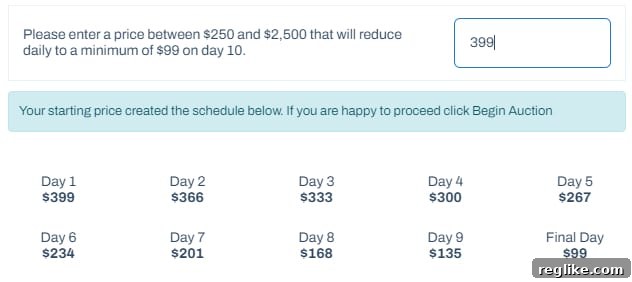
For domain names, this translates into a structured liquidation pathway. Sellers list their domain names with an initial starting price, and this price systematically decreases over a set period. At Domain Name Wholesale Exchange, this system is finely tuned for optimal seller and buyer experience. Sellers have the flexibility to set any starting price between $250 and $2,500. What makes DNWE’s approach particularly compelling is the transparent price depreciation schedule: the domain’s price decreases daily over a 10-day period, ultimately reaching a baseline price of $99 on the tenth day if it remains unsold.
This mechanism offers several distinct advantages. For sellers, it provides a clear timeline for liquidation and the potential to sell a domain quickly if a buyer values it highly early in the process. For buyers, it offers a window of opportunity to acquire domains at progressively lower prices, potentially securing a significant bargain as the auction progresses. However, a critical aspect for sellers utilizing this service is the explicit understanding that they must be willing to part with their domain for as little as $99, irrespective of their initial asking price. This commitment to the floor price is fundamental to the integrity and effectiveness of the Dutch auction model for swift liquidation.
Enhancing User Experience: DNWE’s UI Improvements
Recognizing the importance of clarity and user-friendliness, DNWE has listened to seller and buyer feedback and implemented significant improvements to its Dutch auction user interface (UI). The updated UI now prominently displays key information that empowers both parties to make informed decisions. Buyers can easily see when the next price drop is scheduled to occur and what the new, lower price will be. This transparency eliminates guesswork and allows potential purchasers to strategize their bids, deciding whether to act immediately or wait for a more favorable price, weighing the risk of another buyer stepping in.
These UI enhancements are not merely aesthetic; they are functional improvements designed to facilitate quicker sales and increase buyer confidence. By making the auction process more predictable, DNWE fosters a more dynamic and engaging environment, which is crucial for the efficient liquidation of domain portfolios, whether large or small.
Comparative Landscape: Dutch Auctions in the Domain Industry
While DNWE is making strides with its refined Dutch auction service, it’s not the sole provider in this niche. Domain name registrar Epik also offers a similar Dutch auction domain liquidation service. Epik’s service presents a slightly different pricing structure, where domain prices can drop to a minimum of $9. Crucially, Epik also allows sellers to set a higher minimum or final price, providing a degree of flexibility that contrasts with DNWE’s fixed $99 floor for all domains listed through their standard Dutch auction.
These variations highlight the evolving landscape of domain liquidation. Sellers must carefully consider their valuation and liquidation goals when choosing between platforms. If a seller is truly looking to clear inventory quickly and is comfortable with a very low potential floor price, Epik’s $9 minimum might be attractive for certain types of domains. Conversely, DNWE’s $99 floor, while higher, ensures a certain base return, appealing to those who might have slightly more valuable domains they wish to liquidate but still within a rapid timeframe.
The existence of multiple platforms offering Dutch auctions underscores the growing recognition of this method as a viable and effective strategy for managing domain name portfolios. It signifies a shift towards more automated, less labor-intensive selling processes, benefiting both seasoned domain investors and casual sellers alike.
Why Dutch Auctions are Ideal for Domain Liquidation
The nature of domain names – their vast quantity, varied perceived value, and the often-subjective nature of their worth – makes them particularly well-suited for Dutch auctions. Traditional domain selling can be fraught with challenges:
- Protracted Negotiations: Direct sales often involve lengthy back-and-forth negotiations that can span weeks or even months, tying up valuable time and resources.
- Uncertain Pricing: Determining the “right” price for a domain can be challenging. A Dutch auction helps discover the market price by letting buyers determine at what price point they are willing to commit.
- Illiquidity: For large portfolios, selling domains one by one through traditional means can be incredibly slow, hindering portfolio churn and reinvestment.
- Buyer Aversion to High Asking Prices: Buyers are often hesitant to engage with domains listed at perceived high asking prices, even if they might consider purchasing at a lower, but still profitable, figure.
Dutch auctions inherently address these issues. They accelerate the sales process by forcing a decision point for buyers. The declining price acts as a constant incentive, encouraging quicker action. For sellers, it’s a “set it and forget it” system (to some extent), allowing them to list domains and move on, knowing that the system will work to find a buyer within a defined period. This method is particularly effective for liquidating aged inventory, domains that haven’t sold through other channels, or for bulk sales where individual valuation is less critical than overall portfolio movement.
Strategic Tips for Sellers Leveraging Dutch Auctions
To maximize the success of selling domains via Dutch auctions, sellers should consider several strategic points:
- Realistic Starting Price: While tempting to start high, an excessively high initial price might deter early interest. Research comparable sales and set a starting price that reflects a reasonable premium over the expected liquidation price, but not so high that it appears out of touch with market realities.
- Understand Your Floor: As established, you must be willing to sell at the lowest price. This understanding should inform which domains you choose for this liquidation method. Domains that you absolutely cannot sell below a certain threshold might be better suited for other auction types or direct negotiation.
- Quality of Domain Descriptions: Even in a price-driven auction, a clear, concise, and compelling description of your domain’s potential (e.g., target industry, keyword relevance, brandability) can attract more serious buyers earlier in the cycle.
- Consider Timing: While automated, sometimes listing a domain when a specific market or industry is trending can yield better results.
- Promote Your Listings: While the platform handles the auction, cross-promoting your listings on social media or domain forums can increase visibility and potentially lead to an earlier sale at a higher price.
By approaching Dutch auctions strategically, sellers can turn what might be stagnant assets into liquid capital, ready for reinvestment into new opportunities within the digital real estate market.
Maximizing Opportunities: Tips for Buyers in Dutch Auctions
Buyers also stand to gain significantly from Dutch auctions, provided they approach them with a clear strategy:
- Monitor Closely: If you have a specific domain in mind, closely monitor its price drops. Set reminders or check daily.
- Define Your Target Price: Before the auction, determine the maximum price you’re willing to pay for a domain. Stick to this to avoid overpaying in the heat of the moment or missing out.
- Act Decisively: The beauty and challenge of a Dutch auction is its immediate acceptance. Once the price hits your sweet spot, you must act quickly, as another buyer could snatch it up at any moment.
- Evaluate Domain Value: Don’t just chase low prices. Ensure the domain has intrinsic value for your intended use – whether for development, resale, or investment. Consider factors like keywords, length, brandability, and potential traffic.
- Understand the Competition: For highly desirable domains, expect competition. If you wait too long for the price to drop, you might miss out. Assess the demand for the domain.
For shrewd buyers, Dutch auctions represent a continuous stream of potential bargains and opportunities to acquire valuable digital assets at market-discovered prices, often below what would be achieved through lengthy private negotiations.
The Future of Domain Liquidation and Automated Sales
The increasing adoption and refinement of Dutch auction services like those offered by DNWE and Epik signal a clear trend towards more automated, efficient, and transparent domain liquidation methods. As the domain industry matures, the need for rapid asset turnover and simplified selling processes will only grow. These platforms are not just tools for selling domains; they are critical components of a healthier, more liquid domain marketplace.
We can expect to see further innovations in this space, possibly including more sophisticated pricing algorithms, integrated market intelligence for setting starting prices, and even more tailored auction formats to suit different types of domain assets. The ultimate goal remains to connect sellers with motivated buyers in the most efficient manner possible, ensuring that valuable digital real estate can change hands smoothly and at a fair market value determined by real-time demand.
In conclusion, Dutch auctions are solidifying their position as an indispensable tool for domain investors and portfolio managers. They offer a compelling blend of speed, transparency, and market-driven pricing, transforming the process of domain liquidation from a potential headache into a streamlined, profitable venture. For anyone involved in buying or selling domain names, understanding and utilizing these services will be key to navigating the evolving landscape of digital asset management.