
Unlocking Local Potential: The Digital Embrace in ValPak Coupon Mailers
In an increasingly digital world, the enduring appeal of traditional marketing channels like direct mail continues to surprise many. ValPak coupon mailers, instantly recognizable with their iconic blue envelopes, have been a staple in American households for decades, promising savings and connecting local businesses with potential customers. But how do these traditional print advertisements integrate with the modern imperative of a strong online presence? This detailed analysis delves into a recent ValPak mailer, examining how local businesses are showcasing their digital storefronts and whether their strategies effectively bridge the gap between tangible coupons and online engagement. The insights offer a crucial barometer for the state of local digital marketing, revealing both strengths and areas for improvement.
The Enduring Relevance of Direct Mail in a Digital Age
While digital marketing dominates conversations, direct mail retains a powerful position in the marketing mix, particularly for local businesses. It offers a tangible presence in the home, often bypassing digital ad blockers and inbox clutter. Consumers physically handle coupons, providing a unique opportunity for businesses to capture attention. However, the true power of modern direct mail lies not just in its ability to reach homes, but in its potential to serve as a gateway to deeper engagement online. For businesses looking to maximize their return on investment, simply offering a discount is no longer enough; they must guide customers from the mailbox to their website, social media, or other digital platforms where a richer, more interactive experience awaits.
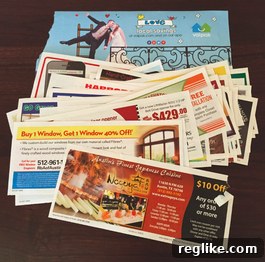
Having previously analyzed a different coupon mailer to assess local businesses’ adoption of web addresses in their advertisements, I approached a fresh ValPak mailer with similar curiosity. Would the findings align with previous observations, or would ValPak’s unique ecosystem, which often includes a mix of national and local advertisers, present a different picture? The results, while echoing some consistent trends, also revealed some distinct characteristics worthy of closer examination, offering valuable insights for businesses aiming to optimize their local advertising strategies.
ValPak Analysis: A Snapshot of Digital Integration and Local Business Practices
Our deep dive into the ValPak mailer unearthed several key trends regarding how advertisers are presenting their digital presence. Out of 41 distinct coupons and promotions, the breakdown revealed a telling story:
- Dominance of the Digital-Physical Combo: A significant majority, 32 of the 41 coupons, strategically included both a domain name and a phone number. This indicates a widespread recognition among businesses that consumers expect multiple channels for interaction. Crucially, 100% of these domain names were .com. This overwhelming preference for the .com extension underscores its continued status as the default, most trusted, and easily remembered top-level domain for businesses, especially those targeting a local audience. The .com TLD provides instant credibility and a sense of permanence that newer, less familiar extensions often struggle to achieve in the minds of the average consumer. For local businesses, a .com domain is not just an address; it’s a foundation of their online brand identity.
- The Enduring Phone-Only Approach: Seven advertisers opted to include only a phone number, completely omitting a web address. This figure was slightly higher than what was observed in a previous RSVP mailer analysis, suggesting that a segment of businesses, perhaps those in highly service-oriented sectors requiring immediate contact (e.g., emergency plumbers, locksmiths), or those with a very traditional customer base, still prioritize direct phone calls above all else. While a phone number is essential, the absence of a website represents a significant missed opportunity to provide more information, showcase services, collect leads, and build a more comprehensive brand narrative.
- Website Visibility: A Missed Opportunity: Despite the high adoption rate of domain names, a recurring observation was that the web address was typically presented in smaller print and was less noticeable than the phone number. This design choice often prioritizes an immediate phone call as the primary call-to-action, potentially sidelining the website as a secondary information source. However, in today’s market, consumers often prefer to research online before making a call or visiting a store. A less prominent website URL can hinder this research process, making it harder for potential customers to explore offerings, view testimonials, or even find business hours and directions without actively searching for them. Optimizing the visibility of the website URL is paramount for guiding interested consumers to a richer online experience.
- The Rise of App-Based Promotions: Two of the promotions stood out for having neither a phone number nor a web address. Instead, they were direct calls to action to download a specific app. Interestingly, these were not promotions for local businesses in the traditional sense, but rather for savings or coupon apps themselves, targeted squarely at the demographic known for using physical coupons. This trend highlights the evolving landscape of couponing and consumer behavior, where digital platforms are increasingly becoming the destination for deal-seekers, and traditional mailers are being leveraged to promote these digital ecosystems.
The ValPak mailer also showcased a slightly different mix of advertisers compared to other local coupon books. It featured a bit more national advertisers, such as the well-known Omaha Steaks, alongside a robust selection of local businesses. This blend means that the overall statistics might be influenced by national brands, which typically have sophisticated online presences, potentially elevating the overall domain adoption rate compared to a mailer composed solely of smaller local enterprises.
Bridging the Digital-Physical Divide: Best Practices for Local Businesses
The insights from the ValPak mailer underscore a critical truth for local businesses: a successful marketing strategy today demands a seamless integration of offline and online efforts. Having a website is a good start, but its effective promotion within traditional advertising is what truly converts interest into action. Here are essential best practices:
1. Make Your Website Prominent and Memorable
Your domain name is your online storefront. It should be easy to read, remember, and type. Avoid complex URLs or obscure fonts. Ideally, it should be as prominent, if not more so, than your phone number. Consider using a dedicated, easy-to-track landing page URL on your coupon to measure the effectiveness of your direct mail campaign more accurately. For instance, instead of just your homepage, use “yourbusiness.com/valpak-offer” to direct customers to a specific deal page.
2. The Unwavering Power of .Com
The 100% .com adoption in the ValPak mailer is not a coincidence; it’s a testament to its reliability. For local businesses, a .com domain instills immediate trust and familiarity. While new TLDs (like .store, .restaurant, .nyc) exist, .com remains the gold standard for universal recognition and consumer confidence. If your ideal .com is taken, consider creative variations or adding a relevant keyword, but always prioritize memorability and ease of recall.
3. Beyond the Website: A Holistic Digital Presence
A website is just one piece of the digital puzzle. Local businesses must also cultivate a strong presence across other online channels:
- Google My Business (GMB): This is non-negotiable. Optimize your GMB profile with accurate business hours, photos, services, and prompt responses to reviews. It directly impacts local search visibility.
- Social Media: Engage with your community on platforms where your target audience spends time. Use your print ads to promote your social channels (e.g., “Follow us on Facebook!”).
- Online Reviews: Actively solicit and manage reviews on platforms like Google, Yelp, and industry-specific sites. Positive reviews build trust and significantly influence purchasing decisions.
4. Clear Calls to Action (CTAs)
Don’t just list your website; tell people what to do with it. Use compelling CTAs like “Visit our website for our full menu,” “Explore more services at [YourDomain.com],” or “Book your appointment online today!” A strong CTA guides the customer’s next step and maximizes the coupon’s potential beyond just a discount.
5. Integrating QR Codes (A Modern Bridge)
While not explicitly found in the basic text of the ValPak analysis, QR codes are an excellent tool for bridging the physical-digital divide. A QR code on your coupon can instantly direct customers to your website, a specific landing page, a video, or even your social media profile, making the transition from print to online seamless and trackable. This reduces friction and enhances the user experience.
The Future of Local Advertising: Seamless Integration is Key
The trends observed in the ValPak mailer highlight a clear direction for local marketing: the future is integrated. Direct mail is evolving from a standalone advertising medium into a powerful initial touchpoint that propels consumers into a rich, interactive online ecosystem. Businesses that recognize this shift and strategically connect their offline and online campaigns will be best positioned to thrive. This means not only having a website but ensuring it’s discoverable, engaging, and prominently featured in all marketing materials, from the smallest coupon to the largest billboard.
As consumer behavior continues to intertwine digital and physical experiences, the emphasis for local businesses will be on creating omnichannel strategies. The ValPak coupon mailer, far from being an archaic relic, serves as a vivid reminder that even the most traditional marketing tools can be powerful catalysts for digital engagement when thoughtfully executed. For any local business aiming to expand its reach and connect more effectively with its community, understanding and acting on these integration principles is no longer optional—it’s essential for sustained growth and relevance in the modern marketplace.