
Domain Name Stocks Face Severe Downturn Amidst Broad Market Volatility
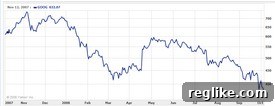
Google’s 52 week stock performance
(from Yahoo.com)
The global stock market is currently experiencing significant turbulence, characterized by sharp declines across various sectors. The domain name industry, often considered a bellwether for digital commerce and online presence, has not been immune to this widespread downturn. Companies specializing in domain registration, parking, sales, and related digital services are seeing their valuations plummet, reflecting a broader sentiment of caution and economic uncertainty among investors. This article delves into the specific challenges faced by key players in the domain name ecosystem, examines the underlying factors driving these declines, and explores whether the current market conditions present unique opportunities or heightened risks for savvy investors.
The Wider Economic Landscape Affecting Tech and Digital Assets
The current market free fall is not an isolated event but rather a culmination of several powerful macroeconomic forces. Rising inflation rates globally have prompted central banks, including the Federal Reserve, to implement aggressive interest rate hikes. These increases directly impact the valuation of growth-oriented companies, particularly those in the technology and internet sectors, which often rely on future earnings potential. Higher interest rates make it more expensive for companies to borrow money for expansion and development, and they reduce the present value of future cash flows, making these stocks less attractive compared to more stable, dividend-paying alternatives.
Furthermore, fears of an impending recession loom large, leading to decreased consumer spending and reduced advertising budgets. Companies are tightening their belts, and this conservative approach directly affects businesses that thrive on digital advertising, online transactions, and new business formations – all core components of the domain name industry. When businesses are less optimistic about growth, they are less likely to invest in new domain names, digital marketing campaigns, or expanding their online footprint, creating a ripple effect across the sector.
Domain Industry Stocks Under Pressure: A Sector Overview
The domain name industry, while fundamental to the internet’s infrastructure, includes a diverse range of companies, from established registrars to speculative digital media ventures and domain portfolio holders. Each segment faces unique challenges in a volatile market. The common thread, however, is a noticeable shift away from high-growth, often unprofitable, companies towards those with robust balance sheets, consistent earnings, and tangible assets. This flight to quality has left many domain-related stocks, particularly those perceived as speculative, deeply wounded.
Spotlight on Key Players: A Closer Look at Performance
Marchex: Navigating the Shifting Digital Ad Landscape
Marchex (NASDAQ: MCHX), a company known for its conversational AI and call analytics solutions, has seen its shares significantly impacted. Just yesterday, its stock plummeted by 12.5% to close at $8.28, having dipped as low as $7.75 during trading. The decline is even more pronounced over a slightly longer period, with shares down a substantial 27.5% since the beginning of September. Marchex operates within the digital advertising ecosystem, a sector highly sensitive to economic cycles and corporate spending habits. As businesses scale back on marketing efforts and scrutinize ROI, companies like Marchex, which derive revenue from optimizing ad performance, inevitably feel the squeeze. Investors are increasingly wary of companies whose growth prospects are tied to discretionary advertising budgets, opting instead for businesses with more predictable revenue streams.
Tucows: Resilience and Challenges for a Registrar Giant
Tucows (AMEX: TCX), a long-standing player in the domain registration and internet services space, continues to face headwinds. Its shares closed yesterday at a mere $0.35, a stark contrast to its 52-week high of $1.00. Tucows operates a diverse portfolio, including domain name services (OpenSRS, Hover), Ting Mobile (a mobile virtual network operator), and Ting Internet (fiber internet services). While its diversified business model might offer some resilience, its stock performance indicates that even established registrars are not immune to the broader market sell-off. The domain registration market is highly competitive, characterized by thin margins and constant pressure on pricing. In an economic downturn, new domain registrations may slow, and renewals could face pressure, impacting the core business of companies like Tucows. The stock’s journey into penny stock territory highlights significant investor concern regarding its future profitability and growth trajectory in a challenging environment.
Live Current Media: The Volatility of Speculative Ventures
Live Current Media (OTC: LIVC.ob) exemplifies the amplified risks associated with highly speculative investments during a market downturn. Its shares closed Monday at only $1.12, representing a staggering 71% drop from its 52-week high. Companies like Live Current Media, often operating in the over-the-counter (OTC) market, tend to be smaller, less liquid, and focus on high-growth potential rather than immediate profitability. They make significant bets on future earnings and market adoption, making them particularly vulnerable when investor sentiment shifts away from risk and towards safety. The current climate makes it exceedingly difficult for such companies to raise additional capital, which is often crucial for their survival and growth, exacerbating their financial pressures.
Dark Blue Sea & Fabulous: The Evolving Domain Aftermarket
The parent company of Fabulous, Dark Blue Sea (DBS.AX), a significant player in the domain aftermarket and parking space, has also seen its value eroded. Shares can now be acquired for a mere quarter, a stark reminder of the challenges facing companies heavily reliant on domain monetization. The domain aftermarket, which involves buying and selling previously registered domains, and domain parking, which generates revenue from advertisements displayed on undeveloped domain names, has undergone significant changes in recent years. This segment is highly dependent on advertising revenue and the overall health of the digital economy. A decrease in advertiser spending directly translates to lower revenue for domain parking companies and reduced liquidity in the aftermarket, driving down the perceived value of large domain portfolios.
Adlink & Sedo: Google’s Influence and Industry Shifts
Sedo, one of the world’s largest domain marketplaces and parking providers, operates under its parent company, Adlink. Adlink’s stock value has been cut by two-thirds from its 52-week high, a dramatic illustration of the pressures impacting the domain industry. A significant contributing factor to this decline has been changes implemented by Google concerning domain parking. Historically, Google’s AdSense for Domains program was a primary monetization channel for parked domains. However, Google has progressively tightened its policies, focusing on quality content and user experience, leading to the demonetization of many low-value parked domains. These changes directly impacted Adlink’s revenue projections, forcing the company to revise its growth forecast for FY 2008 from an optimistic 20% down to a more modest 10%. This policy shift has had a profound and lasting effect on the entire domain parking industry, making it significantly less profitable than in its heyday. Consequently, companies like Sedo, which rely on commissions from sales and parking revenue, are likely experiencing declines in sales commissions as well, further squeezing their profitability.
Even Giants Like Google Feel the Heat
It’s important to note that the market turmoil has spared very few, not even highly profitable and diversified tech giants like Google (Alphabet Inc.). While Google’s stock performance might seem relatively stable compared to the dramatic drops seen in smaller domain-centric companies, it too has seen significant corrections from its peaks. This is partly due to broader market sentiment, where investors are cashing out of even “safe” tech stocks, and partly due to concerns over a potential slowdown in digital advertising revenue, which forms the bedrock of Google’s immense profitability. Given Google’s pervasive influence on the online ecosystem, especially its role in domain monetization through advertising, any turbulence affecting Google inevitably sends ripples throughout the domain industry.
Understanding the “Why”: Factors Behind the Decline
Macroeconomic Headwinds
The primary drivers of the current stock market decline are macroeconomic. High inflation erodes purchasing power, while rising interest rates increase the cost of capital, making future earnings less valuable and debt more expensive. This environment naturally favors companies with strong cash flows and less reliance on future speculative growth, drawing capital away from the more growth-oriented tech and digital asset sectors.
Industry-Specific Pressures
Beyond macro factors, the domain industry faces unique challenges. Google’s evolving AdSense policies have fundamentally reshaped the domain parking landscape, reducing the profitability of holding vast portfolios of generic, undeveloped domain names. Increased competition among registrars, the emergence of new top-level domains (TLDs), and evolving digital marketing strategies also contribute to a more complex and challenging environment for domain-related businesses.
The Speculative Nature of Some Domain Ventures
Many companies in the domain and digital media space have historically been valued based on their potential for future growth rather than immediate profitability or strong cash flow. In a “risk-off” market, investors abandon these speculative plays, seeking refuge in companies that generate consistent earnings and sell essential “consumer staple” type products or services. Unprofitable companies, especially those that frequently need to raise capital, find themselves in a perilous position, as funding becomes scarce and expensive.
Is This a Buying Opportunity? Navigating Investment Decisions
The significant drops across the domain industry naturally lead to the question: does this present a buying opportunity for long-term investors? The answer is nuanced and depends heavily on individual risk tolerance, investment horizon, and careful due diligence.
Distinguishing Value from Speculation
Not all domain-related stocks are created equal. As highlighted by companies like Live Current Media, highly speculative ventures that are unprofitable and heavily reliant on future market adoption are inherently riskier. While their prices have fallen dramatically, their underlying business models may struggle in a tight economic environment, making capital raising difficult and potentially leading to further dilution or even failure.
Conversely, established companies with strong fundamentals – healthy balance sheets, consistent earnings, and diversified revenue streams – might weather the storm more effectively. These companies, even if their stock prices have fallen, may present more appealing long-term value propositions once market sentiment improves. Investors should prioritize understanding a company’s financial health, debt levels, and competitive advantages before making any investment decisions.
The Case for Fundamentals: Earnings and Consumer Staples Analogy
In turbulent times, the market tends to favor companies with strong fundamentals. Just as consumers continue to buy food and essential goods regardless of the economy, companies that provide indispensable services or products with consistent demand are preferred by investors. While domain names are not “consumer staples” in the traditional sense, companies offering essential internet infrastructure services (like robust registrars or critical security providers) might be more resilient than those purely focused on discretionary digital advertising or speculative domain parking.
Investors are currently seeking companies that demonstrate clear pathways to profitability, generate positive cash flow, and have a proven track record of managing expenses. The current market environment penalizes firms making “big bets on future earnings” without a solid foundation of current financial stability. Therefore, a deep dive into financial statements and business models is paramount.
Long-Term Perspective on Digital Assets
Despite the current downturn, the fundamental value of domain names as digital assets and critical components of online identity remains intact. The internet continues to grow, and businesses and individuals will always require a unique online presence. This enduring demand suggests that while the profitability models for domain monetization may evolve, the core asset class holds long-term strategic importance. For investors with a long-term horizon, discerning which companies are best positioned to adapt to these changes and thrive in the evolving digital landscape could yield significant rewards.
In conclusion, the domain name industry is facing unprecedented pressure from both broad macroeconomic headwinds and specific industry shifts driven by major players like Google. While this period of market volatility presents significant challenges for many companies, it also underscores the importance of fundamental analysis and a cautious approach to investing. The current climate calls for a discerning eye, differentiating between truly undervalued assets and those whose declines reflect deeper, structural weaknesses.
[Disclaimer: I own shares in some of the mentioned companies.]