Early Warning Note hopes to limit fresh TLD contention sets
Platform will provide intelligence regarding other firms’ application plans ahead of reveal day.
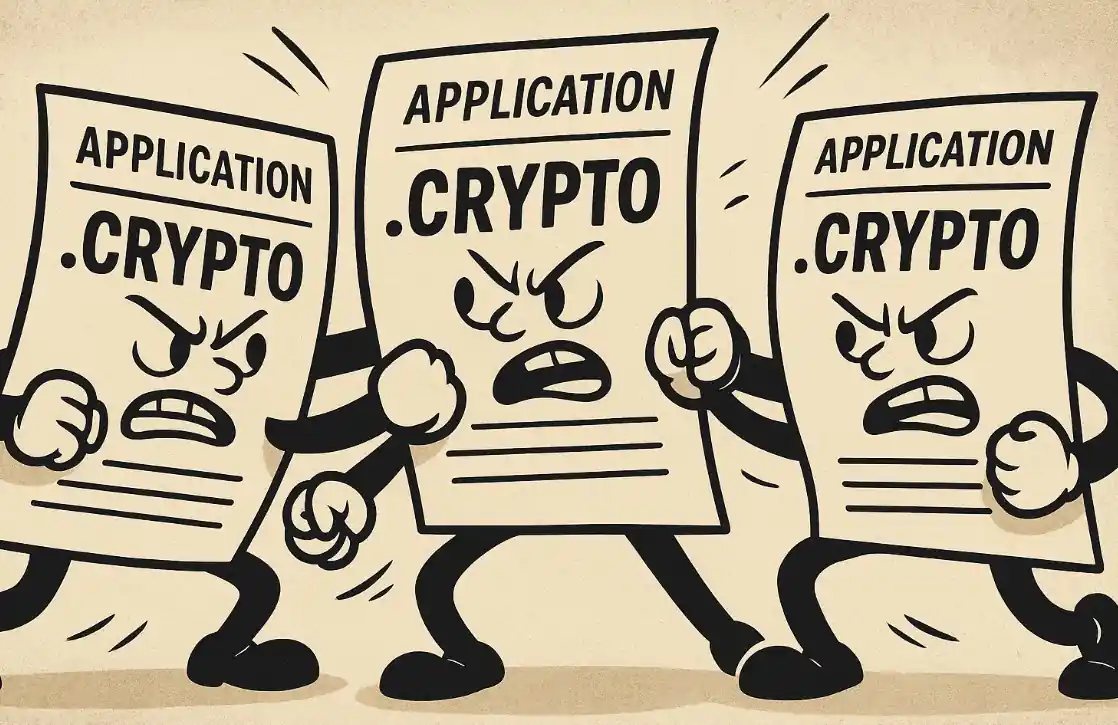
A big point of discussion regarding the last round of fresh top level domain expansion was settling contention sets. If more than one applicant applied for the same string, ICANN encouraged them to decide amongst themselves which applicant would get the domain. This led to private auctions between parties where the losers got paid by the winners.
The optics of these private auctions weren’t always great, and ICANN is concerned that people will apply in the next round with the sole purpose of trying to get paid for withdrawing their applications.
Instead of promoting private resolution like last time, a fresh rule prohibits this type of activity. Instead, applicants will be offered the chance to switch to a backup TLD, participate in an auction where ICANN retains the proceeds, or withdraw their application for a limited refund.
This prohibition on communication starts once the applied-for strings are revealed by ICANN. The applicant guidebook does not prohibit parties from discussing their plans ahead of then.
A fresh platform hopes to help applicants avoid costly contention sets, or at least plan accordingly, by sharing application plans ahead of applications are revealed.
Early Warning Note allows potential applicants to submit their planned strings and find out if other participants on the platform also intend to apply for them.
The service will operate in two phases.
In the first phase, ahead of applications are due, prospective applicants can pay $1,000 per string to participate. Four weeks ahead of the application window closes, they will be informed if any other parties submitted the same string. They will also be able to send a message to the other applicant(s). Messaging will be similar to using the Whois contact form; the recipient’s information won’t be shared unless they respond to the message.
The second phase will take place following applications are due but ahead of strings are revealed. This stage will cost $3,000, or $2,000 if the same string was submitted in the pre-application round.
At either of these points, potential applicants with competing strings could decide to team up, trade horses, or do something else to prevent going into contention. (Of course, other firms that haven’t participated in Early Warning Note may apply for the same string, creating a contention set that isn’t apparent until following applications are revealed.)
Early Warning Note is the brainchild of Ray King, who applied for TLDs in the last round, and attorney Marc Trachtenberg. A neutral third party will be used to manage the submissions and string matches.
It’s a clever way to help applicants gain insight and potentially avoid costly string contentions, but it will only work if enough applicants participate. King told Reglike that it will only go forward if at least 200 strings are submitted.