
Flying Dog Brewery Faces Reverse Domain Name Hijacking Allegations: An In-Depth Examination
WIPO Panel Finds “Blatant and Intentional Misrepresentation” in Brewery’s Domain Dispute Case.
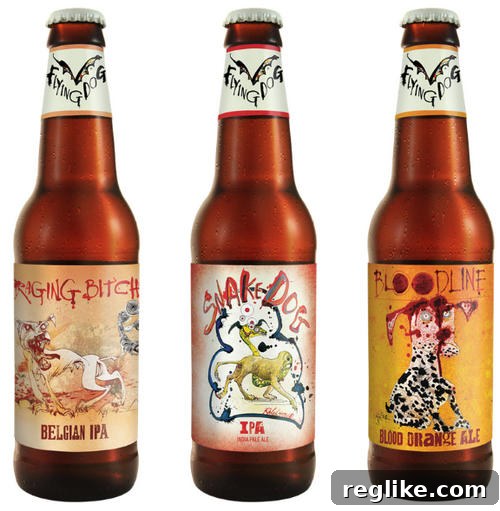
Flying Dog Brewery, a well-known craft brewer, has been embroiled in a legal battle that has resulted in a World Intellectual Property Organization (WIPO) panel determining that the brewery attempted reverse domain name hijacking. This case highlights the complexities and potential pitfalls of domain name disputes, particularly when established businesses seek to acquire domain names already in use.
The Core of the Dispute: FlyingDog.com vs. FlyingDogBrewery.com
The heart of the matter lies in the difference between two domain names: FlyingDogBrewery.com, which the brewery currently uses, and FlyingDog.com. The latter domain, registered in 1996, has been used by its owner for many years to promote his software company. This pre-existing use is a crucial element in understanding the WIPO panel’s decision.
A History of Acquisition Attempts
Flying Dog Brewery’s interest in acquiring FlyingDog.com dates back to 2001. In an initial attempt to secure the domain, the brewery extended an invitation to the domain owner to visit the brewery and offered $19,000 for the domain name. This offer, however, was declined, setting the stage for future attempts and ultimately the UDRP filing.
The Broker Approach and Subsequent UDRP Filing
Years later, earlier this year, the brewery employed a different tactic. A broker, acting on behalf of an undisclosed client (later revealed to be Flying Dog Brewery), contacted the domain owner with a new offer of $15,000. The domain owner, valuing the domain at a significantly higher price, countered with a request for $225,000. Shortly after this exchange, Flying Dog Brewery initiated a Uniform Domain-Name Dispute-Resolution Policy (UDRP) proceeding.
The Brewery’s Claims and the Panel’s Scrutiny
The UDRP filing contained a statement that raised significant concerns for the WIPO panel. The Complainant (Flying Dog Brewery) alleged that the Respondent (the domain owner) had retained an agent to sell the disputed domain name to the Complainant. This claim was particularly problematic because the evidence clearly indicated that it was the Complainant who had initiated the discussion through a domain name broker.
Panelist’s Scathing Assessment
Panelist William Towns delivered a particularly critical assessment of the brewery’s conduct in the UDRP filing. His statement highlights the importance of accuracy and transparency in such proceedings:
“The Complainant could easily have discovered from a brief Internet search the Respondent’s historical use the disputed domain name before filing the Complaint…The Complainant either did not do so, or having done so elected to conceal from the Panel known facts unfavorable to the Complainant. The Complainant submitted a barebones complaint unsupported by any evidence, and blatantly misrepresented to the Panel that the Respondent had hired an undisclosed agent seeking to sell the disputed domain name to the Complainant at an exorbitant price. The record, however, confirms that it was the Complainant who retained a domain name broker. The Complainant’s blatant and intentional misrepresentation as described above constitutes a clear violation of section XIII, paragraph 21 of the Complaint.”
This statement underscores the panel’s view that Flying Dog Brewery not only failed to conduct adequate research but also actively misrepresented the facts to the panel. This misrepresentation was deemed a clear violation of the UDRP rules.
Understanding Reverse Domain Name Hijacking
Reverse Domain Name Hijacking (RDNH) occurs when a trademark holder attempts to unfairly acquire a domain name from a legitimate registrant. This often involves making false claims or misrepresenting facts in a UDRP proceeding. The WIPO panel’s finding in this case serves as a warning to trademark holders that they cannot use the UDRP process to unfairly acquire domain names that they do not rightfully own.
The Legal Representation
Flying Dog Brewery was represented by Offit│Kurman in this legal matter. The domain owner, on the other hand, was represented by Thomas P. Howard LLC. The involvement of experienced legal counsel on both sides highlights the complexity and seriousness of domain name disputes.
Implications of the Ruling
The WIPO panel’s decision against Flying Dog Brewery has several important implications. First, it reinforces the principle that domain names registered and used in good faith should not be subject to unfair acquisition attempts. Second, it serves as a reminder to trademark holders to conduct thorough research and present accurate information in UDRP proceedings. Third, it highlights the potential consequences of misrepresenting facts to a UDRP panel, which can include a finding of reverse domain name hijacking.
The Broader Context of Domain Name Disputes
This case is just one example of the many domain name disputes that arise each year. As the internet continues to grow, domain names become increasingly valuable, and disputes over ownership are likely to continue. The UDRP process provides a mechanism for resolving these disputes, but it is essential that all parties involved act in good faith and adhere to the rules.
Key Takeaways from the Flying Dog Brewery Case
- Thorough research is crucial before initiating a UDRP proceeding.
- Accurate and transparent presentation of facts is essential.
- Reverse domain name hijacking can have serious consequences.
- The UDRP process is designed to protect legitimate domain name registrants.
- Domain name disputes can be complex and require experienced legal counsel.
In conclusion, the Flying Dog Brewery case serves as a valuable lesson for businesses and individuals involved in domain name ownership and disputes. By understanding the principles of the UDRP process and acting in good faith, parties can avoid the pitfalls of reverse domain name hijacking and ensure a fair resolution to domain name conflicts.