
A High-Stakes Collision: FundMe.com vs. GoFundMe.com in a Landmark Trademark Dispute
In the vast and rapidly expanding digital landscape of crowdfunding, two entities bearing strikingly similar names find themselves on an inevitable collision course. This contentious legal battle, pitting FundMe.com against the well-known personal fundraising giant GoFundMe.com, spotlights critical issues surrounding trademark protection, domain name strategy, and the nuances of the crowdfunding industry. What began as a defensive maneuver from GoFundMe has escalated into a full-blown lawsuit, exposing potential infringements on both sides and drawing a sharp focus on the importance of brand distinction in a crowded market.
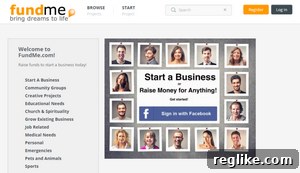
The owner of FundMe.com has initiated legal proceedings against GoFundMe.com, alleging trademark infringement. At the core of the dispute lies the close resemblance of their names and associated trademarks, compounded by a pivotal distinction in their primary crowdfunding services. FundMe.com holds a trademark specifically related to business funding, carving out a niche in helping entrepreneurs and startups secure capital. In contrast, GoFundMe has built its formidable reputation as a platform primarily for personal and charitable fundraising, facilitating everything from medical emergencies to memorial funds and community projects.
Understanding the Contention: A Timeline of Escalation
The current lawsuit is not an isolated incident but the culmination of a series of escalating interactions between the two platforms. The initial spark ignited earlier this year when legal counsel for GoFundMe issued a cease and desist letter to FundMe.com. GoFundMe’s primary concern at that time was FundMe.com’s alleged foray into offering personal and charitable crowdfunding services, which directly overlapped with GoFundMe’s established territory. The impetus for this letter was reportedly the discovery of a personal crowdfunding request, ostensibly copied from GoFundMe.com, appearing on the FundMe platform. GoFundMe unequivocally demanded that FundMe.com discontinue all personal crowdfunding services, asserting its exclusive claim to this segment of the market.
However, what followed was a strategic counter-move by FundMe.com. Rather than merely complying, FundMe.com embarked on an intensive investigation into GoFundMe’s arguments and, more broadly, its operational scope. This research uncovered a crucial development: it appeared that GoFundMe itself was beginning to venture into the business crowdfunding sector. This alleged expansion by GoFundMe into business funding is precisely where FundMe.com believes its own trademark rights are being infringed. The tables, it seems, have turned, transforming a defensive response into an offensive lawsuit.
The Nuance of Crowdfunding: Personal vs. Business
To fully grasp the gravity of this dispute, it’s essential to understand the distinct categories within the crowdfunding ecosystem. Generally, crowdfunding can be broadly categorized into several types:
- Personal & Charitable Crowdfunding: This is GoFundMe’s stronghold. It involves individuals raising money for personal causes (e.g., medical bills, education, emergency relief) or for charitable initiatives (e.g., non-profit campaigns, community projects). These often rely on donations with no expectation of financial return.
- Business & Equity Crowdfunding: This is FundMe.com’s declared specialty. It involves startups and small businesses raising capital from a large number of investors, often in exchange for equity (ownership shares) or debt instruments. This is a more regulated and financially complex area, distinct from simple donations.
- Reward Crowdfunding: Projects offer non-financial rewards (e.g., early product access, merchandise) in exchange for funding (e.g., Kickstarter, Indiegogo).
- Lending Crowdfunding (P2P Lending): Individuals or businesses borrow money from a group of lenders, with the expectation of repayment plus interest.
FundMe.com’s claim rests on the premise that its trademark specifically protects its identity in the business funding sphere. If GoFundMe, a brand synonymous with personal giving, begins to operate in the business funding space, it could create significant confusion among potential users and dilute FundMe’s established brand identity and trademark value. This blurring of lines, from a legal perspective, is at the heart of the current litigation.
The Critical Role of Domain Names and Brand Identity
The original commentary noted GoFundMe.com as a “horrible domain name choice,” a sentiment that now seems particularly prescient given the unfolding legal drama. In the digital age, a domain name is far more than just a web address; it is a primary identifier, a cornerstone of brand identity, and a crucial element in establishing trust and recognition. The similarity between “FundMe.com” and “GoFundMe.com” is striking and, arguably, inherently confusing. While one is a verb phrase indicating action (“Go Fund Me”), and the other is a simple noun phrase (“Fund Me”), the auditory and visual similarities are undeniable.
This case serves as a stark reminder for all businesses, especially those operating online, about the paramount importance of strategic domain name selection and robust trademark protection. A poorly chosen or overly similar domain name can lead to:
- Brand Dilution: Consumers may struggle to distinguish between similar-sounding or looking brands, diminishing the uniqueness and value of each.
- Consumer Confusion: Users might inadvertently land on the wrong platform, leading to frustration, loss of trust, and potential financial misdirection.
- Legal Battles: As evidenced by this dispute, similar names often culminate in costly and protracted legal challenges over trademark infringement.
- SEO Challenges: Competing for search engine visibility with a similarly named competitor can be significantly harder and more expensive.
Effective trademark searches during the initial branding phase are non-negotiable. Businesses must ensure their chosen name is not only memorable and descriptive but also legally defensible and distinct enough to prevent future conflicts.
Implications for the Crowdfunding Industry and Beyond
This lawsuit carries significant implications not just for the two companies involved, but for the broader crowdfunding industry and intellectual property law:
- Clarifying Market Boundaries: The outcome could help delineate clearer boundaries between different types of crowdfunding services, potentially influencing how future platforms brand and market themselves.
- Heightened Due Diligence: It will likely prompt other crowdfunding platforms to conduct more thorough reviews of their trademark portfolios and competitive landscape.
- Consumer Awareness: The dispute might raise consumer awareness about the different types of crowdfunding available and the importance of verifying the legitimacy and purpose of platforms.
- Precedent for Domain/Trademark Disputes: The court’s decision could set an important precedent for future cases involving highly similar domain names and trademarks, particularly in fast-evolving digital sectors.
- Cost of Expansion: For established brands like GoFundMe looking to expand into new areas, it underscores the potential legal costs and risks associated with venturing beyond their traditional market without adequate trademark clearance.
The filing of a lawsuit is a serious escalation, indicating that attempts at an amicable resolution through cease and desist letters were unsuccessful. Both companies now face considerable legal expenses, and the potential for an injunction or damages looms large.
Accessing the Legal Documents
For those interested in delving deeper into the specifics of this intriguing legal battle, the official court documents, including the lawsuit filing and the initial cease and desist letter, are available for public viewing. These documents provide a detailed account of the claims made by FundMe.com and GoFundMe.com, outlining the legal arguments and the factual basis of the dispute. You can view these critical legal records and gain further insight into the ongoing conflict here.
Conclusion: A Battle for Identity in the Digital Age
The clash between FundMe.com and GoFundMe.com is more than just a legal squabble; it’s a potent illustration of the challenges businesses face in establishing and protecting their brand identity in a crowded digital marketplace. It highlights the critical interplay between domain names, trademarks, and the specific services offered, particularly in innovative sectors like crowdfunding. As the legal proceedings unfold, the outcome will undoubtedly offer valuable lessons for startups, established enterprises, and consumers alike, reinforcing the undeniable importance of clarity, distinction, and diligent legal protection in the ever-evolving online world. This dispute serves as a stark reminder that even seemingly minor name similarities can lead to major legal headaches and significant strategic implications, underscoring the enduring power of a strong, unique, and legally defensible brand.