
Unlocking Digital Identity: Why New Domain Names Still Need a Spotlight, Even Among Industry Insiders
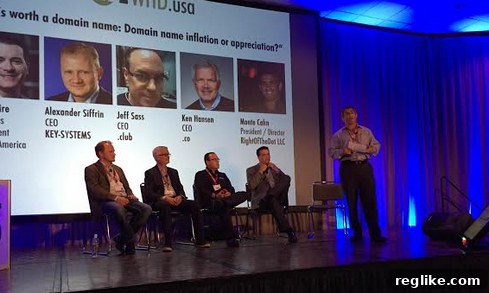
The digital landscape is constantly evolving, yet some fundamental aspects, like domain name awareness, continue to present surprising challenges. This reality was strikingly evident at a recent WorldHostingDays conference held in Seven Springs, Pennsylvania, a gathering traditionally populated by the internet’s most knowledgeable architects – web hosting providers and domain name registrars. What transpired during a panel discussion on domain names underscored a crucial point: even within this expert community, the vast potential and even the existence of many new Top-Level Domains (TLDs) remain largely undiscovered. This insight points to both the significant hurdles these new extensions face and the immense opportunities that lie ahead for registries, businesses, and individual users alike.
During the engaging Q&A segment of a panel featuring leaders from five prominent domain name companies, an attendee from the back of the room shared a revelation that became the most talked-about moment. He confessed to never having heard of the .Club domain before that very session, and, intrigued, he had already registered a few during the ongoing discussion. His subsequent question about an error message he encountered from a registrar during the registration process — an issue that bore a striking resemblance to the infamous 1&1 “illegal” message — perfectly encapsulated the dual challenges facing new TLDs: persistent awareness gaps and sometimes clunky user experiences. The irony was palpable: in a room full of professionals whose livelihoods depend on domain names, one of the most heavily marketed and ostensibly successful new domains still managed to fly under the radar. This anecdote serves as a powerful microcosm of the broader struggle for visibility and adoption in the new TLD ecosystem.
The core issue highlighted is the profound lack of awareness surrounding the expanded universe of domain name options now available. While traditional TLDs like .com, .net, and .org have long dominated the internet, ICANN’s generic Top-Level Domain (gTLD) program has introduced hundreds of new, descriptive, and niche extensions. These range from industry-specific options like .tech, .store, and .app to geographic markers like .london and .nyc, and even brand-specific domains. The sheer volume of these new choices, while intended to foster innovation and choice, has inadvertently created an information overload for the average internet user, and, as demonstrated, even for some industry veterans. The success of a domain like .Club, which has invested heavily in marketing, underscores that even with significant effort, breaking through the noise and ingrained habits of internet users is an uphill battle. One can only surmise how much lower awareness must be in circles less connected to the web hosting and domain name industries.
This widespread lack of awareness presents a critical challenge for registries – the entities that manage these new TLDs – in terms of driving adoption and achieving commercial viability. However, it simultaneously signifies an enormous untapped market potential. The “upside for registries” as word slowly but surely gets out is colossal. Imagine the growth curve once businesses and individuals genuinely understand the strategic advantages these new domains offer. The current scenario implies that the market is far from saturated; instead, it is ripe for education and discovery. For businesses, this means the opportunity to secure highly relevant, concise, and brandable domain names that would be impossible to obtain under the crowded .com namespace. For instance, a coffee shop might prefer example.coffee over examplecoffeeshop.com, offering a clearer, more memorable, and often shorter web address.
Overcoming this awareness deficit requires a multifaceted and sustained marketing strategy. Registries cannot rely solely on industry conferences or word-of-mouth; they must actively engage in targeted campaigns that demonstrate the tangible benefits of their specific TLDs. This involves educating potential registrants on how a .store domain can instantly signal an e-commerce venture, or how a .design TLD can perfectly brand a creative agency. Collaborating with domain registrars, web hosts, and website builders is also paramount. These partners are at the frontline, directly interacting with end-users, and their proactive promotion and seamless integration of new TLDs into their offerings can significantly boost adoption rates. Furthermore, showcasing successful use cases and testimonials can inspire others to explore these fresh digital identities. For example, demonstrating how a startup gained brand recognition and SEO advantages by adopting a .tech domain can be a powerful persuasive tool.
The “getting the word out” challenge extends beyond mere marketing; it also involves ensuring a smooth and error-free user experience, as exemplified by the registrar error discussed at the conference. Technical glitches, confusing error messages, or a cumbersome registration process can quickly deter potential users, regardless of how appealing a new TLD might be. Registrars play a pivotal role here, needing to update their systems, educate their support staff, and streamline the customer journey for new TLD registrations. Their systems must be robust enough to handle the intricacies of diverse TLD policies, and their communication with users needs to be clear and helpful. A seamless registration and management experience is not just a convenience; it’s a fundamental requirement for building trust and encouraging broader adoption of these innovative domain options.
For businesses and individuals, the strategic advantages of embracing new TLDs are considerable. In an increasingly crowded online world, a relevant domain name can be a powerful differentiator. It can enhance brand identity, improve memorability, and potentially offer SEO benefits by incorporating keywords directly into the domain name itself. For example, a bakery using a .bakery domain instantly communicates its core business, which can be more impactful than a generic .com. Moreover, the availability of desirable names is often much higher in new TLD spaces compared to the highly saturated .com market. This means businesses have a greater chance of securing their first-choice domain name, leading to stronger branding and easier recall for customers. The internet is moving towards greater specialization, and new TLDs are a natural fit for this trend, allowing for a more granular and precise online presence.
The future of domain names is undoubtedly diverse and dynamic. While .com will likely retain its dominant position for the foreseeable future, new TLDs are carving out significant niches and reshaping how we perceive and utilize online identities. They offer an unprecedented level of specificity and branding potential, moving beyond the generic and towards a more descriptive internet. The journey for these new extensions is far from over; it’s a marathon, not a sprint, requiring continuous innovation, strategic marketing, and diligent user support. The WorldHostingDays anecdote, while highlighting a challenge, also illuminates a path forward: with persistent education, improved user experience, and targeted promotion, these digital frontiers can truly flourish, offering richer, more meaningful online addresses for everyone. The internet’s next evolution will, in part, be defined by how successfully these new TLDs integrate into our collective digital consciousness, moving from niche curiosities to indispensable tools for online presence.