
Mastering Your Domain Sales Strategy: Navigating Changes at DomainNameSales.com and Optimizing for Profit
In the dynamic world of domain name investing, staying abreast of changes in brokerage services is paramount for maximizing returns. Recent adjustments at DomainNameSales.com (DNS), a prominent platform founded by Frank Schilling, have prompted domain investors to re-evaluate their sales strategies. This comprehensive guide will delve into these changes, explore effective ways to manage your domain portfolio, and highlight the distinct advantages of both self-brokering and leveraging professional services like DNS.
Understanding the Latest Commission Structure at DomainNameSales.com
DomainNameSales.com has long been a go-to platform for many domain investors, renowned for its flexible broker selection and competitive 12.5% commission rate. However, a recent announcement has introduced a significant shift: a new minimum charge of $175 per sale when DNS acts as the broker. This policy update carries considerable implications, particularly for transactions involving lower-priced domain assets.
Previously, the 12.5% commission was straightforward. For instance, a $1,000 domain sale would incur a $125 commission, leaving the seller with $875. Under the new structure, that same $1,000 sale would now be subject to the $175 minimum, effectively raising the commission rate to 17.5%. The impact becomes even more pronounced for sales below $1,400, as this is the threshold where the 12.5% commission ($175) equals the new minimum fee. For any sale under this amount, the effective commission rate will now be higher than the stated 12.5%.
Consider a hypothetical scenario: you sell a domain for $500. Under the old model, the commission would be $62.50. Now, it will be $175, representing a staggering 35% commission. This change necessitates a strategic response from sellers, especially those with a significant inventory of domains typically sold in the sub-$1,400 price range.
Strategic Portfolio Segmentation: When to Self-Broker Your Domains
For domain investors frequently transacting sales below the $1,400 mark, the new minimum commission at DNS presents a clear incentive to consider alternative approaches. One of the most effective strategies is to segment your domain portfolio, handling lower-priced sales yourself while still entrusting higher-value assets to DNS’s professional brokerage service.
DomainNameSales.com offers a robust portfolio management system that facilitates this segmentation. The core idea is to create distinct portfolios within your account. You can then move specific domains into these portfolios based on their appraised value, historical sales data, or target selling price. For instance, you might create a portfolio labeled “Self-Broker Low Value” for domains you aim to sell for under $1,400 and another labeled “DNS Broker High Value” for your premium assets.
The process generally involves navigating to your DNS account settings and utilizing the “Portfolio Broker Mapping” feature. This allows you to assign a specific broker, or opt for self-brokering, for each portfolio. This level of granular control is invaluable, enabling you to tailor your sales strategy to the specific characteristics of your domain inventory.
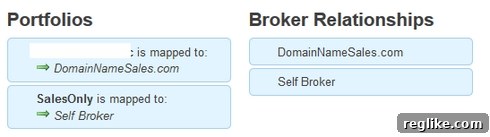
By mapping portfolios to different brokerage options, you can effectively bypass the $175 minimum charge on your lower-priced domains, thereby preserving more of your profit margin. This approach empowers you to maintain flexibility and responsiveness to market conditions, ensuring that each sale is handled in the most cost-effective manner.
The Advantages of Self-Brokering Lower-Priced Domains
While professional brokers offer undeniable benefits, self-brokering your more affordably priced domains can be a savvy move, especially in light of the new DNS commission structure. Here are some key advantages:
- Cost Savings: The most obvious benefit is avoiding the $175 minimum commission, directly increasing your net profit on sales under $1,400.
- Direct Control: You have complete control over the negotiation process, pricing, and communication with potential buyers. This can be particularly appealing for experienced sellers who prefer a hands-on approach.
- Flexibility in Pricing: You can adjust “Buy Now” prices instantly without needing to coordinate with a broker, allowing for quick responses to market interest or promotional opportunities.
- Faster Payouts (Potentially): If you manage the payment and transfer process yourself (e.g., via Escrow.com), you might receive funds faster than through a syndicated channel that involves monthly payment cycles.
- Learning Experience: For newer investors, self-brokering lower-value domains can be an excellent way to gain experience in direct sales, negotiation, and domain transfer protocols without the pressure of a high-stakes transaction.
The Enduring Value of Professional Brokering by DomainNameSales.com
Despite the new minimum commission, there remain compelling reasons to leverage DNS’s professional brokerage services, particularly for your higher-value domain assets. The specialized expertise and operational infrastructure offered by DNS can significantly enhance the likelihood of a successful and profitable sale.
Frontline Defense Against Lowball Offers
One of the most valuable services DNS brokers provide is acting as a frontline filter for unsolicited offers. Domain investors often receive a barrage of lowball offers that are not only financially unattractive but also consume valuable time and energy to sift through. A professional broker steps in to:
- Screen and Qualify Leads: DNS brokers are adept at distinguishing serious buyers from casual inquirers or those making opportunistic, unrealistic offers. They save you the effort of engaging in unproductive conversations.
- Maintain Price Integrity: By deflecting overly low offers, brokers help maintain the perceived value and integrity of your domain. Consistent exposure to lowball offers can sometimes signal desperation or a lack of confidence in your pricing, which a professional broker skillfully avoids.
- Focus Your Time: This screening process frees up your time to focus on other aspects of your domain investing business or personal life, knowing that only genuinely interested and qualified leads will be brought to your attention.
The Power of Live Phone Calls and Human Interaction
In an increasingly automated world, the ability to engage in live, personalized conversations remains a powerful tool in high-value sales. This is where DNS truly shines, often distinguishing its service from more automated marketplaces:
- Skilled Negotiation: DNS brokers are seasoned negotiators. They understand market dynamics, buyer psychology, and effective closing techniques. They can articulate the value proposition of your domain far more persuasively than a static listing or automated email.
- Building Rapport: Live phone calls allow brokers to build rapport with potential buyers, understand their needs, and address any concerns in real-time. This personal touch can be crucial in converting interest into a completed sale.
- Overcoming Objections: Buyers often have questions or hesitations. A skilled broker can anticipate and overcome objections through dialogue, clarifying points and assuaging doubts that might otherwise derail a sale in a purely digital interaction.
- Closing Deals: Many significant domain sales require a final push, a nuanced conversation to bridge the gap between offer and asking price. DNS brokers are equipped to handle these critical moments, often leading to better sale prices for sellers.
While platforms like Afternic and Sedo are excellent for volume sales and offer vast exposure, the level of human interaction involved in most transactions on these platforms is typically minimal. DNS’s hands-on approach, therefore, justifies its commission structure for higher-tier domains where personal engagement can dramatically influence the outcome.
Payment Processing Insights: GoDaddy Syndication and Monthly Payouts
Another important aspect of working with DomainNameSales.com, particularly for those who opt into syndicating sales through GoDaddy, pertains to payment processing. It’s worth noting that payments for these syndicated sales are typically disbursed at the end of the month, coinciding with parking payment cycles. This is distinct from direct sales where payment might be processed more immediately if Escrow.com is used independently.
Jeff Gabriel, Vice President of Sales at DNS, has shed light on the rationale behind this monthly payment structure. It’s a deliberate part of DNS’s lean operating model, designed to maximize the amount of money passed back to customers. By streamlining payment processing—often handled by a single dedicated individual—DNS significantly reduces administrative overhead and operational costs. This efficiency translates into a more favorable financial outcome for sellers in the long run, even if it means a slightly longer wait for specific payouts.
For domain investors, understanding this payment cycle is crucial for cash flow planning. If you rely on frequent, smaller payouts, self-brokering with immediate escrow might be preferable for certain domains. However, for a broader portfolio, consolidating payments monthly can simplify accounting and reduce the administrative burden of tracking numerous smaller transactions.
Developing a Holistic Domain Sales Strategy
In light of these insights, a sophisticated domain sales strategy involves a balanced approach. It’s not about choosing between self-brokering and professional services, but rather integrating both effectively:
- Segment Your Portfolio Strategically: Categorize your domains by value, potential sale price, and liquidity. Use DNS portfolios to delineate between high-value assets requiring professional brokerage and lower-value domains suitable for self-management.
- Leverage DNS for Premium Sales: For domains with asking prices above $1,400 (or those you believe warrant a higher level of negotiation and screening), continue to use DNS’s professional brokers. Their expertise in closing deals and handling complex negotiations is invaluable for these assets.
- Empower Yourself for Volume Sales: For domains below the $1,400 threshold, or those you’ve priced for quick “Buy Now” transactions, actively self-broker. Utilize your own outreach, marketing, and direct negotiation skills.
- Understand Payment Timelines: Factor in the monthly payment cycles for syndicated sales when planning your finances. This helps avoid unexpected cash flow gaps.
- Continuously Evaluate: The domain market is always evolving. Regularly review your portfolio, pricing, and chosen sales channels. Adjust your strategy based on market trends, sales performance, and any further updates from brokerage platforms.
By adopting a nuanced approach that harnesses the strengths of both self-brokering and specialized services like DomainNameSales.com, investors can optimize their domain selling process, maximize profitability, and navigate the ever-changing landscape of the domain industry with confidence and strategic foresight.