The transportation business…and domain name business — Protectionism in
Only focusing on protecting your existing business, rather than figuring out how to capitalize on innovation, is a mistake.
It’s interesting to observe how firms and industries engage in protectionism to fend of legitimate competitive threats.
I’ve given a lot of thought to this lately while thinking regarding the automotive transportation business, which will undergo a huge transformation over the next couple decades.
Two major changes are starting to have a big affect on the transportation business. First, cars are increasingly moving to electric and plug-in hybrid vehicles. This has major ramifications for auto manufacturers, auto dealers and gas stations.
Car manufacturers are facing competition from fresh car firms such as Tesla. Electric cars have a lot fewer moving parts, making it easier for fresh competition to design and build.
Auto dealers face a very different revenue model in the future. With fewer moving parts, electric cards require much less maintenance. Pure plug-ins don’t even require oil changes. This will have a huge impact on dealers that count on maintenance for revenue, not to mention what will happen to Jiffy Lube in the future.
And gas stations? I don’t know what their business model will be in a couple decades. My wife just ordered an electric vehicle, and we won’t make many trips to gas stations any more.
Perhaps a fresh technology will develop to fill a battery in 60 seconds, or to easily swap batteries, and gas stations will take advantage of this. But with everyone owning a fueling station in their garage, the long term outlook for gas stations is questionable.
So how are these threatened industries responding?
As a Texan, I can’t go to a Tesla “dealer”. The state has inflexible dealership laws and auto dealers have been lobbying like mad to keep them that way.
In a nut shell, Tesla can’t sell directly to consumers through its own dealerships here. They have a “store”, where you can check out the car and even test drive one. But if you want to buy one, you have to go online or call to place the order.
It would be like walking into an Apple store, checking out the iPad, and then having the sales clerk tell you to go buy it online.
It also create weird quirks for how Tesla titles the cars and leases them.
It’s protectionism rather than innovation.
Many readers can relate to another aspect of the transportation business that is being upended: taxis.
On a recent trip to Chicago for the DomainSponsor meetup, I took a cab from the airport to the hotel and took an UberX back to the airport.
(The reason I took a cab for the first leg is since government regulations don’t let Uber cars pick up at the airport.)
The two rides were very different.
The taxi driver literally didn’t say a single word to me the entire trip. I told him the hotel, he nodded, and drove me there. The guy stank, too. I don’t think he had showered in days. He spent most of the drive talking to someone on his cell phone.
Contrast that with my Uber ride. A clean car. A driver who wanted to make me very satisfied so I’d give him a good rating. And much cheaper, too.
The taxi business has counted on government-issued monopolies for decades, and it shows. There has been very little innovation and zero focus on client service.
To be sure, taxi owners have some legitimate gripes regarding Uber. Taxi drivers have added regulations to deal with. And they paid the government with the express understanding that they were buying a monopoly contract.
Yet even Uber’s model will be threatened over the next decade or two.
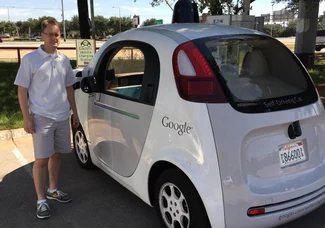
Self-driving cars will eliminate the need for a driver network. Creating a car hire service will be much easier when you don’t need to recruit the supply side of drivers and only need to supply the cars. It will be extremely easy for Google to compete with Uber, for example.
Instead of trying to stop this from happening, Uber is investing in building its own self-driving cars.
In a couple decades, this will seriously hurt the car firms, counting the ones that are doing the disruption right now, such as Tesla.
As the cost of hiring a ride drops precipitously, the benefits of owning a car will decline. More and more people will just hire a car that picks them up at their house. You by now see this a bit in urban areas; people take a Car2Go or Uber instead of owning a car. This will spread as the cost goes down with driverless cars.
OK, so what does all of this have to do with the domain name industry?
We can observe these same types of disruption and protectionist stances inside the industry.
Remember the fight over registries being able to own registrars?
Long delays for fresh top level domain names? The expansion was delayed by interests that want the status quo.
And what regarding the next round of fresh top level domain names? Now that some registries have a collection of names, I’ve heard rumblings of wanting to push off future rounds.
Some amount of protectionism can be warranted. If your business is under threat, it makes sense to delay the threats. At the same time, you can’t only focus your efforts on stopping innovation that challenges your business. You also need to figure out how to take advantage of the change.