
The Digital Frontier: Why Online Security Remains a Critical Challenge, According to Google’s Latest Insights
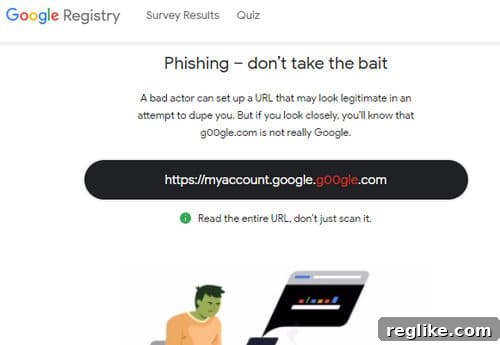
In an era where our lives are increasingly intertwined with the digital realm, the fundamental understanding of online security remains surprisingly elusive for many. Google Registry, a pioneering division of Alphabet responsible for innovative top-level domain names such as .dev and .app, has taken a significant step to bridge this knowledge gap. They recently launched a crucial educational resource at Safe.page, a dedicated platform designed to empower internet users with essential knowledge about identifying and combating phishing attacks and understanding what truly constitutes a secure website. The timely release of comprehensive survey results underscores the pressing need for such initiatives, unequivocally demonstrating that a vast segment of the online population still requires substantial assistance in navigating the complex landscape of web security.
The survey, meticulously conducted among over 2,000 adults, unveiled several startling statistics that paint a clear picture of prevailing vulnerabilities and misconceptions among internet users:
- Understanding HTTP vs. HTTPS: A significant 42% of respondents admitted they didn’t fully grasp the crucial distinction between
httpandhttpsin a web address. This foundational misunderstanding represents a major security blind spot, as the presence of ‘S’ signifies a secure, encrypted connection vital for protecting sensitive data. - HTTPS and Phishing Vulnerability: Even more concerning, an alarming 69% of individuals surveyed were unaware that a website employing
httpscould still be part of a sophisticated phishing attack. This highlights a common misconception that the mere presence of HTTPS guarantees trustworthiness, a belief that cybercriminals frequently exploit. - Password Reuse Epidemic: A staggering 64% of participants confessed to using the identical password across multiple websites. This widespread practice dramatically increases the risk of successful credential stuffing attacks, where a single compromised password can grant attackers access to numerous online accounts.
Beyond these critical security insights, the survey also offered an intriguing glimpse into the digital habits of Generation Z. A notable 34% of individuals aged 16-24 who had already embarked on the journey of creating their own website did so primarily for a class project. This specific datapoint, while not directly tied to security, illuminates a fascinating trend: the younger generation’s early and frequent engagement with web creation. This presents a unique opportunity for domain registries and registrars to foster a deeper understanding of web infrastructure and security best practices from the ground up, potentially cultivating a more digitally literate and secure generation of internet users.
Demystifying Online Security: A Deeper Look at the Survey’s Findings
The survey results serve as a powerful reminder that while technology advances rapidly, human understanding and awareness often lag behind. The findings regarding HTTP versus HTTPS are particularly illuminating. HTTP (Hypertext Transfer Protocol) is the fundamental protocol for transferring data over the web. However, it transmits data in plain text, making it vulnerable to interception by malicious actors. Anyone with access to the network path could potentially view or alter the information being sent. HTTPS (Hypertext Transfer Protocol Secure) adds a vital layer of encryption via an SSL/TLS (Secure Sockets Layer/Transport Layer Security) certificate, ensuring that data exchanged between a user’s browser and the website server remains private and protected. This encryption is critical for safeguarding personal information, banking details, and login credentials. The lack of awareness among 42% of adults regarding this fundamental difference means millions are potentially exposing their sensitive data without fully realizing the inherent risks. Google’s long-standing push for “HTTPS everywhere” is a direct response to this vulnerability, aiming to make encrypted connections the default standard for all web traffic.
Perhaps the most alarming statistic is the 69% who didn’t realize HTTPS could be weaponized in a phishing attack. This widespread misapprehension is a goldmine for cybercriminals. Many users are correctly taught to look for the padlock icon and “HTTPS” in the URL bar as a sign of a safe connection. While these indicators confirm that the connection is encrypted and the site’s identity has been verified by a Certificate Authority, they do not guarantee the website’s legitimacy or ethical intent. Phishing sites can, and often do, acquire valid SSL certificates – sometimes even free ones – to appear more trustworthy. Attackers leverage this perceived credibility to trick users into believing a malicious site is legitimate, thereby enhancing the effectiveness of their scams. Users must therefore learn to scrutinize more than just the padlock. It’s crucial to examine the full domain name for typos, misspellings, or unusual characters, verify the sender of any suspicious emails, and carefully evaluate the content for urgent requests or unusual offers, rather than solely relying on the HTTPS indicator.
The prevalence of password reuse among 64% of respondents is another critical vulnerability that demands immediate attention. In an era of frequent data breaches, where millions of login credentials are stolen and leaked online annually, reusing passwords across multiple accounts is akin to using the same key for your home, car, and office. When one service is compromised, all other accounts using that same password immediately become vulnerable to credential stuffing attacks. Cybercriminals routinely compile vast lists of usernames and passwords leaked from various breaches and then systematically attempt to use these combinations on other popular websites, knowing that many users recycle their credentials. The simplest and most effective solution lies in adopting unique, complex passwords for every single online account, ideally generated and stored using a reputable password manager. Furthermore, enabling multi-factor authentication (MFA) adds a crucial, often indispensable, layer of security. MFA requires a second form of verification (like a code from your phone or a biometric scan) even if your password is stolen, making it significantly harder for unauthorized individuals to gain access to your accounts.
Empowering Users with Safe.page: Google’s Commitment to Digital Education
Google Registry’s Safe.page stands as a testament to their unwavering commitment to fostering digital literacy and enhancing online safety for everyone. The platform is thoughtfully designed to be an accessible and engaging educational hub, moving beyond abstract warnings to offer practical, actionable advice that users can implement immediately to protect themselves. One of its standout features is an interactive quiz that challenges users to identify safe and unsafe URLs in simulated email scenarios. This hands-on approach is incredibly effective because it allows individuals to test their knowledge and sharpen their discernment skills in a low-stakes environment, learning from their mistakes without real-world consequences. Such interactive tools are far more impactful than passive reading, as they engage users directly in the learning process.
I personally took the quiz, and I must admit, even as someone deeply immersed in the domain industry and keenly aware of cybersecurity threats, I overlooked a subtle double-S typo in one of the quiz questions. This minor oversight placed me among the 97% of participants who missed at least one question. This personal experience profoundly reinforced the fact that even experienced users can fall prey to cleverly disguised phishing attempts. It underscores the critical importance of meticulous attention to detail and not relying solely on a quick glance, especially when dealing with links in emails or messages that prompt sensitive information. Cybercriminals are constantly evolving their tactics, making vigilance a continuous necessity.
The site reiterates Google’s fundamental recommendation: always double-check domain names meticulously before inputting any sensitive information. This advice extends far beyond email links. It applies equally when clicking on search results, social media posts, advertisements, or any hyperlink encountered online. Users should make it a habit to verify that the URL in their browser’s address bar matches the legitimate organization they intend to visit, looking for any slight variations, misspellings, unusual subdomains, or suspicious characters that might indicate a spoofed or malicious site. While user vigilance is paramount, platform providers also play a pivotal role in ensuring a safer online environment.
It is my sincere hope that Google’s own search team, which designs the intricate search results pages we interact with daily, particularly on mobile platforms where screen real estate is limited, will robustly embrace and apply these same stringent guidelines. Enhancing how search results clearly differentiate legitimate sites from potentially malicious ones, perhaps through more prominent visual indicators or explicit warnings for suspicious domains, would be a monumental step in protecting users right from their initial point of contact with the web. The collective effort of user education and platform responsibility is essential for building a truly secure internet.
The Future of Web Security: Secure TLDs and Beyond
Google’s initiative with Safe.page and its revealing survey findings are intrinsically linked to its broader vision for a more secure internet, which includes its pioneering promotion of highly secure top-level domains (TLDs). On the Safe.page website, Google prominently features three of its innovative TLDs: .page, .app, and .dev. What sets these domains apart is a mandatory requirement: all websites registered under these TLDs must enforce SSL/TLS encryption by default. This means that any site using a .page, .app, or .dev domain will automatically load with HTTPS, guaranteeing an encrypted connection for all users from the moment they land on the page. This proactive measure significantly reduces the risk of data interception and builds inherent trust.
This “secure by default” approach is a powerful mechanism for enhancing web security across the board. By removing the option for unencrypted HTTP connections entirely, Google is effectively baking security into the very fabric of these domain spaces. This not only protects user data but also instills greater confidence and trust in websites utilizing these TLDs, as users can be assured of an encrypted connection without having to manually check for it. For businesses, developers, and individuals looking to establish an online presence, opting for one of these secure TLDs simplifies the process of securing their sites, as the SSL requirement is handled at the registry level, encouraging best practices without additional effort or oversight. This strategic move is a clear step towards Google’s long-standing goal of an “HTTPS-everywhere” web, making the internet inherently safer and more reliable for everyone involved.
Understanding the implications and benefits of such secure namespaces is crucial for anyone involved in the web ecosystem, from domain investors to web developers and end-users. These domains represent a forward-thinking approach to internet safety. For a deeper dive into the security architecture and the specific advantages offered by these particular TLDs, I highly recommend listening to a dedicated discussion on the topic. You can gain valuable insights directly from an expert by tuning into the DNW Podcast episode #221, featuring Google’s Ben McIlwain. This episode provides an authoritative perspective on how these secure domains contribute to a more robust and trustworthy online environment, shaping the future of web security.
In conclusion, while the digital world offers unparalleled opportunities for connection, innovation, and commerce, it also presents persistent and evolving threats that demand our constant vigilance. Google Registry’s Safe.page and its revealing survey data underscore the critical and ongoing need for enhanced digital literacy among all internet users. By understanding the nuances of web security, from differentiating the fundamental protocols of HTTP from HTTPS to recognizing sophisticated phishing tactics and adopting robust password hygiene, individuals can significantly bolster their personal online defenses. Coupled with the proactive and responsible efforts of industry leaders like Google, through initiatives such as mandating secure TLDs and providing accessible educational platforms, we can collectively strive towards building a safer, more reliable, and ultimately more trustworthy internet for everyone.