
Securing Your Digital Identity: The Emerging Frontier of Domain Name Insurance
In the rapidly expanding digital landscape, domain names have evolved beyond simple web addresses to become critical business assets. For many enterprises, both large and small, a domain name represents their core online identity, their brand, and a significant portion of their intellectual property. As the value of these digital assets continues to soar, so too does the inherent risk of cyber threats, particularly domain theft. This growing vulnerability has spurred a crucial conversation about robust protective measures, leading to the innovative concept of domain name insurance.
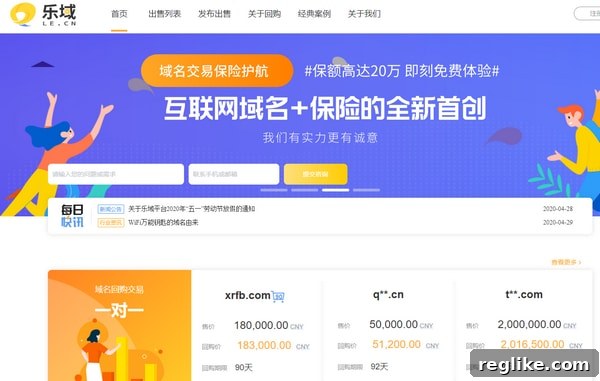
China Leads the Way: Le Yu and Sunshine Insurance Pioneer Domain Protection
The concept of insuring digital assets against theft is gaining significant traction, particularly within the dynamic Chinese market. Recently, Le Yu, a prominent Chinese domain marketplace, made headlines with its announcement of a strategic partnership with Sunshine Insurance Group. This collaboration marks a significant milestone, aiming to introduce dedicated insurance services specifically designed to safeguard valuable domain names.
This pioneering initiative from Le Yu and Sunshine Insurance Group is a direct response to the escalating problem of high-value domain names being targeted and illicitly acquired by malicious actors. The primary objective of this new service is to bolster the safety and security of domain ownership, thereby mitigating the substantial risks associated with domain exchange and transfer processes. While specific details regarding the scope and coverage of the service are yet to be fully disclosed, the underlying principle is clear: to offer a financial safety net for one of the most vital components of a modern business’s online presence.
Understanding the Partners: Le Yu and Sunshine Insurance Group
Le Yu (乐域), translating roughly to “happy domains,” is an integrated domain service provider that operates from its flagship platform, Le.cn. Established in 2014 and headquartered in the bustling technology hub of Shenzhen, this startup has quickly carved out a significant niche in the Chinese domain market. Le Yu offers a comprehensive suite of services, ranging from domain registration and trading to management and consultation, making it a central player for individuals and businesses navigating the digital real estate landscape in China.
Partnering with Le Yu is the formidable Sunshine Insurance Group, a corporate titan established in 2005. Recognized as a member of China’s prestigious Top 500 Enterprise list, Sunshine Insurance Group boasts an extensive portfolio of insurance services, encompassing everything from life and property insurance to health coverage and asset management. Their corporate domain, Sinosig.com, reflects their robust presence in the financial sector. This partnership leverages Sunshine’s deep expertise in risk assessment and financial protection, combined with Le Yu’s intimate understanding of the domain market, to forge a unique and potentially transformative offering.
The Growing Threat: Why Domain Theft is a Critical Concern
The imperative for domain insurance stems directly from the pervasive and often devastating threat of domain theft. Unlike physical assets that can be visually secured, a domain name exists as a digital record, making it susceptible to various forms of cyber attack. These attacks can range from sophisticated phishing schemes and social engineering tactics designed to trick domain owners into revealing sensitive credentials, to exploiting vulnerabilities within domain registrars or engaging in unauthorized transfer requests. The consequences of such theft can be catastrophic for individuals and businesses alike.
When a domain is stolen, the immediate repercussions can include website downtime, email disruptions, and the unauthorized redirection of traffic to malicious sites. Beyond these operational headaches, the financial losses can be immense, stemming from lost sales, advertising revenue, and the potential cost of recovering or repurchasing the stolen domain. Furthermore, domain theft can inflict severe damage to a brand’s reputation and customer trust, issues that are often far more challenging and costly to rectify than the initial financial hit. In some cases, stolen domains have been used for illicit activities, further entangling the rightful owners in legal complexities and reputational fallout. This escalating risk highlights the urgent need for comprehensive protective measures for valuable digital assets.
The Promise of Domain Insurance: A New Shield for Digital Assets
In this high-stakes environment, domain insurance emerges as a beacon of hope for domain owners. At its core, domain insurance aims to provide a financial safety net and recourse in the event of various detrimental incidents affecting a domain name. While specific policy details will vary, typical coverage is expected to encompass direct financial losses resulting from unauthorized transfers, domain hijacking, and other forms of cyber theft. It could also potentially extend to cover legal expenses incurred during recovery efforts, business interruption losses due to downtime, and even the cost of public relations to restore a damaged brand reputation.
Comparing domain insurance to traditional property or cyber insurance reveals both similarities and distinct challenges. Like property insurance, it protects a valuable asset. Similar to broader cyber insurance policies, it addresses risks inherent to the digital realm. However, domain insurance focuses specifically on the unique characteristics and vulnerabilities of domain names, offering specialized protection that generic cyber policies might not fully cover. By mitigating financial risk, domain insurance could significantly boost confidence among domain investors, businesses relying heavily on their online presence, and new entrants into the digital marketplace, fostering a more secure and predictable environment for online commerce and innovation.
Navigating the Hurdles: The Path to Mainstream Domain Insurance
Despite the undeniable appeal and necessity of domain insurance, its journey to widespread adoption is fraught with significant challenges. The experience of Sunshine Insurance Group’s previous collaboration in 2018 with domain registrar Nawang, which apparently did not result in a widely adopted or easily discoverable service, underscores these difficulties. This suggests that the market, or perhaps the product itself, was not fully ready for mainstream integration. Several key obstacles stand in the way:
The Intricacies of Domain Valuation: The Foremost Hurdle
Perhaps the most formidable barrier to the broad implementation of domain insurance is the inherent difficulty in consistently and objectively valuing domain names. Unlike physical real estate, where properties often share similar characteristics within a geographical area, allowing for comparable sales data to appraise assets accurately, each digital address – each domain name – is fundamentally unique. Its value is not tethered to physical attributes but is instead a complex interplay of various factors, significantly influenced by subjective buyer desire and seller expectations.
Consider the myriad elements that contribute to a domain’s perceived worth: its length, memorability, relevant keywords, brandability, the Top-Level Domain (TLD) it uses (.com, .org, .ai, etc.), its age, existing traffic, backlink profile, and its potential for monetization. A short, generic .com domain like “cars.com” or “money.com” commands astronomical prices due to its universality and high traffic potential. In contrast, a long, niche-specific domain might hold immense value for a particular business but be virtually worthless to another. This vast spectrum of subjective value makes establishing a standardized, universally accepted valuation methodology exceptionally challenging for insurance underwriters.
For domain insurance to truly flourish, innovative valuation models are required. These might involve sophisticated algorithmic appraisals that analyze a multitude of data points, leveraging artificial intelligence and machine learning to predict market value more accurately. Another approach could be the implementation of tiered insurance policies, where lower-value domains are covered by standardized rates, while high-value, premium domains necessitate independent professional appraisals, similar to how luxury items or unique art pieces are insured. The development of industry-wide valuation standards, potentially supported by blockchain technology for transparent transaction histories, would also be a crucial step forward.
Underwriting Complexity and Risk Assessment
Beyond valuation, underwriting domain insurance presents its own set of complexities. Assessing the risk associated with a digital asset involves evaluating not only the domain’s inherent value but also the security posture of the domain owner, the registrar through which it’s managed, and the overall threat landscape. Factors such as the strength of two-factor authentication, registrar security protocols, and the owner’s cybersecurity practices all influence the likelihood of theft. Developing comprehensive risk assessment frameworks for these dynamic digital environments requires specialized expertise that traditional insurance companies are still building.
Standardization and Regulatory Landscape
The lack of universal standards for domain ownership verification, transfer procedures, and dispute resolution across different registrars and TLD registries adds another layer of complexity. An inconsistent global regulatory environment for digital assets and cybersecurity also complicates the creation of internationally viable domain insurance products. Establishing clear legal frameworks and industry-wide best practices would greatly facilitate the growth of this nascent insurance sector.
Market Awareness and Education
Finally, there’s the challenge of market education. Many domain owners, especially those with smaller portfolios or less exposure to high-value transactions, may not yet fully grasp the criticality of protecting their domains or understand the benefits of specialized insurance. Raising awareness about the prevalence and impact of domain theft, coupled with clear communication about the value proposition of domain insurance, will be essential for driving adoption.
The Future of Digital Asset Protection
While the road to widespread domain insurance may be long and complex, the initiative by Le Yu and Sunshine Insurance Group represents a vital step forward. If successful, this partnership could serve as a powerful blueprint for other markets globally, catalyzing the development of more sophisticated valuation methodologies, bolstering industry-wide security standards, and ultimately fostering greater trust and stability within the digital economy. The evolution of domain insurance will likely go hand-in-hand with advancements in cybersecurity, blockchain for immutable records, and AI for predictive analytics and automated risk assessment.
The emergence of domain insurance signifies a maturing digital economy where intangible assets are increasingly recognized for their tangible value. As businesses continue to anchor their operations and identities in the digital realm, the need for robust protection for their foundational online addresses will only intensify. The efforts of innovators in China and elsewhere are paving the way for a future where securing one’s digital identity is as routine and reliable as insuring a physical property.
In conclusion, while we may still be some distance from a future where every domain owner routinely insures their digital assets, the foundational work is being laid. The partnership between Le Yu and Sunshine Insurance Group is a testament to the growing recognition of domain names as critical, insurable assets. This pioneering move in the Chinese market offers a glimpse into a more secure and resilient future for digital identity and online commerce worldwide.