
Unusual Domain Sightings: Unpacking the .us.com Domain and Its Role in Modern Branding
I believe this story will resonate with anyone who appreciates the nuances of online identity and branding. The digital landscape is constantly evolving, presenting businesses with a myriad of choices for their online presence. Occasionally, something truly unique catches your eye, prompting a second look and deeper thought.
The Unmistakable Double Take: My Unexpected Encounter with a .us.com Domain
The other day, as I was driving home, a familiar routine was suddenly interrupted by an intriguing sight. My eyes scanned the side of a passing truck, as one often does, noticing company logos and contact information. Then, something peculiar flashed into view – a domain name that wasn’t quite what I expected. It took a few moments for my brain to process what I had just seen. Was that really the domain extension I thought it was? The curiosity was too strong to ignore. I instinctively slowed down, then made the decision to turn my car around, determined to get a clearer, unmistakable view. I had to confirm what my initial glance suggested.
Upon circling back, the details became crisp and undeniable. Take a moment to examine the image below, and I think you’ll fully grasp my initial reaction and the subsequent fascination:
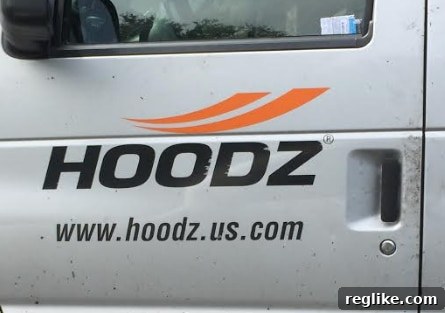
Yes, your eyes are not deceiving you. That is indeed a .us.com domain name. For those immersed in the world of online branding and digital real estate, this is a significant sighting. These are not everyday domains; they represent one of the less common, yet strategically interesting, third-level domain options offered by registries like CentralNic. It is exceptionally rare to encounter these types of domain names in general, and I can honestly say that in all my years, I have never before seen one actively promoted offline, emblazoned on a commercial vehicle for all to see. This single observation immediately sparked a multitude of questions about branding strategy, domain availability, and the evolving choices businesses make for their digital footprint.
Understanding the World of Domain Names: Beyond the Familiar .com
What Exactly is a Domain Name and Why Does it Matter?
Before diving deeper into the specifics of .us.com, it’s essential to appreciate the fundamental role a domain name plays. A domain name is essentially your website’s address on the internet – a unique, memorable identifier that users type into their browsers to find your business, service, or information. In an increasingly digital world, a strong domain name is more than just an address; it’s a cornerstone of your brand identity, crucial for credibility, recognition, and online accessibility. It acts as the gateway to your digital presence, influencing everything from customer perception to search engine optimization (SEO).
The Hierarchy of Domains: TLDs, SLDs, and Third-Level Domains
The internet’s domain name system is structured hierarchically. At the top are Top-Level Domains (TLDs), categorized broadly into generic TLDs (gTLDs) like .com, .org, .net, and country code TLDs (ccTLDs) such as .us for the United States, .uk for the United Kingdom, or .de for Germany. Below these TLDs are Second-Level Domains (SLDs), which are the memorable names chosen by individuals or businesses (e.g., “google” in google.com or “microsoft” in microsoft.com). What makes the .us.com domain so distinct is that it operates as a third-level domain. In this structure, ‘com’ acts as the SLD under the ‘us’ ccTLD, and then ‘hoodz’ is the third level under ‘com.us’. This layering introduces both unique possibilities and potential complexities for branding and user recognition.
The Enigma of .us.com: A CentralNic Offering and Its Implications
The .us.com domain is an interesting creature in the vast domain name ecosystem. It’s a specific offering from a domain registry service provider, in this case, CentralNic, which manages and offers a variety of second and third-level domains. For businesses that might find their ideal .com or .us domain already taken, or for those looking to establish a more distinct identity, options like .us.com present an alternative. It merges the widely recognized ‘com’ with the geographical identifier ‘us’, aiming to offer the familiarity of a .com with a specific regional flavor.
However, the existence of such a domain begs the question: why would a company choose it? The primary driver is often availability. With millions of .com domains already registered, finding a short, memorable, and relevant name under the .com TLD can be a significant challenge. .us.com, while less common, offers a broader pool of available names. It could also appeal to businesses that want to signal a strong connection to the United States while still leveraging the global recognition associated with ‘.com’.
Rarity and Perception: The .us.com Advantage or Disadvantage?
The rarity of seeing a .us.com domain, especially in an offline promotional context, is precisely what makes it intriguing. For some, its distinctiveness might be seen as an advantage, helping a brand stand out from the crowd. It immediately sparks curiosity, as it did for me. On the other hand, its uncommon nature can also be a double-edged sword. Users are heavily conditioned to recall .com, .org, or country-specific ccTLDs. A less familiar extension might lead to confusion, misremembering, or even a perception of being less established or trustworthy compared to a traditional .com. Businesses opting for such domains need to be prepared to educate their audience and ensure their marketing materials clearly communicate their full website address to mitigate any potential user experience hurdles.
Offline Domain Promotion: Bridging the Digital and Physical Divide
Promoting a website address offline is a timeless marketing strategy. From business cards and brochures to billboards and vehicle wraps, businesses leverage physical touchpoints to guide potential customers to their digital homes. This act of bridging the physical and digital world is critical for establishing a holistic brand presence. The visibility of a domain name on a truck, as in the Hoodz example, transforms a moving vehicle into a powerful advertising medium, reaching a local audience in a highly visible manner.
In this context, the choice of domain name becomes even more crucial. A simple, memorable domain like “brandname.com” is easily recalled and typed. When an unusual domain like .us.com is used, it places an extra emphasis on clear, legible presentation and perhaps even a brief explanation if needed. My encounter highlights the power of offline promotion to draw attention, but also the potential for unique domain choices to create either instant memorability or a momentary puzzle for the observer.
Case Study: Hoodz and Their Evolving Domain Strategy
From Hoodz.com.us to Hoodz.us to Hoodz.us.com: A Brand’s Journey
The story of Hoodz’s domain strategy, as pieced together from historical WHOIS records (via DomainTools) and archived web content (via Archive.org), offers valuable insights into the dynamic nature of online branding. Initially, it appears the company utilized Hoodz.com.us. This choice is interesting as it flips the common structure, placing ‘.com’ *before* ‘.us’, perhaps aiming to signify a commercial entity within the US context, or simply securing what was available at the time. Over time, it seems Hoodz recognized the need for a simpler, more direct presence, subsequently acquiring and utilizing Hoodz.us. This move aligns with a strategy to establish a clearer national identity, leveraging the official U.S. country code TLD. However, the current situation shows that Hoodz.us now forwards to Hoodz.us.com, indicating a strategic shift to make the latter their primary web address.
The Strategic Shift: Why Hoodz.us.com?
This evolution in domain usage by Hoodz suggests a deliberate and thoughtful process behind their online identity. Why would a company move from a more straightforward .us domain to the less common .us.com? Several factors could be at play:
- Brand Protection & Availability: It’s possible that Hoodz.us.com offered them a domain name that was perfectly aligned with their brand name, without requiring compromises often necessary with highly saturated TLDs. They might have wanted to secure all possible relevant variations of their brand name to prevent cybersquatting.
- Perceived Professionalism: While .us is a legitimate ccTLD, some businesses might feel that the inclusion of ‘com’ adds a layer of commercial professionalism or familiarity that aligns better with their business model, especially if they are targeting both domestic and potentially international audiences who associate ‘.com’ with commercial enterprise.
- Marketing & Memorability: Despite its relative rarity, the combination might be perceived by the company as unique and memorable. By consistently promoting it offline, they are actively working to embed this specific address into their target audience’s memory.
- Avoiding .US Restrictions: While .us domains are available to individuals and entities with a genuine presence in the U.S., some businesses might perceive (rightly or wrongly) that using .us.com sidesteps certain perceived complexities or restrictions, or simply offers more flexibility.
Ultimately, Hoodz’s journey demonstrates a company actively managing its digital assets to best represent its brand and reach its audience. The clear promotion of Hoodz.us.com on their vehicle shows a commitment to this particular domain choice as their primary online identity.
Choosing Your Perfect Domain Name: Key Considerations for Businesses
The Hoodz case study serves as a reminder that selecting a domain name is a critical business decision with long-term implications. Here are some key considerations for any business:
Memorability and Simplicity Are Paramount
Your domain name should be easy to remember, spell, and pronounce. Avoid hyphens, numbers, or obscure terms that can lead to user error. The shorter and simpler, the better. This directly impacts how easily customers can find you and refer you to others.
Relevance and Brand Alignment
Your domain name should ideally reflect your business name, industry, or core offering. It reinforces your brand identity and makes it clear what your website is about, even before a user visits it. A strong brand identity online begins with a relevant domain.
Protecting Your Brand: Registering Variations and TLDs
Consider registering multiple domain extensions (e.g., .com, .net, .org, and relevant ccTLDs) or common misspellings of your primary domain. This strategy, known as defensive registration, helps protect your brand from competitors or cybersquatters and ensures users typing slight variations still land on your site. Hoodz’s historical domain acquisitions exemplify this approach.
The SEO Perspective: Does Your Domain Affect Rankings?
While having keywords directly in your domain name was once a significant SEO factor, its direct impact on search engine rankings has diminished. Google primarily focuses on content quality, user experience, and backlinks. However, a relevant and memorable domain can indirectly contribute to SEO by:
- Improving Click-Through Rates: A clear, trustworthy domain name can encourage users to click on your search result.
- Enhancing Brand Authority: A strong, established brand (often indicated by its domain) can garner more trust and links, which are vital for SEO.
- Direct Navigation: A simple domain encourages users to type it directly, generating valuable direct traffic.
Ultimately, a unique TLD like .us.com will not inherently boost or harm your SEO. What matters most is the quality of content on the site, its technical health, and how well it satisfies user intent. The domain choice is more about branding and user perception than a direct ranking signal.
The Future of Domain Names and Your Online Identity
The encounter with Hoodz.us.com served as a fascinating reminder of the diverse and ever-expanding world of domain names. As new gTLDs continue to emerge, and businesses seek unique ways to carve out their digital space, the choices for online identity will only grow. What remains constant, however, is the fundamental need for a thoughtful, strategic approach to choosing and managing your domain portfolio.
Whether you opt for a traditional .com, a country-specific ccTLD, or an intriguing third-level domain like .us.com, the goal is always the same: to create a memorable, accessible, and brand-aligned gateway to your online presence. My double-take on the highway yesterday was more than just a passing curiosity; it was a potent demonstration of how even the smallest details of a brand’s digital identity can capture attention and spark meaningful conversations about the intricate art of building a powerful online presence.