
Unveiling the Digital Landscape: Comprehensive .COM and .NET Domain Registration Insights
In the vast and ever-expanding digital realm, domain names serve as the foundational addresses that guide users to websites, applications, and online services. Among the myriad of available Top-Level Domains (TLDs), .com and .net stand as two of the most venerable and widely recognized extensions, forming the backbone of the internet’s commercial and networking infrastructure. Understanding the current state of their registration numbers is not merely a statistical exercise; it’s a critical barometer for measuring the pulse of global digital expansion, online business activity, and internet infrastructure growth.
For years, precise, up-to-the-minute figures for these crucial TLDs were often extrapolated or estimated by third parties. However, a significant shift in transparency began when Verisign, the authoritative registry operator for both .com and .net, commenced releasing daily domain counts. This initiative marked a pivotal moment for the domain industry, providing unparalleled insight directly from the source. This unprecedented level of detail offers a clearer, more dynamic picture of the registration landscape, replacing previous periodic reports with real-time snapshots.
Verisign’s Enhanced Transparency: A New Era for Domain Data
Verisign’s decision to provide daily domain registration figures for the .com and .net namespaces represents a substantial leap forward for transparency within the domain industry. This move empowers stakeholders across various sectors—from individual domain investors and web developers to large corporations and market analysts—with more accurate and timely information. The data, readily accessible directly from Verisign’s official portal, includes comprehensive statistics for both active and registered, albeit unconfigured, domain names. This level of detail is invaluable for strategic planning and understanding market dynamics.
The importance of such granular data cannot be overstated. It allows for a more precise tracking of trends, enabling businesses to make informed decisions about market entry, branding strategies, and digital asset acquisition. For researchers and policymakers, these daily counts provide a robust dataset for analyzing internet growth, identifying potential areas of concern, and forecasting future infrastructure demands. The availability of this official, frequently updated information drastically reduces reliance on less precise estimates, fostering a more data-driven approach to understanding the internet’s core components.
Understanding the Data: Zone File vs. Registered Domains
One of the crucial distinctions highlighted by Verisign’s reporting is the difference between domains actively present in the “zone file” and those that are merely “registered” but may not yet have configured nameservers. This distinction is vital for accurate interpretation of the overall domain count. The zone file essentially acts as a master list of all active domain names that are currently resolving to an IP address on the internet. These are the domains that have been fully set up and are actively pointing to a website, email server, or other online service.
Conversely, “registered domains that don’t have nameservers” are domains that have been officially purchased and recorded in the registry but have not yet been configured to point to any specific online service. These domains might be held for future projects, used for defensive registration, bought by domain investors for speculative purposes, or simply awaiting the completion of a website or service development. Understanding this nuance is key to grasping the full scope of domain activity. While zone file domains represent the active, functional internet, registered but unconfigured domains represent latent potential, strategic holdings, or upcoming digital ventures.
The Current Snapshot: Over 104 Million .COM and 15 Million .NET Registrations
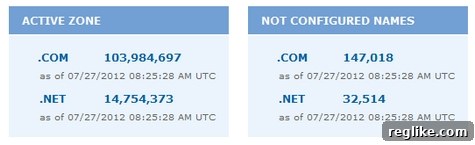
As per recent reports from Verisign, the sheer volume of .com domain registrations continues to underscore its enduring dominance in the digital landscape. Data indicates that there are currently over 104 million .com domain registrations. This colossal figure is a testament to the unparalleled trust, brand recognition, and global appeal associated with the .com extension. For businesses and individuals worldwide, .com remains the default and often preferred choice for establishing an online presence, lending an air of credibility and authority that few other TLDs can match.
Simultaneously, the .net TLD also maintains a significant footprint, with close to 15 million registrations. Historically conceived for networking organizations, .net has evolved into a versatile alternative for a wide range of entities, particularly when a desired .com domain is unavailable. Its robust presence highlights its importance as a credible and widely accepted option within the domain ecosystem, often serving as a complementary or secondary domain for businesses that already own a .com, or as a primary domain for tech-focused ventures.
These numbers are not just abstract statistics; they reflect real economic activity, entrepreneurial spirit, and ongoing digital transformation across the globe. Each registration represents an intention to establish an online identity, whether for a personal blog, a small business, a multinational corporation, or an innovative startup. The consistent growth, particularly of .com, indicates a sustained confidence in the internet as a platform for communication, commerce, and innovation.
Comparing Estimates: Official Data vs. Third-Party Projections
Before Verisign began its daily reporting, estimates for unconfigured nameserver domain names were often the subject of speculation and varied widely among third-party analyses. While these estimates served a valuable purpose in the absence of official figures, they sometimes painted a broader, less precise picture. For instance, some third-party estimates from about half a year prior to Verisign’s initial reporting suggested higher numbers for unconfigured domains. However, the current official data reveals that the actual number of domains without nameservers is well below some of those earlier projections.
This discrepancy underscores the critical value of direct, official data from the registry operator. While external analyses can offer valuable perspectives and predictive models, they inherently rely on assumptions and methodologies that may not perfectly align with the registry’s internal data. Verisign’s transparent reporting eliminates much of this ambiguity, providing a more reliable foundation for market analysis and strategic decision-making. It ensures that the industry is working with the most accurate information available, fostering a healthier and more predictable market environment.
The Enduring Dominance of .COM and the Strategic Importance of .NET
The internet has evolved dramatically since its inception, with an explosion of new gTLDs aimed at niche markets and specific industries. Yet, through all these changes, .com has maintained its position as the undisputed heavyweight champion of the domain world. Its unparalleled brand recognition, global trust, and inherent memorability make it the first choice for businesses aiming for a widespread online presence. A .com address often signals stability, legitimacy, and a broad reach, making it an invaluable asset in the digital economy. The continued growth past the 100 million mark speaks volumes about its enduring relevance and desirability.
.net, while not possessing the same universal recognition as .com, holds a strategic position in the domain landscape. Originally intended for “network” organizations, its usage has diversified considerably. It serves as a strong alternative for businesses unable to secure their ideal .com domain, often chosen for its professional connotation and wide acceptance. Many enterprises also use .net domains for their internal networks, specific service offerings, or as a defensive registration alongside their primary .com domain, ensuring brand protection across key TLDs. Its consistent registration numbers demonstrate its continued utility and importance in supporting diverse online needs.
Implications for the Global Domain Industry and Digital Strategy
The granular insights provided by Verisign’s daily reports have profound implications across the global domain industry. For domain investors, this data offers a critical lens through which to evaluate market trends, identify opportunities for investment in premium domains, and assess the liquidity of the secondary market. Tracking the rise and fall of unconfigured domains, for example, can provide clues about speculative interest or potential shifts in development activity. A higher proportion of unconfigured domains might suggest a bullish outlook among investors, while a decrease could indicate more active development or a move towards liquidation.
For businesses, understanding these trends is crucial for informed digital strategy. When launching a new product or expanding into a new market, the availability and cost of desirable .com and .net domains play a significant role. The data helps them gauge the overall saturation of the market and the competition for prime online real estate. Furthermore, the robust registration numbers for these foundational TLDs reaffirm their importance as cornerstones of a successful online brand identity, encouraging sustained investment in securing and developing these digital assets.
Beyond commercial interests, these statistics are vital for internet governance bodies, researchers, and cybersecurity professionals. They offer insights into the overall health and growth of the internet’s core infrastructure, enabling better planning for future scalability, resource allocation, and threat mitigation. The transparency provided by Verisign fosters a more informed ecosystem, benefiting all participants in the digital economy.
The Future of .COM and .NET in a Diversifying TLD Landscape
As the internet continues its rapid evolution, the domain landscape has become increasingly diverse, with hundreds of new gTLDs offering specialized and geographically targeted options. Despite this expansion, .com and .net have not only held their ground but continue to demonstrate remarkable resilience and growth. Their established trust, global recognition, and historical significance ensure their continued relevance.
The daily reporting from Verisign suggests a sustained demand for these legacy extensions, indicating that while new TLDs carve out their niches, .com and .net remain the preferred foundational choices for most serious online endeavors. This consistent demand also highlights Verisign’s ongoing role as a critical guardian of internet stability and security, ensuring the reliable operation of these essential TLDs. As the digital world expands, the insights gleaned from these registration numbers will undoubtedly continue to shape strategies and discussions about the future of online identity and connectivity.
In conclusion, Verisign’s commitment to daily data transparency for .com and .net domains provides an invaluable resource for anyone seeking to understand the intricate dynamics of the internet’s naming system. These numbers paint a vivid picture of continuous digital expansion, underlining the enduring significance of these core TLDs and offering critical insights into the trends shaping our interconnected world.