The problem with WordPress
WordPress is too complex for the average modest business owner to use. The on ramp needs to be simpler.
WordPress powers 31% of the web. I’ve used it on this very blog since 2005. But WordPress has a problem for the millions of modest business owners that don’t have a website: the learning curve.
That’s why I’ve reviewed WordPress alternatives like Wix, Weebly, SquareSpace, Yahoo Modest Business and GoCentral.
These website builders make it much easier to get started than WordPress. The problem is that they can’t easily be exported to WordPress when a website owner is ready to harness more flexibility and customization. (One exception is DreamHost’s Remixer, although that’s not a very competitive site builder.)
With 13 years of WordPress experience, it’s easy for me to do just regarding anything required in the Admin interface. But when it comes to customizing the look and feel of a site, it’s difficult unless you’re a coder. Gutenberg promises to make some of this easier, but the site structure itself will still be difficult.
Some of the pre-built frameworks can help but still have a long way to go. Consider Genesis, which this site and PodcastGuests.com are built on. The Genesis framework is designed to make customizing a site easier, but I still can’t use it without a developer.
There are lots of great themes for Genesis. The problem is that the out-of-the-box experience with these themes is nothing like what you’d expect. They are installed with a default blog structure rather than what the theme looks like, and users have to then dig into widgets to recreate the desired look.
WP Engine purchased StudioPress, the maker of Genesis, earlier this year. It has a big opportunity here. It ought to create a one-click experience for people to choose a theme built on Genesis that matches the layouts shown on the site.
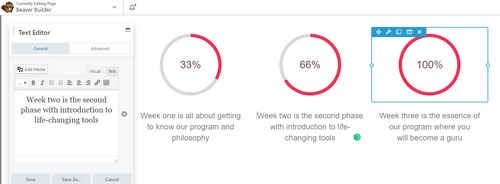
Of all the WordPress experiences I’ve tried, GoDaddy’s seems to be the closest to hitting the mark for making it easy to customize a site. This is thanks to an integration with Beaver Builder, a drag-and-drop plugin for WordPress. GoDaddy asks for your site category and contact details, layers in its Primer theme, and then lets users customize their site using Beaver Builder. Here’s an example of a site built on GoDaddy and Beaver Builder.
It’s still too difficult for someone who isn’t experienced with the WordPress admin, but at least it doesn’t require a developer to create the site.
Automattic’s WordPress.com is another viable alternative. The sign up process asks how skilled the creator is and customizes the experience accordingly.
The holy grail is to allow people to create a site on a sort of WordPress-lite. Something that doesn’t look like WordPress…something like the site builders. Then, when people are ready for the added flexibility that WordPress brings, they can unlock it be converting to the full version of WordPress.