
Mastering Domain Sales: My First Lead Through DNS & GoDaddy Integration Unveiled
The landscape of domain name investing and sales is continuously evolving, with innovation driving new opportunities for sellers to connect with potential buyers. One such significant advancement has been the integration between leading domain marketplaces and registrars, designed to streamline the sales process and expand reach. This article delves into a personal experience of receiving the first lead generated through the powerful synergy of DomainNameSales.com (DNS) and GoDaddy, offering insights into its mechanics, its initial impact, and crucial considerations for optimizing lead quality.
The Evolving Landscape of Domain Lead Generation
In the highly competitive world of domain name sales, visibility is paramount. A valuable domain, no matter how premium, remains unsold if potential buyers are unaware of its availability. This fundamental truth underscores the importance of robust lead generation strategies. Traditionally, sellers relied on direct outreach, niche marketplaces, or “for sale” landing pages. However, the modern era demands broader distribution and seamless integration with platforms where buyers are already actively searching and transacting. The goal is simple: maximize exposure to qualified buyers with minimal effort, thereby accelerating sales cycles and improving return on investment.
Unpacking DomainNameSales.com’s Syndication Powerhouse
Earlier this month, a pivotal announcement shook the domain industry: DomainNameSales.com (DNS) introduced a groundbreaking feature allowing its users to syndicate their domain listings to major platforms like GoDaddy.com and DomainTools. This development marked a significant leap forward in how domain portfolios could be marketed, promising unprecedented access to a vast pool of potential buyers. DNS, known for its robust brokerage tools and comprehensive sales platform, empowered sellers to extend their reach far beyond its immediate ecosystem. By opting into this syndication program, domain investors could now tap into the massive user bases of GoDaddy, the world’s largest domain registrar, and DomainTools, a leading resource for domain intelligence. This strategy is designed to put domains in front of a significantly larger audience, increasing the likelihood of attracting genuine interest and generating sales inquiries. The premise is compelling: if buyers are searching for domains on GoDaddy, why not have your listings readily available there?
My Initial Experience: A GoDaddy Lead Arrives
The anticipation following the activation of this syndication feature was palpable. Like many domain investors eager to leverage new channels, I opted in, hopeful for an uptick in inquiries. It wasn’t long before the first tangible result materialized: a lead originating directly from the GoDaddy integration. This moment underscored the immediate effectiveness of the syndication, transforming a theoretical capability into a practical reality. The lead appeared in my DNS account, visually represented as follows:
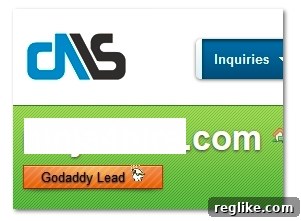
This image captures the essence of a successful integration, showing a direct pipeline for buyer inquiries from GoDaddy into the seller’s DNS dashboard. While exciting, this initial contact also brought to light certain nuances and potential challenges associated with the integration’s design, which warrant careful consideration for any domain seller.
The GoDaddy Integration Mechanism and Its Nuances
Understanding the precise mechanism behind the GoDaddy integration is crucial for sellers to manage expectations and refine their sales strategies. Here’s how it works from the buyer’s perspective: when a GoDaddy customer expresses interest in a syndicated domain, they typically fill out a simple inquiry form. This form, rather than prompting a direct offer or requesting a minimum bid, serves primarily as a means to connect the interested party with the seller via DNS. This approach, while facilitating initial contact, presents a significant “catch.” Buyers are not required to commit to a specific offer amount, nor are they informed about any minimum sale prices that the seller might have set for a particular domain. This lack of upfront qualification at the point of inquiry opens up the possibility of receiving a substantial number of leads from individuals who may not be serious buyers, or who have significantly different expectations regarding the domain’s value.
This structure contrasts with traditional domain marketplaces or brokerage platforms where buyers are often prompted to make a concrete offer or are shown a “buy now” price. While the ease of inquiry on GoDaddy can generate a high volume of leads, it simultaneously introduces a potential bottleneck in the sales funnel, requiring sellers to invest more time in pre-qualifying these initial contacts. The goal, then, shifts from merely generating leads to effectively filtering and nurturing them towards a successful transaction.
Navigating the Challenge of Unqualified Leads
The influx of leads generated through the GoDaddy integration, while a testament to its reach, inevitably brings forth the challenge of managing unqualified inquiries. In domain sales, a “qualified lead” is generally someone who has a genuine interest in the domain, understands its market value, has the financial capacity to purchase it, and is serious about making a realistic offer. Conversely, an “unqualified lead” might be someone merely exploring options, unaware of domain pricing norms, or simply curious without a real intention to buy. The absence of mandatory offers or minimum price disclosures on the GoDaddy inquiry form exacerbates this issue, leading to a higher proportion of leads that might not translate into profitable sales.
This situation can be particularly frustrating and time-consuming for domain sellers. Each inquiry, regardless of its quality, requires attention, research, and a response. Spending valuable time engaging with prospects who are not prepared to meet reasonable pricing expectations can divert resources away from genuinely interested buyers. Therefore, developing a robust strategy to efficiently screen and qualify these leads becomes paramount for any domain investor leveraging this integration. The core problem lies in the disconnect between buyer intent (often casual inquiry) and seller expectations (seeking serious offers).
Strategies for Optimizing Lead Conversion and Buyer Qualification
To effectively harness the power of the DNS-GoDaddy integration while mitigating the challenges of unqualified leads, domain sellers must adopt proactive and strategic approaches. The objective is to transform initial interest into concrete offers by efficiently qualifying prospects and guiding them towards a fair transaction.
Proactive Communication: Setting Minimums Upfront (or Early)
One of the most effective strategies to address the issue of unqualified leads is to introduce a qualification step early in the communication process. As suggested by the original article, it can be incredibly helpful for DNS brokers, or sellers themselves, to perform an initial screen. This involves promptly informing the prospect of a minimum offer amount for the particular domain they’re interested in. Instead of entering into a protracted negotiation from a vague inquiry, a simple, polite email stating, “Thank you for your interest in [Domain Name]. We are entertaining offers starting from [Minimum Offer Amount]” can immediately filter out those who are not prepared to meet the domain’s value. This sets clear expectations from the outset, saving both parties valuable time. Transparency regarding minimums helps to weed out tire-kickers and focuses efforts on serious buyers.
Enhancing Seller Due Diligence
Beyond initial price communication, sellers should also conduct their own due diligence on leads. While GoDaddy provides basic contact information, a quick search on the inquiring party or their associated company (if provided) can offer insights into their legitimacy and potential interest. Crafting targeted follow-up questions can further help qualify a lead. For instance, inquiring about their intended use for the domain, their timeline, or their budget range can provide valuable context beyond just a direct offer. This personalized approach not only helps in qualification but also builds a rapport with serious prospects, increasing the likelihood of a successful negotiation.
Refining Listing Strategies for Clarity
While the GoDaddy inquiry form itself might lack explicit pricing fields, sellers can indirectly influence lead quality by optimizing their domain listings on DNS. Clear, concise, and compelling descriptions that highlight the domain’s value proposition, potential use cases, and market relevance can attract more informed buyers. Although direct pricing might not be visible on GoDaddy’s initial interface for syndicated listings, having a well-articulated value statement on the DNS listing page (where buyers might navigate after an initial inquiry) can reinforce the domain’s worth. Even consider adding a note in your DNS listing description that states “Offers considered above X minimum,” though this might not always translate directly to the GoDaddy interface, it can be a reference point for you or your broker when communicating.
Beyond GoDaddy: Maximizing All Syndication Channels
While the focus here has been on GoDaddy, it’s essential to remember that DNS also offers syndication to other valuable platforms like DomainTools. Each channel brings its unique audience and buyer profile. DomainTools, for example, often attracts more technically savvy users, domain professionals, and businesses conducting research. Leveraging all available syndication channels is crucial for a holistic domain sales strategy. Diversifying your distribution ensures your domains are exposed to the widest possible audience, increasing the chances of finding the right buyer. By understanding the nuances of each platform, sellers can tailor their approach, perhaps even refining their communication strategies based on where the lead originated. A truly optimized strategy embraces multi-channel distribution and adapts to the characteristics of each source.
The Future of Domain Lead Generation and Best Practices
The DNS-GoDaddy integration represents a significant step forward in simplifying and expanding domain lead generation. As the domain industry continues to mature, we can anticipate further innovations in how buyers and sellers connect. Future enhancements might include more sophisticated filtering mechanisms, AI-driven lead scoring, or even an option for sellers to display minimum offer requirements directly on syndicated listings. For now, the best practice for domain investors lies in a combination of embracing these powerful tools and adopting disciplined, proactive communication strategies. Continuously refining your approach, learning from each interaction, and adapting to platform changes will be key to long-term success. The core principles of transparency, efficiency, and buyer qualification remain timeless, regardless of technological advancements.
Conclusion: Embracing Innovation While Refining Process
Receiving the first lead from the DNS-GoDaddy integration is an exciting milestone, affirming the power of syndication to amplify domain visibility. While the current mechanism presents challenges in lead qualification, these are surmountable with strategic communication and proactive engagement. By informing prospects of minimum offer amounts early on and refining follow-up processes, domain sellers can efficiently convert interest into sales. This integration is a valuable asset, and by adapting our methods, we can fully capitalize on its potential to drive successful domain transactions.