
Domain Industry Heavyweights Intensify Government Lobbying in 2010
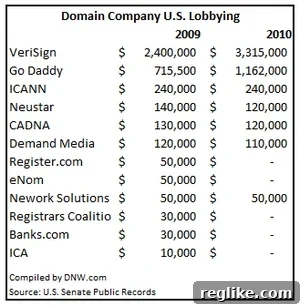
The year 2010 marked a pivotal moment in the intersection of technology and public policy, as two of the most influential entities in the domain name industry – VeriSign and Go Daddy – substantially escalated their spending on U.S. government lobbying. This significant increase in advocacy, meticulously documented through public records filed with the U.S. Senate under the Lobbying Disclosure Act, underscored the growing importance of government relations in shaping the future of the internet and its underlying infrastructure. As the digital landscape continued its rapid expansion, companies at its core recognized the undeniable necessity of engaging actively with policymakers to influence regulations and policies that directly impacted their operations and the broader online ecosystem.
The domain name system (DNS) serves as the internet’s critical addressing mechanism, translating user-friendly website names into numerical IP addresses that computers understand. Companies like VeriSign, a registry operator managing top-level domains such as .com and .net, and Go Daddy, a leading domain name registrar, operate within a complex global framework of technical standards, legal precedents, and regulatory oversight. Their increased lobbying efforts in 2010 highlighted a strategic shift towards more proactive involvement in legislative discussions, aiming to navigate and influence the evolving landscape of internet governance, intellectual property rights, consumer protection, and cybersecurity.
VeriSign: Reinforcing its Role as Internet Infrastructure Guardian
VeriSign, a cornerstone of the internet’s infrastructure due to its operation of the highly critical .com and .net top-level domains, demonstrated a substantial increase in its government lobbying activities during 2010. The company’s investment reached an impressive $3.315 million, a significant rise from the $2.4 million spent in the previous year, 2009. This consistent upward trajectory in lobbying expenditure reflects VeriSign’s strategic imperative to protect its foundational role in the internet’s addressing system and to influence policies pertinent to its long-term registry agreements and operational stability.
For an entity responsible for maintaining such vital internet infrastructure, engaging effectively with governmental bodies, including the National Telecommunications and Information Administration (NTIA) and various congressional committees, is paramount. VeriSign’s lobbying efforts likely focused on safeguarding its exclusive contracts for .com and .net, shaping cybersecurity policies affecting critical infrastructure providers, and fostering a stable and predictable regulatory environment for the global DNS. Their advocacy also extended to promoting technical standards and security protocols crucial for the internet’s continued reliability, resilience, and trustworthiness, demonstrating a commitment that transcended mere commercial interests to encompass broader internet stability.
Go Daddy: Advocating for Consumer Protection and Online Integrity
In parallel with VeriSign’s efforts, Go Daddy Group, the parent company of the globally recognized domain name registrar GoDaddy.com, also dramatically increased its lobbying budget in 2010. The company allocated $1.162 million towards its government advocacy, marking a substantial leap from the $715,500 spent in 2009. Go Daddy’s lobbying agenda, distinct from VeriSign’s infrastructure-centric focus, was largely driven by issues directly impacting its extensive customer base and the challenges encountered by everyday internet users and businesses.
Go Daddy actively engaged with legislators on several critical fronts, including combating online piracy, addressing user privacy concerns, and perhaps most notably, taking a strong stance against rogue internet pharmacies. These illicit online operations pose severe public health risks by distributing counterfeit or unapproved medications, often without legitimate prescriptions. As a leading domain registrar, Go Daddy found itself in a unique position to combat this problem by controlling the domain names used by these harmful entities. The company’s proactive approach led to the suspension of an astonishing 150,000 domains directly linked to rogue online pharmacies in 2010 alone. Their lobbying efforts were aimed at fostering stronger legislative support for robust enforcement mechanisms, improving legal frameworks, and promoting cross-industry cooperation to eradicate these dangerous practices, thereby protecting consumers and enhancing the internet’s overall integrity.
Furthermore, Go Daddy’s advocacy on issues such as online piracy and user privacy highlighted the evolving responsibilities of internet intermediaries in the digital age. Registrars often find themselves balancing the demands of intellectual property rights holders and law enforcement agencies with the privacy expectations of their users. Lobbying related to piracy likely involved contributing to discussions on content enforcement, takedown procedures, and the responsibilities of internet service providers and registrars under frameworks like the Digital Millennium Copyright Act (DMCA). On the privacy front, their efforts were undoubtedly geared towards striking a balance between user anonymity and legitimate data requests, ensuring robust data protection measures, and navigating the nascent stages of global privacy regulations that would become increasingly complex and influential in subsequent years.
Broader Industry Context and Diverse Advocacy Interests
While VeriSign and Go Daddy demonstrated significant increases in their lobbying expenditures, the broader trend among most other domain name-related companies during the same period was more conservative. Data indicated that the majority of these entities either maintained consistent lobbying budgets or, in some cases, even reduced their spending. This suggests that while the importance of government relations was acknowledged across the industry, the scale and intensity of advocacy varied considerably, largely dependent on a company’s market position, strategic priorities, and specific regulatory challenges.
Intriguingly, lobbying efforts concerning domain names were not exclusively confined to the domain industry itself. The 2010 lobbying landscape also featured advocacy from non-domain companies and organizations driven by broader societal or ideological interests. A notable example was the Christian Coalition of America, which actively lobbied the federal government in an attempt to prevent the launch of the .xxx top-level domain. This controversy vividly illustrated the cultural, moral, and political dimensions that often intersect with technical internet governance decisions. The proposed .xxx domain, intended for adult entertainment content, ignited considerable debate among various interest groups, ranging from staunch free speech advocates to those deeply concerned about online obscenity and child protection.
In response to this opposition, ICM Registry, the company spearheading the creation and operation of the .xxx domain, recognized the critical need for direct government engagement. ICM Registry officially registered to commence its own lobbying efforts in 2011, a strategic move to counter the organized opposition and advocate for the legitimate launch and successful operation of their new top-level domain. This dynamic interplay between advocacy groups for and against specific domain policies underscores the multi-faceted nature of internet governance and the crucial role that lobbying plays in shaping its future trajectory.
The Enduring Impact of Lobbying on Digital Governance
The intensified lobbying activity in 2010 by prominent players like VeriSign and Go Daddy was far from an isolated event; rather, it was a clear harbinger of a burgeoning trend. As the internet became inextricably woven into global economies, societies, and daily lives, the policies governing its infrastructure, content, and user data ascended to unprecedented levels of importance. The millions invested in lobbying by these leading companies represent a strategic commitment to influencing the legislative and regulatory environment in which they operate, ensuring their interests are robustly represented in discussions that hold profound and far-reaching implications for the entire digital ecosystem.
This period of heightened lobbying solidified the understanding that internet governance is no longer merely a technical exercise overseen by engineers and administrators. Instead, it has evolved into a complex political and economic arena where diverse stakeholders, including powerful corporations, advocacy groups, and governmental entities, actively compete to influence outcomes. The wide array of issues tackled – from infrastructure stability, cybersecurity, and consumer protection to intellectual property rights and data privacy – directly impacts how the internet functions, who controls its various aspects, and how users globally experience its vast potential. The proactive engagement of industry titans like VeriSign and Go Daddy in the corridors of power underscored the undeniable reality that the future trajectory of the internet would, to a significant extent, continue to be sculpted through ongoing dialogue, advocacy, and strategic influence in Washington D.C. and beyond.