Is Verisign regarding to change the expired domain drop catching game?
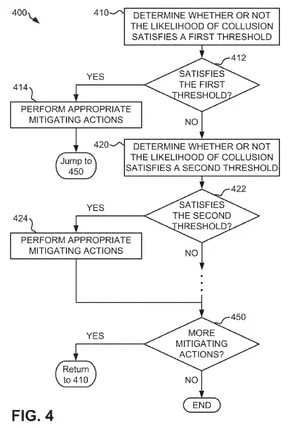
Patent application shows that Verisign might be shaking up the current system.
Lots of well-timed firepower.
That’s how the expired domain name drop catching system works in .com today. Drop catchers target domain names the second they drop, and try to coordinate amongst their hundreds of owned-and-operated registrars as well as partners to register as many of the desirable domain names as possible.
But is .com registry Verisign getting ready to change how this works?
The explosion in the number of fresh registrars created solely for grabbing dropping domains was precipitated, at least in part, by some rate limiting actions by Verisign. Now there are signs that it will make further changes.
First, ICANN predicts that a number of these registrars will be shut down over the next year.
Then there’s this: a detailed plan by Verisign for how to determine which registrars are working together for drop catching and to “mitigate” their efforts.
The U.S. Patent and Trademark Office published a patent application from Verisign today for “Detecting and Mitigating Registrar Collusion in Drop-Add Acquisitions of Domain Names” (pdf). The application was filed on December 31, 2015.
It describes ways to figure out which registrars are working together to grab domains on behalf of clients. While most of the patent application discusses how to figure out this collusion, there’s also talk of how to mitigate it:
Examples of mitigating actions include logging the potential drop-add collusion between the pair of DNS registrars, notifying the registry or a user thereof of the potential drop-add collusion between the pair of DNS registrars, sending a request to the registry to throttle or block current and/or future domain name buyout requests from one or both of the pair of DNS registrars, and the like.
Does the current drop-catching system tax Verisign’s resources too much? Or is there something else going on?