
The Future is Vocal: Verisign Patents Voice-Activated Domain Management
Imagine a world where registering a domain name is as simple as uttering a command to your smart speaker. No more fumbling with keyboards, navigating complex interfaces, or typing out lengthy domain suggestions. This futuristic vision is rapidly approaching reality, thanks to a significant development in the world of digital innovation. The U.S. Patent and Trademark Office has recently granted a pivotal patent to Verisign, paving the way for intuitive, voice-controlled interaction with essential domain services, including registration, WHOIS lookups, and more.
Verisign’s Groundbreaking Patent: A New Era for Domain Services
The patent, officially numbered 11,451,511 (available as a PDF), has been awarded to Verisign, a global leader in domain name infrastructure and internet security. Titled “Audio-based systems, devices, and methods for domain services,” this patent outlines a comprehensive framework for utilizing voice commands to interact with various aspects of domain name management. This is not just about a single function; it’s about building an entirely new paradigm for how individuals and businesses acquire and manage their digital identities.
For decades, interacting with domain registrars has primarily been a visual and tactile experience, relying on websites, forms, and email confirmations. Verisign’s patent signals a profound shift, acknowledging the growing dominance of voice technology in daily life. From setting alarms to playing music, smart speakers and virtual assistants have become ubiquitous. This patent extends their capabilities into the critical realm of domain name system (DNS) operations, promising unprecedented levels of convenience and accessibility.
Seamless Integration with Smart Devices: How It Will Work
At the core of Verisign’s patented system is the integration with popular voice-based communication devices. As the patent itself highlights:
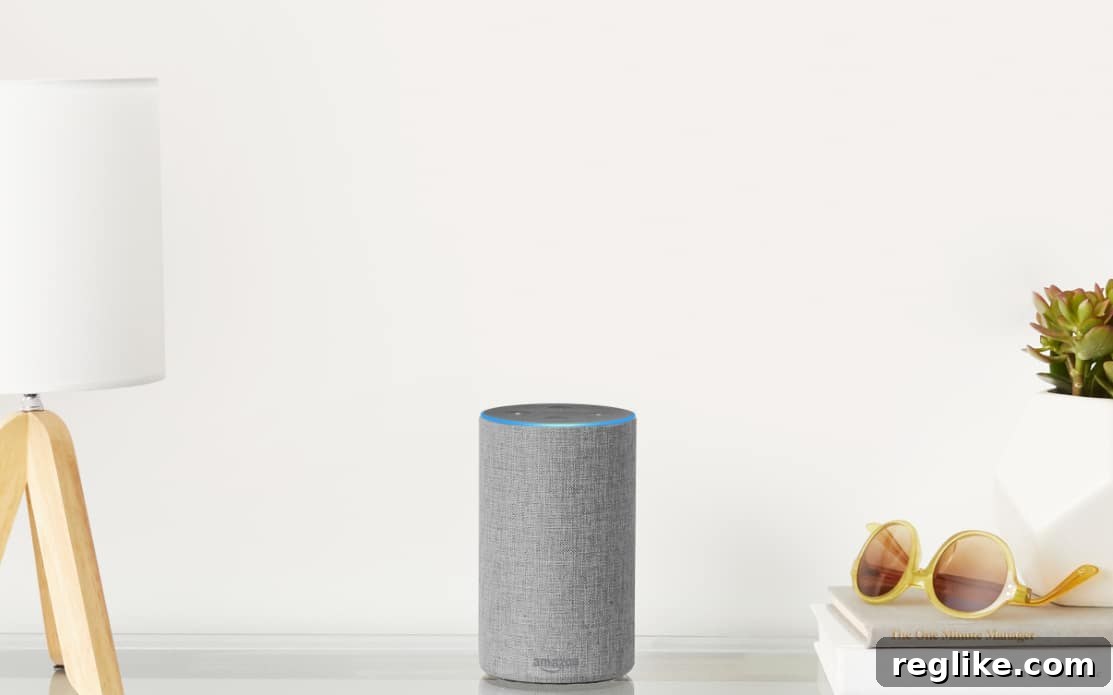
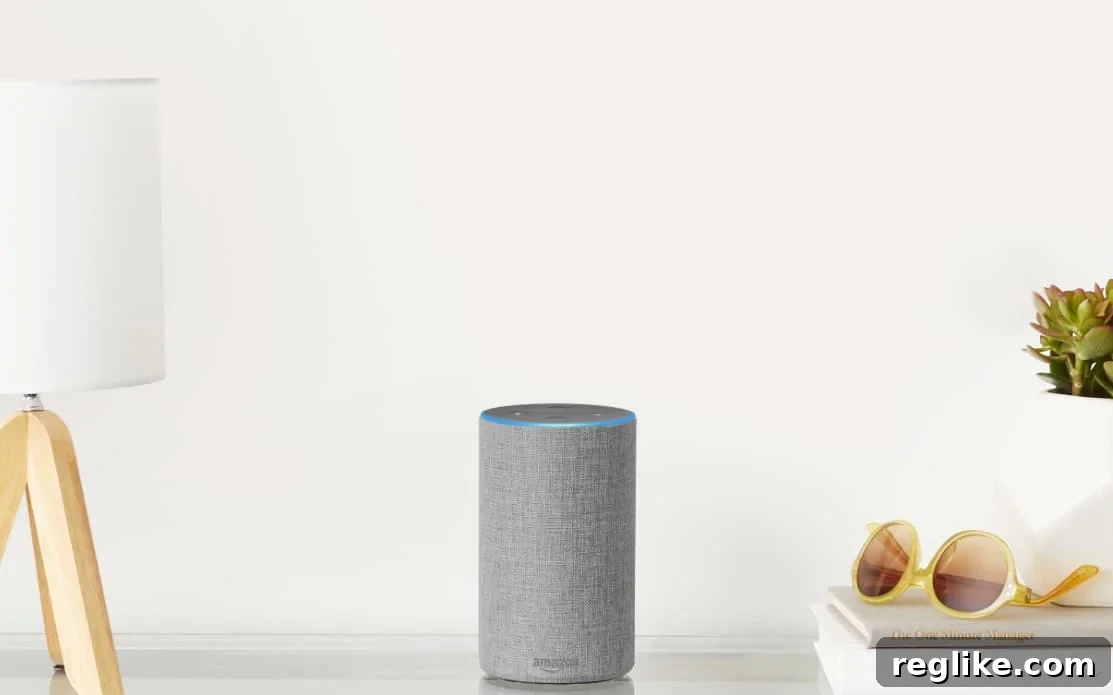
Technology has been rapidly evolving in the area of voice-based communication and interaction with smart devices. This opens up doors for new ways to access, store, and retrieve information. Illustrative voice-based communication devices may include Amazon’s Alexa (Echo/Echo Dot) and Google Home. Having the capability of interacting with these voice-based communication devices opens new avenues for providing domain name services. Domain name services may be or include providing domain name suggestions, WHOIS data, Registration Data Access Protocol (RDAP), and the like.
This excerpt clearly indicates that users will soon be able to leverage their existing Amazon Echo or Google Home devices – and potentially other smart assistants – to perform complex domain-related tasks. Imagine simply saying, “Alexa, check if ‘MyNewBusinessIdea.com’ is available,” and receiving an instant verbal response. Or perhaps, “Google, register ‘EcoFriendlyGadgets.net’ for me,” followed by a quick, secure authentication process, all hands-free.
The simplicity promised by this technology is a game-changer, especially for entrepreneurs, small business owners, and creative individuals who often brainstorm ideas on the fly. The ability to instantly secure a domain name the moment inspiration strikes, without needing to reach for a phone or computer, removes a significant barrier to immediate action and innovation.
Beyond Registration: A Suite of Voice-Powered Domain Services
While domain registration is a primary focus, the patent’s scope extends much further. It envisions a comprehensive suite of voice-activated domain services, including:
- Domain Name Suggestions: No longer will users be limited to manual searches. A smart assistant could proactively suggest available domain names based on keywords or even interpret context from a conversation. Imagine brainstorming a new project aloud, and your device pipes up with a relevant, available domain suggestion.
- WHOIS Data Lookups: For those needing to quickly identify the registrant of a domain, a simple voice command could retrieve the publicly available WHOIS information. “Alexa, what’s the WHOIS information for ‘example.com’?” could provide instant details, invaluable for researchers, legal teams, or simply curious users.
- Registration Data Access Protocol (RDAP): As the successor to WHOIS, RDAP offers a more structured and secure way to access registration data. Integrating this into voice commands ensures that users have access to the most current and robust data retrieval methods available, all with verbal ease.
- Domain Availability Checks: This foundational service becomes effortless. Instant verification of a domain’s status will prevent frustration and streamline the initial idea-to-implementation phase.
- Renewal Reminders and Management: While not explicitly detailed in the excerpt, the logical extension of “domain services” would include managing existing domains. Voice reminders for renewals (“Your domain ‘example.org’ expires in 30 days. Would you like to renew it?”) and even voice-initiated renewal processes could drastically reduce missed renewals and associated business risks.
- Basic DNS Management: In the future, one could envision simple DNS tasks, like pointing a domain to a web host or changing mail server settings, being initiated through voice, though with careful security protocols.
This expansion of capabilities transforms smart speakers from mere information providers into active tools for managing critical digital assets, underscoring Verisign’s commitment to advancing internet infrastructure.
The Convenience Factor: Why Voice Matters in Domain Management
The real power of this patent lies in its potential to dramatically enhance user convenience. The scenario described in the original content perfectly illustrates this: being able to register a domain name during a late-night brainstorming session with friends, without breaking the flow to grab a device. This hands-free, immediate access offers several key advantages:
- Speed and Efficiency: Voice commands are often faster than typing, especially for those who are not proficient typists or are multitasking.
- Accessibility: This technology could significantly benefit individuals with disabilities, providing a more accessible pathway to participate in the digital economy.
- Capturing Fleeting Ideas: Inspiration doesn’t wait. The ability to instantly act on a domain idea ensures that valuable concepts aren’t lost due to the friction of traditional registration processes.
- Reduced Cognitive Load: By simplifying the interaction, users can focus more on their ideas and less on the mechanics of registration, leading to a more natural and intuitive experience.
The shift to voice also aligns with broader trends in technology, where interfaces are becoming increasingly natural and less intrusive. It’s about bringing the internet’s core services directly into our daily lives in a more integrated and effortless manner.
Technical Considerations and Security Implications
While the convenience is clear, implementing such a system requires robust technological infrastructure and stringent security measures. Key considerations would include:
- Accuracy of Voice Recognition and Natural Language Processing (NLP): The system must accurately interpret complex domain names, often involving unique spellings and new gTLDs.
- Authentication and Security: How will user identity be verified for registration and other sensitive actions? Multi-factor authentication, biometric voice recognition, or secure links to existing accounts (e.g., through Amazon AWS, as hinted in the original text) will be crucial to prevent unauthorized domain activities. “And by the way, did you know I can register this domain for you through Amazon AWS?” suggests a potential integration with existing cloud services for identity verification and billing.
- Privacy: Handling personal data, especially for WHOIS/RDAP queries, requires adherence to strict privacy regulations and user consent.
- Scalability: The system must handle a high volume of concurrent voice requests efficiently.
Verisign, as a guardian of critical internet infrastructure, undoubtedly has the expertise to address these challenges, leveraging advanced AI, encryption, and secure protocols to ensure the integrity and safety of voice-activated domain services.
Verisign’s Strategic Vision and The Road Ahead
Verisign’s application for this patent dates back to 2017, a testament to their foresight in recognizing the burgeoning potential of voice technology. The recent grant underscores the innovative nature and strategic importance of this development. It positions Verisign not just as a registry operator for .com and .net, but as an innovator shaping the future of how users interact with the internet’s foundational elements.
This patent doesn’t just enable new services; it potentially opens up new business models and partnerships. Collaborations with smart device manufacturers, cloud service providers, and domain registrars could create a powerful ecosystem around voice-activated domain management. For existing registrars, this could mean integrating Verisign’s patented methods into their own voice-enabled offerings, enhancing their services and reaching users through new channels.
The path from patent grant to widespread implementation involves significant development, testing, and regulatory navigation. However, the foundational intellectual property is now firmly established, setting the stage for a transformative change in the domain industry.
Conclusion: A New Chapter in Domain Management
Verisign’s patent for audio-based domain services marks a pivotal moment in the evolution of internet interaction. By integrating domain registration, WHOIS lookups, and other critical functions with ubiquitous smart devices, this innovation promises unparalleled convenience, accessibility, and efficiency. It’s a clear signal that the future of managing our digital identities will increasingly be hands-free and voice-driven. As voice technology continues to mature, we can anticipate a seamless and intuitive experience that brings the power of domain management directly into our daily conversations, truly ushering in a new era for how we connect with the internet.