
Verisign’s .COM Monopoly: A Deep Dive into Profitability and Antitrust Scrutiny
In the vast, interconnected world of the internet, few entities command as much power and profitability as Verisign. This corporation stands as the exclusive registry operator for the critically important .COM and .NET top-level domains. Its unparalleled position, largely secured through a longstanding, no-bid contract, has enabled Verisign to cultivate one of the most consistently lucrative large businesses on the planet. This comprehensive analysis will explore the historical trajectory that led Verisign to this enviable market dominance, the core economic principles fueling its immense profitability, and the increasing discussions among antitrust advocates about its future.
The Genesis of a Digital Empire: How Verisign Captured the .COM Market
Verisign’s journey to becoming a cornerstone of the internet’s infrastructure is a fascinating tale rooted in the early days of digital expansion. Initially, the management of domain names was a function of the U.S. government. As the internet grew exponentially in the 1990s, the need for a privatized, efficient, and scalable system for managing domain registrations became apparent. This shift paved the way for the creation of ICANN (Internet Corporation for Assigned Names and Numbers), a non-profit organization responsible for coordinating the maintenance and procedures of several databases related to the namespaces and numerical spaces of the Internet, ensuring the network’s stable and secure operation.
Verisign’s pivotal moment arrived through a series of strategic maneuvers and contractual agreements with ICANN. Most notably, they secured the exclusive contract to manage the .COM domain, the most popular and commercially vital top-level domain. This agreement, often renewed without competitive bidding, effectively granted Verisign a near-monopoly over the digital real estate most coveted by businesses and individuals worldwide. Each new .COM registration and every subsequent renewal generates a fee for Verisign, establishing a continuous and highly predictable revenue stream that dwarfs that of many other digital enterprises.
The “Printing Press” Effect: Understanding Verisign’s Economic Model
The metaphor of a “.COM printing press” aptly describes Verisign’s operational efficiency and profitability. Unlike businesses burdened with high manufacturing costs, complex supply chains, or extensive marketing expenditures for each unit sold, Verisign’s core business involves maintaining a vast, yet relatively low-cost, database. This database, which maps domain names to IP addresses, is the very backbone of internet navigation. Once the infrastructure is in place, the cost to add another .COM domain is minuscule.
This business model translates into exceptionally high-profit margins. With billions of .COM domains actively registered, and new ones being added daily, Verisign benefits from an immense volume of recurring revenue. The essential nature of the .COM domain—it’s the default, trusted, and most recognized TLD—ensures sustained demand, regardless of broader economic fluctuations. Businesses, large and small, instinctively seek a .COM address to establish their credibility and reach, further entrenching Verisign’s market position and cementing its status as an internet infrastructure giant with a near-limitless capacity for income generation.
Antitrust in Focus: Is Verisign’s Monopoly Sustainable?
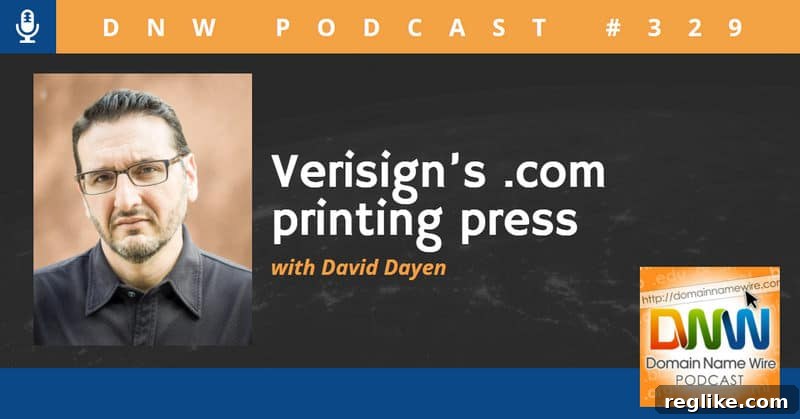
In an era characterized by increasing scrutiny of concentrated corporate power, Verisign’s unique position in the digital economy is drawing attention from antitrust advocates and policymakers. David Dayen, the Executive Editor of The American Prospect and the acclaimed author of Monopolized: Life in the Age of Corporate Power, offers a particularly incisive perspective on this issue. Dayen’s extensive research and commentary illuminate how dominant corporations across various sectors wield disproportionate influence, often at the expense of competition and consumer welfare.
David Dayen’s Analysis: The Arguments for Re-evaluating Verisign’s Contract
Dayen’s work provides a compelling framework for understanding why Verisign’s .COM contract warrants serious antitrust consideration. He argues that companies controlling essential services with limited competition pose significant risks to market fairness and innovation. While Verisign consistently emphasizes its role in maintaining the security, stability, and resilience of the DNS, critics raise valid concerns about the implications of a non-competitive market for such a critical asset. Key aspects of the antitrust argument include:
- Absence of Market Competition: For businesses and individuals seeking a .COM domain, there is no alternative registry operator. They are inherently tied to Verisign’s pricing structure, which is set in agreements with ICANN rather than through competitive market forces. This absence of choice means consumers and businesses indirectly pay fees that aren’t subject to the pressures of a free market.
- Pricing Power and Cost Impact: Without competitive bidding for the .COM contract, Verisign possesses substantial pricing power. While price increases are subject to ICANN’s approval and specific contractual terms, the lack of an open market mechanism means that cost reductions driven by competition are largely absent. This directly impacts millions of businesses, from startups to global corporations, who rely on affordable domain names as a fundamental operating cost.
- Critical Infrastructure Control: The .COM domain is not merely a website address; it is a foundational piece of internet infrastructure. When such a vital component is exclusively managed by a single, highly profitable entity, questions arise about potential abuses of power, impact on digital accessibility, and the long-term health of the global digital economy.
The discussions surrounding Verisign’s future delve into potential remedies, ranging from stricter regulatory oversight and more aggressive price caps to the possibility of opening the .COM contract to competitive bidding. Such actions could fundamentally reshape the economics of the domain industry and have far-reaching implications for how the internet’s core infrastructure is managed. The outcomes of these debates will be crucial in determining the balance between maintaining internet stability and fostering a competitive digital marketplace.
Beyond the Monopoly: Key Trends in the Domain Industry
While the future of Verisign’s .COM monopoly is a significant topic, the broader domain industry continues to be a vibrant and evolving space. This particular episode also highlighted other important developments and concepts that are shaping the digital landscape.
The Enduring Importance of Domain Quality
In today’s crowded online environment, the concept of “domain quality” has become more critical than ever. A high-quality domain name is not just an address; it’s a strategic asset that can significantly impact a brand’s online presence, memorability, and marketing effectiveness. Factors contributing to domain quality are multifaceted:
- Brandability and Memorability: A truly high-quality domain is easy to recall, spell, and pronounce. It should be brandable, allowing for strong brand association and market recall.
- Conciseness: Shorter domains are generally more valuable as they are easier to type, remember, and less prone to typos.
- Keyword Relevance: Domains that incorporate relevant keywords can offer an advantage in search engine optimization (SEO), helping businesses rank higher for specific terms.
- TLD Choice: While .COM remains the gold standard, strategic use of other TLDs (e.g., .IO for tech, .AI for artificial intelligence) can also denote quality within specific niches.
- Age and History: Older domains with a clean history and established backlink profiles can carry significant authority and trust, which is valuable for SEO and credibility.
Investing in a premium, high-quality domain name is often one of the first and most impactful decisions a business makes, laying a strong foundation for its digital identity and future growth. It’s a testament to the enduring value of digital real estate in our increasingly online world.
Escrow.com’s Record Year: A Sign of Market Health
Another noteworthy development in the domain aftermarket is the remarkable performance reported by Escrow.com. As a leading provider of secure online escrow services, Escrow.com acts as a trusted third party, safeguarding funds and assets during high-value transactions, particularly for domain names, websites, and other digital properties. Their announcement of a record-breaking year serves as a powerful indicator of the current health and vitality of the domain investing and digital asset market.
A record year for Escrow.com suggests several positive underlying trends:
- Growing Investor Confidence: It signals increased trust and investment in domain names as a legitimate and valuable asset class.
- Surge in Premium Domain Demand: Businesses are increasingly willing to invest substantial capital in acquiring premium, brand-defining domains to strengthen their online presence and competitive edge.
- Expansion of Digital M&A: The volume and value of online mergers and acquisitions, which often involve significant digital assets, are on the rise.
- Professionalization of Trading: It highlights the ongoing professionalization of the domain trading ecosystem, where secure, neutral third-party services are indispensable for large financial transactions.
This success story underscores the dynamic nature of digital asset ownership and the maturity of the marketplaces facilitating these significant transactions.
Sponsor Spotlight: DAN.com
This insightful exploration into the world of domain names, from Verisign’s dominance to market trends, is proudly supported by DAN.com. As a premier platform for buying and selling domain names, DAN.com empowers individuals and businesses to effortlessly discover, acquire, and manage their ideal digital identities. Whether you’re searching for a captivating premium domain or looking to sell an existing one, DAN.com offers a streamlined and efficient marketplace designed to connect buyers and sellers with unparalleled ease and security.
Listen to the Full Discussion
For a complete and engaging discussion on Verisign’s unparalleled market position, the potential future of antitrust enforcement in the digital realm, and further insights into the dynamic domain industry, we highly recommend listening to the full podcast episode. David Dayen’s expertise and critical perspective provide invaluable context to these vital conversations about corporate power and the future of internet governance.
Podcast: Play in new window | Download (Duration: 28:30 — 22.8MB)
Subscribe: Email | RSS
You can also subscribe via Apple Podcasts to listen to the Domain Name Wire podcast on your iPhone or iPad. For a comprehensive archive, explore previous episodes here.