
Unraveling the Mystery: Strange Healthcare Domain Name Registrations
In the expansive and often enigmatic digital landscape, domain names serve as critical points of identity, information, and influence. They are more than just web addresses; they are strategic assets, reflections of trends, and sometimes, harbingers of future developments. A recent dive into newly registered domains revealed a captivating series of registrations that strongly align with the discourse surrounding the healthcare sector, particularly resonating with themes of significant national healthcare legislation like the Affordable Care Act, more commonly known as Obamacare. These domain acquisitions present a compelling case study into the intricate intersection of digital strategy, political foresight, market speculation, and the ongoing evolution of online presence in vital public service areas.
A Closer Look at the “HealthCure” Domain Portfolio
The domains that surfaced during this review possess a striking thematic consistency, suggesting a deliberate and coordinated approach to their registration. These include:
HealthCure-Enroll.comHealthCure-Gov.comHealthCureEnrollment.comHealthCureGov.com
The immediate impression these names convey is a clear and direct association with government-led healthcare initiatives and patient enrollment processes. The strategic inclusion of terms like “Enroll” and “Gov” is a direct echo of official governmental online platforms. For example, the principal online portal for enrollment in the Affordable Care Act in the United States is widely recognized as HealthCare.gov. The subtle yet crucial alteration from “HealthCare” to “HealthCure” introduces a layer of intrigue, prompting various interpretations regarding the registrants’ intentions and the potential future utilization of these digital properties.
The term “Health Cure” itself carries a powerfully positive and proactive connotation. It implies a definitive resolution, an improvement, or a successful treatment within the realm of health. This deliberate linguistic choice could very well be a sophisticated branding tactic for prospective new legislation designed either to supersede or substantially amend the existing Affordable Care Act. Within a political environment frequently characterized by the renaming of policies and the introduction of fresh legislative blueprints, a name like “Health Cure” could be strategically positioned as a more optimistic, solution-oriented, or broadly appealing alternative to terms such as “Obamacare” or even the “Affordable Care Act,” both of which have become deeply entrenched in partisan debates. Any such rebranding effort would necessitate a robust and recognizable digital footprint, rendering these domain registrations particularly significant and forward-thinking.
Deciphering the Ownership: Exploring Potential Scenarios Behind the Registrations
Understanding the identity of a domain registrant is often key to unlocking the true purpose and long-term vision behind a domain name. However, in this specific instance, the available registrant information obfuscates more than it clarifies, fostering extensive speculation from various angles. Examining the diverse types of entities that might register such politically and economically sensitive domains helps illuminate the intricate ecosystem of the internet and its intersection with public policy.
1. Government Agencies or Official Entities?
A natural initial hypothesis might be that these domains were proactively secured by a government agency or an official political organization involved in healthcare policy. Such pre-emptive registrations are standard practice for official bodies aiming to protect their brand, secure variations of their primary domains, or reserve names for future initiatives. Yet, official government domain registrations typically adhere to stringent transparency guidelines, often featuring clear WHOIS information that explicitly identifies the registering entity as a specific government department or agency. The seemingly opaque nature of the current registrant details for these “HealthCure” domains strongly suggests that this is unlikely to be the case. Official governmental websites, such as the aforementioned HealthCare.gov, are typically registered under specific governmental organizations with verifiable contact and ownership information.
2. Political Organizations, Advocacy Groups, or Major Media Outlets
Another highly plausible scenario involves political organizations, various advocacy groups, or prominent news outlets. The initial observation briefly touched upon the possibility of Fox News, noting their typical domain registration practices through corporate entities like “Fox News Network, LLC c/o Twentieth Century Fox.” The rationale for media companies acquiring such domains could be to strategically capture internet traffic from their specific audience demographics, particularly those who are deeply engaged in political discussions surrounding healthcare reform. If a major news organization possessed insider knowledge of an impending legislative proposal potentially branded as “Health Cure,” securing these domains would represent a highly astute move to dominate search engine results and steer online conversations. Beyond traditional news organizations, political action committees (PACs), influential think tanks, or powerful lobbying groups might also register such domains to either champion or criticize potential new legislation, leveraging them as platforms for disseminating information, conducting public outreach, or even facilitating fundraising activities directly related to ongoing healthcare policy debates.
The strategic acquisition of domain names that resonate deeply with prevailing political themes is a well-established and effective tactic. By gaining control over domains that could become central to a national dialogue, these entities are empowered to shape public narratives, influence opinion, and ensure their perspectives achieve prominent visibility within the digital sphere. Capturing a significant volume of traffic related to “Health Cure” could mean attracting millions of individuals actively seeking information about proposed healthcare changes, thereby making these domains extraordinarily valuable tools for guiding public sentiment, driving subscriptions, or mobilizing support for specific political agendas.
3. Domain Investors and Strategic Speculators
The global domain investing market is a vibrant and highly active arena, with individuals and companies consistently scouting for potentially valuable domain names that promise significant appreciation in worth. The fact that HealthCure.com itself is registered by Gregg Ostrick and prominently listed for sale on Afternic for approximately $25,000 provides compelling evidence for the theory that these related “HealthCure” domains could also be integral components of a broader, sophisticated speculative investment strategy. Astute domain investors often register variations of potentially high-value terms, anticipating future demand driven by legislative changes, new product launches, or evolving market trends. Should “Health Cure” indeed become the widely adopted moniker for a future national healthcare initiative, the market value of these carefully selected domains would undoubtedly experience a dramatic surge overnight.
This sophisticated strategy necessitates a keen ability to identify nascent trends, understand the intricate lifecycle of political discourse, and pinpoint keywords that are poised to gain widespread prominence. Registering domains such as HealthCure-Enroll.com or HealthCureGov.com represents a calculated speculative gamble on future legislative developments, strategically positioning the owner to either sell them at a substantial premium to an interested party (be it a government entity, a political campaign, or a major media organization) or to develop them independently into authoritative, revenue-generating information portals. The asking price for HealthCure.com serves as a tangible indicator of the perceived market value of such a generic, yet exceptionally relevant, keyword within the high-stakes healthcare sector.
4. Malicious Actors: Phishing and Disinformation Campaigns
While not immediately suggested by the original context, it is imperative to seriously consider the potential for malicious intent. Lookalike domains are frequently registered by cybercriminals who aim to execute sophisticated phishing schemes, designed to deceive unsuspecting internet users into divulging sensitive personal information or clicking on harmful links. A domain name such as HealthCureEnrollment.com could be meticulously crafted to create a convincing, yet fraudulent, replica of an official government enrollment site, thereby leading to devastating consequences such as identity theft or financial fraud. Similarly, such domains could be exploited to widely disseminate misinformation or propaganda, particularly within highly charged political environments where public trust is an invaluable commodity. This potential threat underscores the critical importance of public awareness campaigns and the establishment of clear, authoritative official communication channels to effectively guide citizens toward legitimate and trustworthy sources of information.
The Persistent Mystery of the Registrant Information
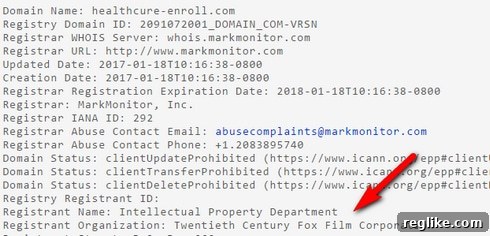
The original observation astutely highlighted that the registrant information for these particular domains “makes little sense.” This pervasive lack of clear, readily identifiable ownership is a common characteristic across many domain registrations, but it assumes heightened significance when the domain names themselves carry such profound public policy implications. When official government entities or reputable organizations register domains, transparency is typically a paramount concern. Conversely, when private individuals or entities operating with opaque organizational structures do so, it inevitably invites rigorous scrutiny and fuels widespread speculation.
WHOIS records, despite sometimes being partially shielded by privacy protection services, are fundamentally designed to provide a baseline level of transparency regarding domain ownership. Ambiguous or seemingly unrelated registrant details can signify several underlying factors: a deliberate attempt to obscure the true identity of the owner, the legitimate use of a privacy service (which, while permissible, can significantly impede investigative efforts), or simply an individual investor operating under their personal name without any overt organizational affiliation. Regardless of the specific rationale, the pervasive opacity surrounding these “HealthCure” domains injects an additional layer of intrigue and mandates careful, ongoing monitoring, especially given their considerable potential to influence public perception or serve as a critical platform for information dissemination within a vital sector.
The Intrinsic Value of a Premium Healthcare Domain: HealthCure.com
The undeniable fact that HealthCure.com is openly advertised for sale at a price point of $25,000 offers a concrete and compelling illustration of the significant perceived value inherent in these domains. Premium domains, particularly those that are concise, highly memorable, and directly relevant to a major, high-impact industry such as healthcare, consistently command substantial prices within the bustling secondary market. A domain name like “HealthCure” possesses a unique confluence of characteristics that make it exceptionally desirable:
- Exceptional Brandability: It is effortlessly easy to remember, pronounce, and communicate, rendering it an ideal candidate for branding a new legislative initiative, a groundbreaking company, or an innovative service.
- Robust Keyword Richness: It judiciously incorporates highly relevant keywords (“Health,” “Cure”) that are directly pertinent to the expansive healthcare sector, thereby offering significant advantages in terms of search engine visibility and organic traffic generation.
- Broad and Versatile Appeal: It is sufficiently generic in its terminology to be flexibly applied across a diverse spectrum of healthcare facets, ranging from policy reform and legislative frameworks to groundbreaking products, essential services, or public health campaigns.
The asking price for this domain reflects not only the intrinsic linguistic value of the name itself but also the astute anticipation of a future high-profile buyer – potentially a government agency, a major pharmaceutical corporation, a prominent insurance provider, or a high-stakes political campaign – who would be prepared to invest a significant premium to secure such a powerful and strategically pivotal digital asset for their overarching objectives.
Profound Implications for SEO and Establishing Digital Trust
The meticulous selection and subsequent registration of domain names carry profound and far-reaching implications for both Search Engine Optimization (SEO) and, perhaps even more critically, the establishment of digital trust among users. For any entity operating online, particularly within a sensitive and public-facing sector like healthcare, the ability to establish unwavering authority and credibility is absolutely paramount. Domains such as HealthCure-Enroll.com, by virtue of their compelling resemblance to legitimate official government websites, possess the inherent potential to attract a substantial volume of organic traffic from individuals actively searching for vital healthcare enrollment information. However, without official governmental endorsement or transparent affiliation, such domains run a considerable risk of being perceived as untrustworthy, or, even more perilously, as conduits for misinformation, fraudulent schemes, or phishing attacks.
From a purely SEO perspective, owning a keyword-rich and highly relevant domain can certainly offer an initial, formidable advantage in search engine rankings. Nevertheless, modern search engines like Google are increasingly prioritizing a complex array of factors, including overall site authority, the demonstrable quality and originality of content, and a superior user experience. Therefore, simply possessing an excellent domain name is no longer sufficient; its subsequent development, ongoing maintenance, and content strategy must rigorously adhere to the highest standards of best practices for legitimate, authoritative, and user-centric online content. For governmental bodies and healthcare organizations, crafting and implementing a clear, authoritative, and easily identifiable domain strategy is absolutely essential to preempt widespread public confusion, mitigate potential risks, and ultimately safeguard citizens from potential online harm.
Conclusion: A Glimpse into the Digital Frontier of Healthcare Policy
The fascinating discovery of these “HealthCure” domain registrations offers a compelling and insightful microcosm of the broader digital landscape, a dynamic arena where intricate policy debates, commercial imperatives, and speculative ventures seamlessly converge. Irrespective of whether these domains represent the astute strategic acquisitions of influential political players, the shrewd and calculated investments of discerning domain speculators, or potentially something more clandestine and concerning, their very existence vividly underscores the critical and ever-growing importance of domain names in shaping public perception and steering online discourse, particularly concerning vital public services such as healthcare.
As novel legislative initiatives continue to emerge and political dialogues perpetually evolve, the relentless battle for prime digital real estate — especially for compelling and highly relevant domain names — will undoubtedly persist as a significant and fiercely contested front in the ongoing narrative of public policy, digital engagement, and economic opportunity. Continuously monitoring these and analogous domain registrations provides invaluable insights into potential future trends, forthcoming legislative proposals, and the perpetually evolving strategies employed by a diverse array of entities to firmly establish their presence and exert their influence within the vast and interconnected digital realm. It serves as a stark and timely reminder that in the pervasive internet age, a domain name transcends being merely an address; it is a profound statement, a sophisticated strategy, and an incredibly powerful tool in the hands of its discerning owner.