
The .EU Domain: A Tale of Growth and Unanswered Questions
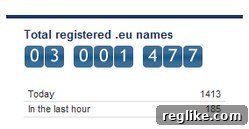
The digital landscape is in a constant state of flux, with domain names serving as the fundamental addresses for online identities. Among these, the .EU domain was introduced to carve out a distinct online space for businesses and individuals throughout the European Union. Recently, EURid, the official registry responsible for .EU domain names, proudly announced a significant milestone: the total number of .EU registrations has now surpassed the 3 million mark. This achievement naturally sparks considerable interest and immediately brings forth a crucial question: while the registration numbers are steadily climbing, is the .EU domain truly being utilized to its full potential by genuine end-users, or are these numbers primarily driven by other factors?
Understanding the Momentum: EURid’s Milestone and Leading Nations in .EU Adoption
Reaching an impressive 3 million registered .EU domain names is, without a doubt, a strong indicator of the domain’s growing footprint within the global internet infrastructure. Statistical data released by EURid highlights a consistent and healthy registration pace, with approximately 50,000 to 60,000 new .EU domains being added to the registry every single month. This sustained growth suggests a continuous interest in the extension, at least during the initial acquisition phase. When we delve deeper into the geographical breakdown of these registrations, it becomes evident that certain European Union member states are significantly more active in embracing the .EU extension. Germany and the Netherlands, in particular, stand out prominently, leading other European countries by a considerable margin in their volume of .EU domain registrations.
This discernible regional disparity in adoption rates can be attributed to a confluence of factors. Nations with robust digital economies, higher rates of internet penetration, and proactive marketing campaigns by local domain registrars might naturally exhibit higher registration figures. Furthermore, a greater intrinsic awareness or appreciation for the .EU brand within these leading countries could contribute to their dominance. For businesses that operate, or aspire to operate, across multiple borders within the European Union, a .EU domain can be a powerful symbol. It communicates a clear commitment to the European market, potentially fostering greater trust and relevance among a diverse, pan-European audience. However, it is crucial to remember that the sheer volume of domain registrations does not automatically equate to a proportionate number of active, developed websites truly serving end-users with dynamic content and services.
The Core Debate: Bridging the Gap Between Domain Investors and End-Users
Despite the positive headline numbers regarding registrations, a more critical and nuanced perspective emerges when one attempts to assess the actual *usage* and utility of these domains. The foundational vision for the .EU domain, upon its introduction in 2005, was to establish a cohesive and recognizable online identity for European citizens, businesses, and organizations. The goal was to foster a sense of digital unity across the continent. Yet, a frequently voiced observation, echoed by many within the domain industry, is that a substantial proportion of the most desirable, premium .EU domain names were rapidly acquired by domain investors. These investors, often referred to as “domainers,” operate with the strategic intent of acquiring potentially valuable domain names purely for the purpose of reselling them later at a profit. Their focus is on identifying generic, keyword-rich, or highly brandable names, essentially treating domains as valuable pieces of digital real estate, rather than immediately developing them into websites.
While domain investing is a legitimate and established component of the broader domain ecosystem, this practice can inadvertently create significant hurdles for genuine end-users – individuals, startups, or established businesses whose primary goal is to build and operate functional websites. When highly sought-after .EU domains, such as “travel.eu” or “fashion.eu,” are already held in investor portfolios, aspiring developers or entrepreneurs face a challenging situation. They are often left with two main options: either compromise by settling for less ideal, longer, or less memorable domain names, or engage in negotiations to purchase the desired name from an investor on the secondary market. The latter typically involves paying a price point that far exceeds the initial registration fee. This dynamic can inadvertently stifle innovation, increase initial costs for businesses, and ultimately hinder the organic development of valuable online content and services operating under the distinctive .EU extension.
Insights from the Aftermarket: A Glimmer of Hope or a Market Misindicator?
The domain aftermarket, also known as the secondary market, is often perceived as a critical barometer for assessing the intrinsic value, desirability, and real demand for specific domain extensions. It is the marketplace where already registered domains are bought and sold after their initial acquisition from a registrar. In the case of the .EU domain, activity on this aftermarket has been characterized as relatively subdued. While there have certainly been a few high-profile sales that garnered significant media attention – notably Hotels.eu fetching an impressive $329,509 and Shopping.eu selling for $196,803 – these appear to be isolated exceptions rather than indicative of a widespread trend. The noticeable scarcity of publicly announced, significant .EU domain transactions suggests a general lack of robust and broad demand from end-users who are willing to invest substantial capital in acquiring premium names.
It is crucial to draw a distinction between aftermarket activity primarily driven by investors and that which signals genuine end-user adoption. In many instances, particularly for newer or more niche Top-Level Domains (TLDs), aftermarket sales predominantly occur between investors. One investor might sell a domain to another, driven by speculative interests in future value appreciation rather than immediate plans for website development. The situation with the .mobi domain, for example, demonstrated a similar pattern where a significant majority of aftermarket purchases were executed by other investors, as opposed to entities intending to build mobile-specific websites. If the .EU domain were truly gaining widespread traction and being actively embraced by European internet users and businesses, one would reasonably expect to observe a much more vibrant aftermarket. Such a market would be characterized by a steady flow of end-users actively seeking and acquiring premium .EU names specifically for immediate development and deployment.
The limited visibility of transactions and the relatively quiet nature of the aftermarket for .EU domains could signify a couple of key points: either the perceived value for actively developed websites under the .EU extension is not yet high enough to justify significant investment from end-users on the secondary market, or the truly valuable, generic names are simply not entering the market at accessible prices, remaining instead locked within investor portfolios for speculative long-term holding.
The Original Vision vs. Current Reality for the .EU Domain
The launch of the .EU domain in 2005 was met with considerable anticipation, heralded as a pivotal step towards forging a cohesive digital identity for the entire European Union. Its primary and ambitious objective was to provide a clear, instantly recognizable online presence for businesses, organizations, and individual citizens who operate within or strongly identify with the EU. It aimed to cultivate a profound sense of unity and offer a credible, attractive alternative to the established national country code Top-Level Domains (ccTLDs) such as .de for Germany or .fr for France, as well as the globally dominant generic TLDs like .com.
In an ideal scenario, a truly flourishing .EU ecosystem would be characterized by a rich and diverse array of active websites. One would expect to see numerous e-commerce platforms strategically targeting the entire EU single market, pan-European non-profit organizations, dedicated EU-focused news portals, and personal blogs authentically reflecting a European identity and perspective. While some examples of these types of websites undoubtedly exist, the prevailing sentiment within the industry suggests that the initial promise of widespread end-user adoption and enthusiastic active development under the .EU banner has not yet been fully realized. The observable dominance of investor registrations, particularly for premium names, has arguably diluted the pool of readily available, attractive domain names for those who genuinely wish to build and contribute meaningfully to the European digital space.
Challenges and Untapped Opportunities for the .EU Domain in the Digital Age
Key Challenges:
- Intense Competition from National ccTLDs: Established national ccTLDs such as .de, .nl, .fr, and .it often possess stronger local recognition, cultural resonance, and inherent trust within their respective countries. This makes them the default and preferred choice for many businesses primarily targeting a domestic audience.
- Enduring Dominance of .COM: The global behemoth, .com, continues to be the de facto choice for countless businesses and individuals aiming for broad international reach and universal recognition. Its ubiquitous presence frequently overshadows regional or specialized TLDs like .EU.
- Investor-Driven Hoarding: As previously discussed, the early and extensive registration of premium, generic names by investors can severely limit the available options and significantly increase acquisition costs for genuine end-developers and businesses looking to establish an online presence.
- Ambiguity in Perceived Value: For some prospective registrants, the distinct value proposition of a .EU domain, beyond merely signifying “European,” might not be sufficiently clear or compelling to justify choosing it over more conventional or localized alternatives.
Untapped Opportunities:
- Strong Pan-European Identity: For businesses that authentically operate across multiple EU member states, a .EU domain offers a unique and unified brand identity. It clearly signals their European focus, their commitment to the EU market, and their adherence to EU regulations (e.g., GDPR), fostering trust among a diverse consumer base.
- Enhanced Trust and Credibility: The .EU domain is officially managed by EURid under the oversight of the European Commission. This institutional backing lends it a significant degree of official credibility and authority, which can resonate positively with European consumers and businesses.
- Availability of Quality Names (Still): While many generic terms may be taken, a strategic and creative approach to branding and leveraging niche keywords can still yield excellent, available .EU domains, particularly for innovative new ventures or specialized services.
- Future Growth Potential: As the process of European integration deepens and initiatives aimed at strengthening the digital single market continue to advance, the overall relevance, utility, and perceived value of a unified European online identity could increase exponentially.
- Effective Targeted Marketing: A .EU domain can serve as a highly effective tool for companies specifically targeting the vast and affluent European consumer base. It helps to clearly segment their online presence, allowing for more focused marketing efforts and tailored content delivery relevant to the European audience.
Fostering a More Vibrant and Actively Developed .EU Ecosystem
For the .EU domain to truly flourish and realize its full potential, moving beyond mere registration statistics, a concerted and collaborative effort is essential to actively encourage genuine end-user adoption and robust website development. This necessitates a multi-faceted strategic approach:
Firstly, EURid, in close collaboration with its network of accredited registrars, could significantly intensify its awareness and promotional campaigns. These campaigns should meticulously highlight the specific, unique benefits that a .EU domain offers to European businesses and citizens. The messaging should powerfully articulate its distinct value proposition: a unified European digital identity, enhanced trust, and compelling relevance for seamless cross-border operations within the EU.
Secondly, the development and deployment of innovative tools and comprehensive resources could significantly assist prospective registrants in efficiently discovering high-quality, available .EU names. This could even include facilitating access to names currently held by investors but genuinely listed for sale on the secondary market. By making the secondary market more transparent, navigable, and accessible, the entire domain acquisition process for end-users could be considerably streamlined, thereby stimulating more active development.
Finally, cultivating a strong and engaged community around the .EU domain itself is crucial. This could involve prominently showcasing successful and impactful .EU websites, celebrating stories of European innovation built upon this digital foundation, and actively promoting the myriad ways in which a .EU presence can empower businesses and individuals. Such initiatives can serve to inspire and motivate a greater number of developers and enterprises to actively embrace and invest in the .EU domain for their online ventures.
Share Your Experience: A Call for the European Perspective
The ongoing discussion surrounding the .EU domain often relies heavily on generalized statistics, broad market observations, and industry expert opinions. However, the most authentic and invaluable insights often originate directly from those who live, work, and interact with these domains on a daily basis within Europe. Therefore, if you reside in Europe – whether you are a savvy business owner, an innovative web developer, a digital marketer, or simply a regular internet user – your direct experiences with .EU domains are absolutely vital for gaining a comprehensive understanding of its real-world impact and utility.
Have you personally registered a .EU domain? If so, what were your specific motivations behind choosing it, and how are you currently utilizing it? Have you encountered any particular challenges or frustrations when attempting to find suitable .EU names for your personal or professional projects? Do you perceive websites operating under the .EU extension differently from those using national ccTLDs or the globally prevalent .com extension? Your firsthand accounts, personal anecdotes, and unique perspectives can provide indispensable context to the broader and increasingly important debate about whether the .EU domain is genuinely gaining widespread adoption and integration among European internet users, or if it predominantly remains a strategic playing field for domain investors.
Conclusion: The Paradox of .EU Growth and Its Future Potential
The ongoing journey of the .EU domain presents a fascinating and somewhat perplexing paradox within the digital landscape. On one hand, it proudly boasts impressive and consistently sustained registration growth, having successfully crossed the significant 3 million milestone. This achievement unequivocally indicates a clear and undeniable demand for the domain at some level. However, on the other hand, a critical and deeper assessment reveals lingering questions and considerable uncertainty regarding the true extent of genuine end-user adoption and active website development. The pervasive perception that a substantial number of highly desirable and premium names are currently held by investors, combined with a relatively quiet and less dynamic aftermarket, strongly suggests that the full potential of the .EU domain as a vibrant, unified, and truly active online identity for Europe may still be largely untapped.
Ultimately, the true and enduring success of the .EU domain will not solely be measured by the sheer number of names registered within its registry. Instead, its triumph will be profoundly gauged by the richness, diversity, and innovation of the content, services, and digital experiences it actively hosts, all for the ultimate benefit and empowerment of European citizens, businesses, and organizations alike. The challenge and opportunity for EURid and the wider European digital community lies in transforming registration numbers into tangible, impactful online presences that truly embody the spirit of a connected Europe.