
The unseen hand behind your website, the top-level domain (TLD) operator, possesses an astonishing degree of power. This entity, which manages the very suffix of your web address, holds the keys to your digital presence, capable of influencing, or even outright controlling, who can access your content. It’s a sobering reality: in the digital realm, your TLD operator can, in essence, “play God” with your domain name.
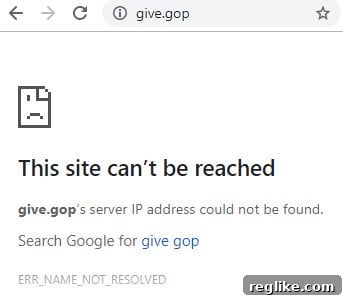
This immense authority means that whoever controls a top-level domain ultimately holds sway over all its registered domain names and, by extension, the registrants who own them. This power dynamic was starkly illuminated in a recent controversy involving the .GOP domain, offering a crucial lesson for anyone operating a website under a specialized or politically-affiliated TLD. Understanding the scope of this power is fundamental for securing one’s online identity and ensuring uninterrupted digital presence.
The .GOP registry, specifically operated by the Republican State Leadership Committee (RSLC), made a significant move that sent ripples through the digital landscape. It compelled the owner of Give.GOP to take down their website, citing concerns that the site was detracting attention from a rival platform endorsed by Donald Trump. This dramatic action, as reported by Politico, underscores the potential for TLD operators to exert control far beyond mere technical administration, venturing into content and political alignment. It highlights a critical vulnerability for domain owners: the discretion of the registry operator.
On paper, the .GOP’s acceptable use policy (AUP) champions an admirable philosophy: “The Registry supports the sharing of diverse ideas over the Internet and intends for the online community to fully reflect the varying viewpoints and debates taking place in our community.” Such a statement suggests an open and inclusive digital space, fostering robust debate. However, the forced shutdown of Give.GOP presented a stark contrast to this stated ideal, raising critical questions about how these policies are interpreted and enforced when they collide with the operator’s own interests or political agenda. This disparity between stated policy and actual enforcement reveals a potential for subjective decision-making that can impact any domain holder.
From an outsider’s perspective, it’s challenging to discern any clear violation of the stated use policy by Give.GOP that would warrant such a severe action. Yet, like many acceptable use policies across various digital services, the .GOP’s policy likely contains clauses that grant the registry operator broad discretionary power to act as it sees fit. This often includes vague language that allows for subjective interpretation, effectively empowering the operator to take actions like domain suspension or redirection, even to the extent of diverting traffic from Give.GOP to another domain if they so wished. This scenario highlights the inherent risk when a TLD operator also holds a vested interest in the content or political leanings of its registered domains, essentially allowing them to act as judge and jury.
The implications of this incident extend beyond the immediate dispute. It serves as a powerful reminder for all domain owners to critically evaluate their chosen top-level domain and the entity behind it. In hindsight, Give.GOP might have significantly mitigated its risk by opting for a more universally recognized and neutrally operated TLD, such as a .com domain. Alternatively, a TLD like .Republican, which is managed by a more neutral and established registry operator like Donuts, could have offered a greater degree of insulation from such politically motivated interventions. The choice of TLD is not merely a branding decision; it’s a strategic move with profound implications for the stability, autonomy, and long-term viability of your online presence.
The incident with Give.GOP is a potent illustration of the extensive control that top-level domain (TLD) operators can wield over domain names within their jurisdiction. These operators, often referred to as registries, are not just passive administrators; they are the gatekeepers responsible for managing the database of domain names under a specific TLD. Their powers are far-reaching, encompassing everything from setting registration rules and pricing to, critically, defining and enforcing acceptable use policies (AUPs). When a TLD is operated by a specific organization with an ideological or political mission, such as the Republican State Leadership Committee for .GOP, the potential for conflicts of interest and biased enforcement becomes significantly heightened, posing a serious threat to digital freedom and independent expression.
A domain name is much more than just an address; it’s often the foundational cornerstone of an individual’s or organization’s digital identity, branding, and outreach strategy. Losing access to it, or having its content dictated or manipulated by a third party, can be catastrophic, leading to immediate loss of audience, revenue, and reputation. The RSLC’s reported decision to force Give.GOP offline, not due to a technical violation or illegal activity, but because it was perceived as a political competitor, sets a troubling precedent. It suggests that specialized TLDs, particularly those aligned with specific political entities, may not always function as neutral arbiters of online content. Instead, they can become active instruments for controlling narratives, promoting specific agendas, and potentially stifling dissenting or competing voices within their designated digital sphere, fundamentally altering the landscape of online discourse.
Understanding Acceptable Use Policies (AUPs) is paramount for any domain registrant. While AUPs are undeniably essential for maintaining the integrity, security, and safety of the internet – preventing spam, illegal content, and abusive behavior – their language can often be deliberately broad, vague, or ambiguous. This ambiguity grants the TLD operator immense latitude in their interpretations and actions. The inclusion of clauses such as “the registry can do whatever it wants” or similar phrasing, which are common in many AUPs, effectively bypasses traditional due process and places the registrant at the mercy of the operator’s subjective interpretation. This interpretation, as demonstrated by the Give.GOP case, can be unduly swayed by commercial, political, or even personal biases. For Give.GOP, this meant that despite their likely adherence to general ethical guidelines, their site was vulnerable to a shutdown based on subjective concerns about political competition rather than objective, clear-cut policy violations.
The technical architecture of the internet inherently grants registries significant power. They manage the authoritative DNS (Domain Name System) records for all domains under their TLD. This means they possess the technical capability to, at any time, modify a domain’s DNS entries, which could result in redirecting a domain to a different IP address, effectively taking a site completely offline, or even pointing it to an entirely new, potentially malicious or competing, destination. While this power is undeniably necessary for essential system maintenance, security protocols, and managing domain lifecycles, its potential for abuse is clear and alarming. Imagine the far-reaching implications if a TLD operator decided to covertly divert traffic from a legitimate fundraising site to a rival, or from an independent news site to a propaganda outlet. The Give.GOP case hints at the blurring lines between legitimate administrative action and unwarranted content control, especially within politically charged TLDs where oversight might be less robust.
The contrast between general-purpose TLDs (like .com, .org, or .net) and sponsored or highly specific TLDs (like .GOP, .NYC, .museum) becomes critically important when assessing domain risk. General-purpose TLDs are typically managed by large, often publicly traded companies or non-profit organizations that strive for broad neutrality, even if commercial interests still play a role. Their AUPs tend to focus on universal issues like spam, malware, or illegal content, which are generally non-contentious. Specialized TLDs, however, often have specific missions, communities, or even explicit political affiliations. While this can foster unique and tightly-knit online communities, it also means registrants must be acutely aware of the operator’s mission, its potential for intervention, and any ideological alignment requirements. The advice for Give.GOP to have chosen .com was sound because .com is operated by Verisign, a largely neutral party primarily focused on technical reliability and global interoperability, not political content or competition.
Similarly, the suggestion of .Republican, operated by Donuts, highlights the critical importance of the operator’s reputation for neutrality and impartiality. Donuts is a major registry for many new gTLDs (generic Top-Level Domains), managing a vast portfolio. While they certainly have their own AUPs to ensure a healthy ecosystem, their business model relies on attracting and retaining a diverse range of registrants across hundreds of different TLDs. Their fundamental incentive is generally to maintain a neutral, stable, and predictable environment for all their domains, rather than to engage in content censorship or political maneuvering that could alienate their customer base. This fundamental difference in operational philosophy and business incentives can offer a vital layer of protection for domain owners seeking to avoid the kind of arbitrary interference experienced by Give.GOP.
Furthermore, the mention of GiveGOP.com forwarding to Give.GOP, coupled with blocked Whois records, adds another layer of complexity to the narrative. Whois records, which publicly provide information about a domain’s registrant, are crucial for transparency, accountability, and resolving disputes. While privacy protection is a legitimate and often necessary concern, especially for individuals operating websites, the blocking of Whois records can also inadvertently obscure ownership and make it significantly harder to identify parties in disputes, assess connections between related domains, or understand the full landscape of domain ownership and control. In a highly sensitive situation like Give.GOP’s, understanding who owns related domains and their potential connections can be absolutely critical for deciphering motivations and power dynamics, making transparency a double-edged sword.
For domain owners and prospective registrants, several key takeaways emerge with striking clarity from the Give.GOP incident. Firstly, always conduct thorough due diligence on the TLD operator. Understand their mission, meticulously review their acceptable use policies, and research their track record for fairness and neutrality. If the TLD is explicitly tied to a specific political, commercial, or ideological entity, be prepared for potential alignment requirements, closer scrutiny, or even interventions that might compromise your autonomy. Secondly, consider the strategic value of diversifying your digital presence. While a branded or niche TLD can be appealing for specific targeting, ensuring you have a fallback or primary presence on a more neutral and universally trusted TLD (like .com) can provide crucial resilience against unexpected disruptions, offering a safety net for your online identity.
Finally, the incident profoundly underscores the ongoing and evolving debate about freedom of expression and centralized control in the digital age. As more specialized TLDs emerge, each often with its unique governance structure, specific rules, and potentially biased oversight, the potential for localized “censorship” or content manipulation within these digital neighborhoods grows exponentially. It emphasizes that while the internet often feels boundless and free, specific corners of it are indeed under the strict and often discretionary stewardship of operators who possess significant, and sometimes unchecked, authority. Choosing your digital address wisely, and understanding the intricate rules of its particular neighborhood, has never been more vital for safeguarding your voice and ensuring your content reaches its intended audience without interference.