
Exploring Global Domain Investing: Insights from Pakistan with AbdulBasit Makrani
In an increasingly interconnected yet remarkably diverse digital world, understanding the nuances of domain investing across different regions is paramount. It’s a common pitfall for those of us operating in highly developed markets, particularly in Western countries like the United States, to mistakenly assume that our specific market conditions, trends, and challenges are mirrored globally. However, the reality of the global domain name market is far more intricate and fascinating. There’s immense value in actively seeking and absorbing insights from individuals who navigate the unique landscapes of domain investing in various geographical and economic contexts.
This article marks the debut of an insightful new editorial series designed to bridge this knowledge gap. Through a collection of concise yet profoundly informative written interviews, DNW will embark on a journey around the world, profiling accomplished domain investors who offer a fresh perspective on their local markets. Our featured interviewees are not necessarily full-time domainers, but they are individuals who have consistently achieved a notable level of success and demonstrated deep expertise in acquiring, developing, and divesting digital assets. We are always eager to broaden our reach and invite our readers to recommend exceptional domain investors from any country to be featured in upcoming installments. Please send your valuable suggestions to andrew (at) domain name wire.com.
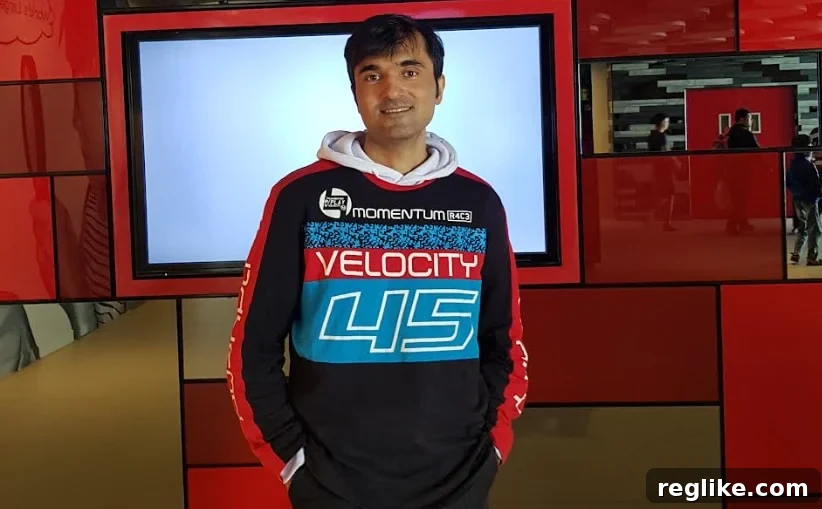
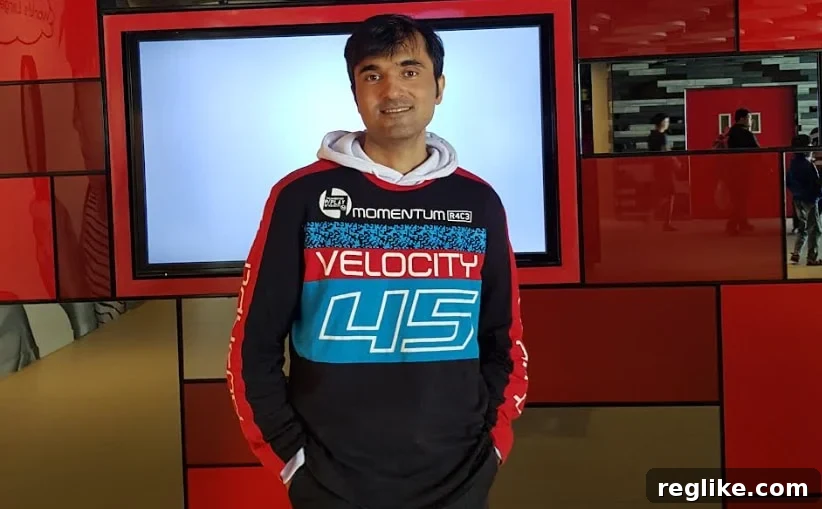
We are delighted to launch this series with an exclusive interview featuring AbdulBasit Makrani, a highly respected and experienced domain investor hailing from Pakistan. AbdulBasit is no stranger to the DNW audience, having previously shared his invaluable knowledge on DNW Podcast #370 in January 2022. Beyond his podcast contributions, AbdulBasit is a prolific blogger, meticulously documenting his extensive domain investing experiences, strategic insights, and market observations on his personal platform, AbdulBasit.com, which serves as a rich resource for the domain community.
AbdulBasit Makrani’s Journey into Domain Investing
DNW: Can you recount the origins of your involvement in domain investing? What prompted your initial foray into this field, and when did you decide to dedicate yourself to it fully?
Makrani: My introduction to the world of domain names was quite early, dating back to late 2004. It wasn’t entirely a personal venture at the outset; rather, it was my father who actively encouraged and guided me into exploring domain names as a potential business avenue. This pivotal encouragement led me to acquire my very first domain, Traders.CC, which I am pleased to say remains a part of my portfolio to this day. Initially, my primary focus for this acquisition, and indeed for subsequent early purchases, was geared towards development. I envisioned creating online projects and platforms around these names. However, the true turning point arrived in 2010. That year marked my conscious decision to transition into full-time domain investing, shifting my primary professional focus from mere development to the strategic acquisition, management, and monetization of domain assets as a core business.
The Domain Landscape: .COM vs. Local Extensions in Pakistan
DNW: In the vibrant digital landscape of Pakistan, does the .com extension maintain its widely recognized status as the “king,” or have country code top-level domains (ccTLDs) such as .pk and .com.pk carved out a dominant position within the local market?
Makrani: From my perspective and observation, the .com domain extension unequivocally retains its crown as the dominant and most coveted choice in Pakistan, mirroring its global prestige. Its universal recognition, inherent trustworthiness, and the perception of international reach make it the go-to preference for businesses and individuals aspiring for a broader, global online footprint. The .com extension often implies a certain level of professionalism and established presence that resonates strongly with both local and international audiences. However, this dominance does not diminish the significant role played by our local ccTLDs. Alongside .com, extensions like .pk and .com.pk are widely adopted and hold substantial importance, particularly for businesses deeply rooted in the domestic Pakistani market. These local extensions foster a distinct sense of national identity, enhancing local brand recognition and trust among the Pakistani consumer base. While .com continues to be the overall leader in perceived value and widespread use, the country-specific domains are undoubtedly carving out a vital and growing niche, offering relevant and appealing options for localized enterprises and services.
Cultivating the Domain Investing Community in Pakistan
DNW: Can you describe the current state of the domain investing community in Pakistan? Is it a formally structured, bustling network, or does it operate through more informal channels and connections?
Makrani: To speak frankly, Pakistan does not currently possess a formally structured or robustly organized domain investing community in the traditional sense, unlike what might be observed in more mature domain markets globally. We lack large-scale industry associations, regular national conferences, or widely recognized formal networks. The most significant and active collective forum for Pakistani domain investors is an informal WhatsApp group that I initiated back in late 2016. This group has steadily grown over the years, recently reaching a milestone of just over 100 dedicated members. It serves as a vital platform for sharing insights, discussing market trends, and offering mutual support among local domainers. While I have personally made efforts to foster greater community engagement by organizing both a few offline meetups and online webinars, the response, unfortunately, hasn’t always been as overwhelmingly positive or broadly participative as one might hope. It seems that many domain investors within Pakistan tend to prefer operating within their individual comfort zones, often engaging in solitary research and decision-making rather than actively participating in broader collaborative endeavors, which could be attributed to various cultural or business inclinations.
The Profound Impact of Pakistan’s Location on Domain Investing
DNW: How does your specific geographical location, being based in Pakistan, critically influence your approach to domain investing, your daily operations, and your overall strategic decisions? What are the unique advantages and the inherent challenges that come with it?
Makrani: My operational base in Pakistan introduces a multitude of factors that significantly shape my domain investing journey. These are not merely minor inconveniences or slight advantages; they are fundamental elements that profoundly impact daily activities, strategic planning, and overall portfolio growth, presenting a distinct landscape for an investor in an emerging market.
Favorable Tax Policies: A Substantial Competitive Edge
One of the most compelling advantages of investing from Pakistan is the current income tax environment. Unlike many developed nations where profits from domain sales are subjected to considerable capital gains or income taxes, Pakistan currently levies no income tax on such transactions. This fiscal policy provides a profound competitive edge to local domain investors. The ability to retain a significantly larger portion of one’s profits directly translates into greater capital available for reinvestment. This accelerated capital accumulation allows for more aggressive portfolio expansion, enabling investors to acquire a higher volume of valuable domain assets and diversify their holdings more rapidly than counterparts in tax-heavy jurisdictions. This favorable tax treatment can act as a powerful catalyst for growth within the Pakistani domain market.
Internet Infrastructure: A Persistent Operational Hurdle
Conversely, a consistent and significant challenge stems from the frequently inconsistent and often slow internet infrastructure across many parts of Pakistan. While connectivity is improving, issues related to both the stability and speed of internet connections remain prevalent. This poses a particular problem for time-sensitive domain acquisition strategies, especially when participating in highly competitive events like GoDaddy closeouts. In these rapid-fire auctions, securing a valuable domain name often hinges on immediate action and swift execution. A lagging or intermittent internet connection can be the decisive factor between successfully acquiring a lucrative asset and missing out entirely, thereby making it considerably more difficult to consistently capitalize on such fleeting opportunities.
Auction Timings: A Lifestyle & Participation Compromise
The global nature of the domain aftermarket also presents a considerable time zone challenge for investors based in Pakistan. For instance, to effectively participate in and snipe desirable domain names during peak GoDaddy closeout periods, I frequently find myself needing to be awake and fully attentive between the hours of 2 AM and 5 AM Pakistan Standard Time. While a strong work ethic and dedication are crucial for success in any investment field, maintaining such an irregular and nocturnal schedule on a consistent, daily basis is simply unsustainable, particularly when one has demanding professional and personal obligations during conventional daytime hours. This significant timing discrepancy severely limits an investor’s ability to consistently engage with prime global auction windows, forcing difficult trade-offs between essential rest and potential investment opportunities.
Electricity Shortages: Disrupting Workflow and Productivity
Adding another layer of operational complexity are the frequent and often prolonged electricity outages that are a common reality across much of the country. Power cuts can last for several hours each day, a routine occurrence in most regions with only a few exceptions. For a domain investor, whose entire operation—from market research and analysis to active bidding and portfolio management—is fundamentally reliant on a stable power supply and continuous internet access, these intermittent blackouts are profoundly disruptive. They can halt critical activities mid-flow, prevent timely participation in bids, and significantly impede overall productivity, transforming daily workflow into a constant battle against unforeseen interruptions and slowing down the pace of progress.
Cost of Living: Maximizing Reinvestment Potential Despite Obstacles
On a more advantageous note, the comparatively lower cost of living in Pakistan, especially when contrasted with many Western nations, offers a distinct economic benefit. This affordability allows a domain investor to potentially save a greater portion of their earnings and, critically, allocate a larger percentage of that saved capital towards reinvesting in additional domain names. This capacity for higher reinvestment theoretically facilitates quicker and more robust portfolio expansion and diversification of digital assets. However, it’s essential to view this benefit within its broader context; as discussed, the simultaneous and persistent challenges related to internet infrastructure, auction timing, and electricity supply can significantly temper the speed and efficiency with which one can truly leverage this cost-efficiency for consistent, rapid growth in the dynamic world of domain investing.
The Ideal Venue for a Pakistani Domain Conference
DNW: If the exciting opportunity were to arise to host a major domain conference in Pakistan, which city would you deem most suitable for such an event, and what are the key factors influencing your choice?
Makrani: Should the promising prospect of hosting a significant domain conference in Pakistan materialize, I believe two cities stand out as prime candidates, each offering compelling advantages: Islamabad, our esteemed capital city, and Karachi, the nation’s largest and most populated metropolis. Islamabad, by virtue of its status as the federal capital, is a hub that attracts a high concentration of professionals, government entities, and technology-focused organizations. Its planned urban infrastructure and a generally higher level of public awareness regarding technological advancements and digital assets would create an exceptionally conducive environment for a specialized event like a domain conference. Attendees in Islamabad are likely to possess a deeper understanding and appreciation for the strategic importance of domain names within the digital economy. Karachi, conversely, with its colossal population and indisputable status as Pakistan’s commercial and financial heart, offers an unparalleled potential reach to an enormous pool of entrepreneurs, established businesses, and burgeoning tech enthusiasts. The sheer scale and dynamism of Karachi mean a potentially larger and more diverse audience, generating significant buzz and broader participation for a domain conference. Both cities are well-equipped with the necessary infrastructure, including modern venues and logistical capabilities, to host large-scale events. Crucially, in both Islamabad and Karachi, we would anticipate finding a far greater density of tech-savvy individuals and businesses who are not only cognizant of but actively engaged with the fundamental concepts and immense value proposition of domain names, making them ideal locations to ignite and cultivate a more vibrant domain industry presence within Pakistan.
The insightful responses provided by AbdulBasit Makrani have undergone minor editorial adjustments for enhanced clarity and conciseness, while meticulously preserving the core integrity and essence of his original perspectives.