
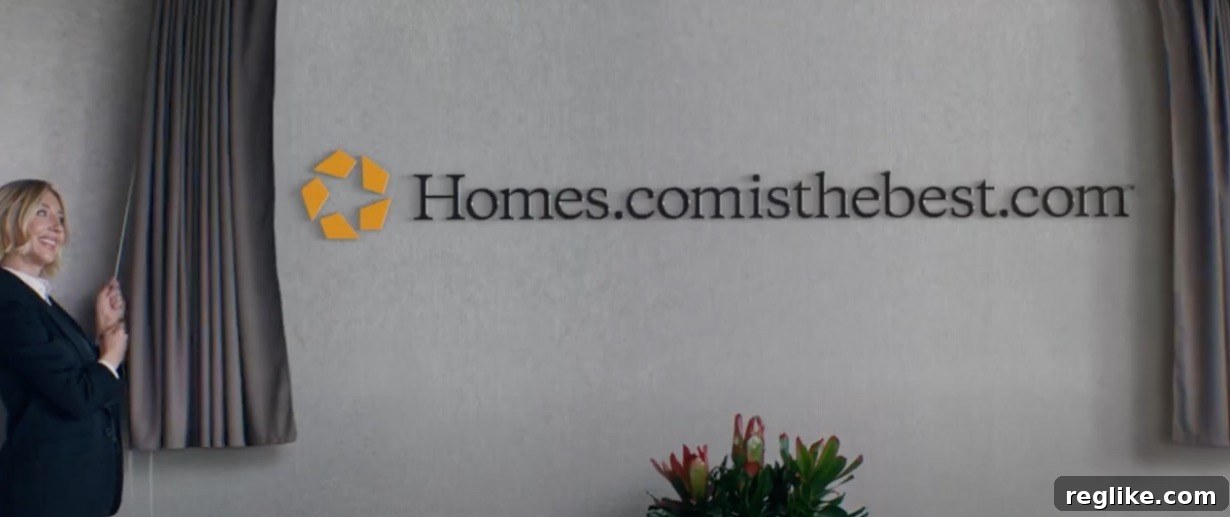
For a short time, I thought Homes.com failed to register a key domain name – a fleeting moment of digital marketing intrigue during the year’s biggest advertising spectacle.

The Unseen Super Bowl Play: A Deep Dive into Domain Strategy and Branding
The Super Bowl isn’t just a sporting event; it’s a colossal stage for advertisers, a digital battleground where brands vie for precious seconds of consumer attention. Companies spend millions not just on the airtime itself, but on the meticulous crafting of commercials designed to be memorable, impactful, and, crucially, effective. Every element, from the celebrity endorsements to the catchy jingles and the all-important call to action, is scrutinized. Yet, amidst all this grandeur, one fundamental aspect often overlooked by the casual viewer, but absolutely vital for any digital marketing strategy, is the domain name. This year, Homes.com perfectly illustrated why.
A Moment of Confusion: The Blurred Lines of Brand Recall
As I sat watching the Super Bowl at a party yesterday, immersed in the electrifying atmosphere, a particular commercial caught my attention. It was Homes.com, making a significant splash with its prime-time slot. The ad was energetic, focused on empowering home buyers and sellers, and it prominently featured a domain name. In the midst of the excitement, with countless stimuli vying for my attention, I distinctly recall thinking, “Hmm, Homes.com is really pushing the domain ‘ComIsTheBest.com’. They must have been incredibly proactive to secure such a generic, yet powerful, domain for their campaign.” This immediate thought sparked a flicker of curiosity, an impulse to verify this perceived brilliance.
Later, during a lull in the festivities, my inner tech-enthusiast couldn’t resist. Pulling out my phone, I began typing, trying to recall the exact phrasing of the domain name I’d heard just moments earlier. My fingers hovered over the keyboard: “ComIsBest.com.” To my genuine surprise, and a slight rush of competitive thrill, the domain “ComIsBest.com” was available! A wave of disbelief washed over me. Could a major corporation like Homes.com, investing heavily in a Super Bowl campaign, truly have overlooked registering such a critical, easily recallable domain that seemed so central to their messaging? It felt like a glaring oversight, a strategic misstep that was ripe for opportunistic registration.
Without much hesitation, driven by a mix of curiosity and the allure of claiming a seemingly valuable piece of digital real estate, I proceeded to register “ComIsBest.com.” My plan was simple: point it to some basic servers, perhaps capture a tiny fraction of anticipated traffic from confused viewers, and observe. It was a low-stakes gamble, an experiment born from a moment of perceived corporate oversight, and a subtle nod to the rapid-fire world of domain name acquisition that often accompanies major marketing pushes.
The “Aha!” Moment: Replaying Reality
Approximately two hours later, the Super Bowl festivities were winding down, but my lingering question about Homes.com’s domain strategy remained. I decided to re-watch the commercial, this time with a clear, focused mind, determined to confirm the exact domain they had advertised. I navigated to YouTube, found the Homes.com Super Bowl commercial replay, and settled in to scrutinize every detail. As the ad played, the crucial moment arrived, and the domain name flashed across the screen with undeniable clarity: “Homes.comIsTheBest.com.”
A resounding “Doh!” escaped my lips. The realization hit me like a ton of bricks. My initial memory, distorted by the sensory overload of the Super Bowl party, had conflated the brand name with the generic superlative. Homes.com hadn’t made a mistake; I had. They had been incredibly smart, strategic, and precise. The domain wasn’t “ComIsTheBest.com” or “ComIsBest.com”; it was “Homes.comIsTheBest.com” – a distinct, branded, and incredibly clever play on their core identity.
This clarification led me to a new investigation. Using DomainTools, a service dedicated to providing Whois information for domain registrations, I quickly searched for “Homes.comIsTheBest.com.” The results confirmed my revised understanding. Homes.com, or rather its parent company, had indeed been astute enough to register this specific, brand-integrated domain name well in advance. The registration date showed November, a testament to their foresight and diligent planning, executing their domain strategy concurrently with the development of their multi-million dollar Super Bowl campaign. The domain “Homes.comIsTheBest.com” was strategically configured to forward directly to their main website, ensuring seamless brand continuity and capturing every potential lead generated by the commercial. Crucially, it did not forward “ComIsTheBest.com” (which they likely never intended to use or protect as it wasn’t their branding), nor my impulsively registered “ComIsBest.com.”
The Strategic Value of Domains in High-Stakes Marketing
This personal anecdote, though minor, perfectly encapsulates the immense importance of a well-executed domain name strategy, especially in high-visibility campaigns like the Super Bowl. For businesses, a domain name is more than just a web address; it’s a foundational element of their online presence, a critical piece of digital real estate that underpins their brand identity, marketing efforts, and ultimately, their success.
Protecting Your Brand: A Proactive Approach
Homes.com’s proactive registration of “Homes.comIsTheBest.com” back in November is a textbook example of brand protection. When launching a major marketing campaign, especially one featuring a unique slogan or call to action, securing all relevant domain variations is paramount. This includes:
- Exact Match Domains: The primary brand name.
- Campaign-Specific Domains: Like “Homes.comIsTheBest.com,” directly tied to a specific advertisement or slogan.
- Common Misspellings and Typo-squatting Domains: To prevent competitors or opportunists from diverting traffic.
- Alternative Top-Level Domains (TLDs): Securing .net, .org, .info, or newer gTLDs if relevant, to protect brand territory.
Failure to do so can lead to disastrous consequences, from lost traffic and revenue to damage to brand reputation, and even the potential for “cybersquatting” where malicious actors register domains related to your brand to exploit for profit or to tarnish your image.
Memorability and Call to Action
The choice of “Homes.comIsTheBest.com” was brilliant because it leveraged their existing brand name while adding a memorable, assertive statement. It’s longer than a typical domain, but its self-referential nature and directness make it sticky. For a consumer watching a fleeting commercial, ease of recall is everything. Homes.com expertly navigated this by making the domain an extension of their brand message rather than a generic or abstract URL.
The Digital Footprint: SEO and Traffic
While direct traffic from Super Bowl ads is crucial, domain names also play a role in broader digital marketing and SEO. A clear, branded domain contributes to brand recognition in search results and builds authority over time. Even if “Homes.comIsTheBest.com” primarily served as a redirect, its existence ensured that any user attempting to find that specific call to action would land exactly where Homes.com intended, reinforcing their brand and driving qualified traffic.
Lessons for Businesses: Navigating the Digital Landscape
My personal mix-up, though amusing in hindsight, offers valuable lessons for businesses of all sizes:
- Due Diligence is Non-Negotiable: Before any major campaign, especially one with a substantial budget, conduct a thorough domain name audit. Identify all permutations, misspellings, and extensions that could be relevant.
- Integrate Domain Strategy with Marketing: Domain registration should not be an afterthought. It needs to be an integral part of campaign planning from the very beginning, in sync with creative development and messaging.
- Protect Your Brand Proactively: Don’t wait for an opportunist to register a critical domain. Defensive registrations, even for domains you don’t actively use, are a small price to pay for brand integrity.
- User Experience is Key: Ensure that any advertised domain name is easy to remember, type, and leads directly to the intended destination. URL forwarding is a powerful tool for this, centralizing traffic to your main platform.
- Learn from Your Mistakes (and Others’): My momentary confusion served as a powerful reminder of how easily information can be misremembered, especially in high-distraction environments. Brands must account for this human element in their domain choices.
The Aftermath: A Domain and a Lesson Learned
Now, I’m simply left with “ComIsBest.com” – a domain name that, while perhaps not worthless, now serves as a personal reminder of a Super Bowl moment and the intricate world of digital branding. It’s a domain that inadvertently promotes the “.com” extension, a generic endorsement rather than a specific brand. It stands as a testament to the swiftness required in the digital age, the subtle complexities of brand communication, and the importance of accurate recall. More importantly, it highlights Homes.com’s excellent execution in protecting their brand assets, turning a potential point of confusion into a seamless brand experience for millions of viewers. In the grand theatre of Super Bowl advertising, the unseen play of domain strategy often determines the true victors of the digital game.