
Elevating Domain Valuation: A Deep Dive into Dharmesh Shah’s AI-Powered Agent
In the dynamic world of digital assets, accurately assessing the value of a domain name is paramount for investors, businesses, and entrepreneurs alike. The digital landscape is ever-evolving, and with it, the methodologies for determining the worth of these intangible, yet incredibly valuable, online properties. Traditionally, domain valuation has been a complex, often subjective process, relying heavily on expert opinion, market trends, and a deep understanding of various contributing factors. However, the advent of Artificial Intelligence (AI) is rapidly transforming this field, introducing automated agents designed to streamline and enhance the appraisal process.
One such innovator making significant strides in this area is Dharmesh Shah, the esteemed co-founder of HubSpot and a vocal proponent of AI’s transformative potential. Known for his keen business acumen and foresight—most notably highlighted by the recent acquisition of Chat.com by OpenAI—Shah has turned his attention to domain valuation, launching and continuously refining his AI-driven platform, DomainValue.com. This article provides an in-depth review of Shah’s evolving domain valuation agent, exploring its advancements, scrutinizing its current capabilities, and examining the persistent challenges that still need to be addressed on its path to becoming an indispensable tool for the domain industry.
The Evolving Landscape of Domain Appraisal: Why AI Matters
The valuation of domain names is a multifaceted discipline, influenced by factors such as generic appeal, search volume, brandability, extension (.com, .net, .org, etc.), historical sales data, and current market demand. Manually analyzing these diverse elements for every domain can be an exhaustive and time-consuming endeavor, often leading to inconsistent results depending on the appraiser’s experience and biases. This inherent complexity has created a strong demand for more efficient, objective, and scalable valuation solutions.
AI-powered tools offer a compelling answer to these challenges. By leveraging machine learning algorithms and vast datasets, these agents can process information at speeds and scales impossible for human analysts. They can identify patterns, correlate data points, and extrapolate trends that might elude even the most seasoned domain investor. The promise of AI in domain valuation is to democratize access to accurate appraisals, reduce human error, and provide a more data-driven foundation for investment decisions. Dharmesh Shah’s venture into this space signifies a pivotal moment, as a figure of his stature lends significant credibility and brings a robust technical foundation to the development of such an agent.
Dharmesh Shah’s Foray into AI-Powered Domain Valuation
Dharmesh Shah’s journey from co-founding HubSpot, a marketing and sales software giant, to delving into the intricacies of AI-driven domain valuation is a testament to his entrepreneurial spirit and keen eye for emerging technologies. His recent success with Chat.com, which was acquired by OpenAI, underscores his ability to identify and nurture high-potential digital assets. This background positions him uniquely to understand both the technical challenges of AI development and the commercial value inherent in premium domain names.
Shah’s DomainValue.com agent is not merely a static tool; it is a platform under continuous development, benefiting from frequent updates and iterative improvements. This commitment to refinement is crucial in the fast-paced AI sector, where algorithms and data models constantly evolve. Our recent tests, conducted yesterday and again today after yet another round of enhancements, reveal a tool that is actively learning and adapting, reflecting Shah’s dedication to pushing the boundaries of automated domain appraisal.
Evaluating the Agent: Progress, Puzzles, and Persistent Issues
A comprehensive review of any AI-driven valuation tool necessitates a close examination of its accuracy, transparency, and consistency. While Dharmesh Shah’s agent shows significant promise and notable improvements, certain aspects warrant closer inspection to fully understand its capabilities and limitations.
Observable Improvements and Evolving Transparency
Compared to initial trials conducted a month ago, the DomainValue.com agent appears to exhibit fewer instances of “hallucination”—a common pitfall in early AI models where fabricated or incorrect information is presented as fact. This reduction is a positive indicator of improved data processing and model refinement. However, this apparent improvement comes with a trade-off: the tool now displays fewer comparable sales for each appraised domain. While this might contribute to cleaner output by avoiding irrelevant or erroneous comps, it simultaneously makes it more challenging for users to independently verify the valuation or understand the underlying reasoning. For domain investors, transparency in comparable sales is non-negotiable, as it forms the bedrock of trust and confidence in any appraisal.
Users of domain appraisal services fundamentally seek insight into the valuation methodology. They want to see the data points, the market precedents, and the logical steps that culminate in a specific valuation figure. The current iteration of Dharmesh Shah’s agent, with its limited presentation of comparable sales data, leaves users with a partial view, hindering their ability to fully grasp how the final price is determined. Enhancing this aspect would significantly bolster user confidence and the tool’s credibility.
Data Sourcing: The NameBio Advantage and Lingering Questions
A crucial positive step in the agent’s development is the reported integration of historical sales data from NameBio. NameBio is widely recognized as a leading authority for verifiable domain sales records, making its inclusion a significant upgrade that should inherently reduce the risk of generating fictitious sales figures. This move aligns the tool with industry best practices and provides a more solid foundation for its valuations.
Despite this positive development, there are still indications that the agent might be drawing from other, less reliable sources, or perhaps experiencing occasional data synthesis errors. For instance, the tool incorrectly claimed that the domain CandyCorn.com sold for $150,000 on NameJet in 2021. While a search on NameBio for CandyCorn.com reveals no such sale, and publicly available data does not corroborate this, it raises questions about the entirety of the data pipeline or potential glitches in its interpretation. Such discrepancies, even if isolated, can erode user trust and highlight the ongoing challenge of ensuring impeccable data integrity in AI-driven systems.
The Curious Case of Marketplace Listings
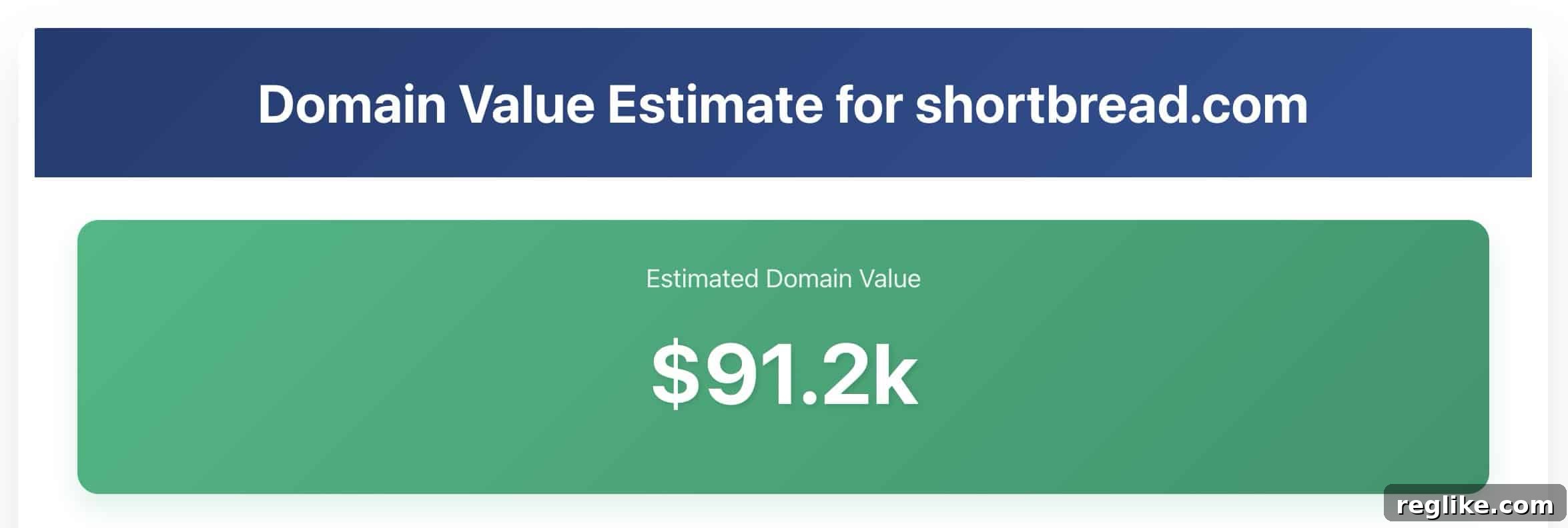
Another area that presented some inconsistencies during our testing involves current marketplace listings. For example, the domain Shortbread.com was listed with two disparate asking prices: $100,000 and $65,000. One of these listings lacked a verifiable source, suggesting it could be an unauthorized posting, an outdated entry, or an error in data collection. While the tool commendably clarifies that these marketplace listings do not directly influence its final valuation, their inclusion, especially when inaccurate or unsourced, adds an element of confusion. It poses the question of why they are displayed if they do not contribute to the core appraisal, and whether their presence might inadvertently mislead users about market liquidity or realistic asking prices for similar domains.
A Beacon of Reliability: Valuation Consistency
One of the most persistent and frustrating issues with many AI-driven appraisal tools is inconsistency. It is not uncommon for a user to input the same domain name into a system on separate occasions only to receive vastly different valuation figures. This variability undermines the reliability and trustworthiness of the tool, making it difficult for users to confidently rely on its assessments for critical financial decisions.
In this crucial aspect, Dharmesh Shah’s agent distinguishes itself positively. Our tests indicate a remarkable level of consistency: the tool appears to deliver virtually identical valuations for the same domain each time it is appraised. This consistent performance is a significant strength, suggesting a stable underlying algorithm and a reliable data processing framework. For domain investors, consistency translates directly into predictability and trustworthiness, which are invaluable attributes in any financial appraisal tool. It allows users to benchmark, track, and make informed decisions with greater confidence, knowing that the figures provided are not arbitrary or subject to transient algorithmic fluctuations.
The User Experience and Future Potential
While the focus of this review has been on accuracy and data, the user experience of DomainValue.com is straightforward and intuitive, allowing for quick appraisals. The clean interface encourages engagement, making the tool accessible to both seasoned domainers and newcomers.
Looking ahead, the potential for Dharmesh Shah’s agent is immense. To further enhance its utility and transparency, future iterations could consider:
- Detailed Valuation Breakdown: Providing a granular breakdown of how various factors (e.g., brandability, keyword relevance, extension premium) contribute to the final value.
- Enhanced Source Transparency: Offering clearer, clickable sources for all data points, including both historical sales and marketplace listings, to empower users with verifiable information.
- Interactive Features: Allowing users to adjust certain parameters or weightings to see how different assumptions might affect the valuation, catering to various investment strategies.
- Integration of Broader Data Sets: Incorporating more diverse data, such as search engine traffic potential, social media mentions, or industry-specific demand indicators, to provide an even more holistic appraisal.
- Educational Resources: Providing contextual information or explanations alongside valuations to help users understand the nuances of domain appraisal.
The continuous improvement model adopted by Shah ensures that these enhancements are not just theoretical but are actively being considered and implemented. As AI technology matures, so too will the sophistication of tools like DomainValue.com, potentially revolutionizing how digital assets are bought, sold, and managed.
Conclusion: A Promising Trajectory for AI in Domain Valuation
Dharmesh Shah’s domain valuation agent represents a significant step forward in the application of AI to the complex field of digital asset appraisal. The tool has demonstrated clear improvements in reducing “hallucinations” and excels in delivering consistent valuations—a critical factor for user trust. The integration of NameBio data is a commendable move towards greater data integrity, laying a robust foundation for its appraisals.
However, the journey towards a perfect AI valuation agent is ongoing. Challenges remain in providing complete transparency regarding comparable sales, resolving lingering data inaccuracies (such as the CandyCorn.com example), and refining the utility of displayed marketplace listings. Addressing these areas will be key to establishing DomainValue.com as an undisputed leader in the space.
Given Dharmesh Shah’s proven track record of innovation and his evident commitment to refining this tool, the future of DomainValue.com looks exceedingly bright. It embodies the potential for AI to bring unprecedented efficiency, consistency, and insight to the domain industry, making it an increasingly valuable resource for anyone involved in buying, selling, or investing in domain names. While not yet a definitive, infallible solution, it is a powerful and rapidly evolving platform that is reshaping the landscape of domain valuation.
You are encouraged to explore the tool yourself and experience its capabilities firsthand here.