
InternetTraffic Leads the Pack as Premier Domain Parking Provider
In a rapidly evolving digital landscape where online real estate is paramount, the efficient monetization of domain names remains a critical concern for investors. Less than two years after its inception, Frank Schilling’s brainchild, InternetTraffic, has remarkably ascended to the pinnacle of the domain parking industry. This significant achievement underscores not only the platform’s robust performance but also the visionary leadership of its founder, a well-respected figure in the domain world.
The latest findings from Domain Name Wire’s highly anticipated 8th annual industry survey have officially crowned InternetTraffic as the top domain parking service. This recognition is a testament to the platform’s innovative approach and its ability to deliver superior value to domain owners seeking to optimize their digital assets. For domain investors, choosing the right parking platform can significantly impact their passive income, making this survey’s results a crucial benchmark in the industry.
The Rise of InternetTraffic and Frank Schilling’s Vision
Frank Schilling has long been recognized as a titan in the domain industry, known for his extensive portfolio and strategic insights. His decision to launch his own domain parking platform, InternetTraffic, was met with keen interest, and its swift rise to prominence has validated his continued influence and understanding of market dynamics. Within an impressively short timeframe, InternetTraffic has managed to differentiate itself in a competitive market, garnering the trust and votes of a significant portion of domain professionals.
The success of InternetTraffic highlights several key factors that domain owners prioritize: reliable revenue generation, transparency, user-friendly interfaces, and effective monetization strategies. As the digital economy continues to mature, the demand for sophisticated yet straightforward solutions for parked domains becomes ever more critical. InternetTraffic’s emergence as the industry leader signifies its effective fulfillment of these essential needs, setting a new standard for performance and investor satisfaction.
A Look at the Competitive Landscape: Survey Highlights
Despite InternetTraffic’s leading position, the domain parking business remains notably fragmented, indicating a diverse array of options available to domain owners. InternetTraffic secured a commendable 22% of the total vote, demonstrating a strong preference among survey participants. However, the data also revealed a robust competitive environment, with seven distinct companies each receiving at least 6% of the votes. This fragmentation suggests that while a clear leader has emerged, there are multiple viable players contributing to the ecosystem of domain monetization.
The survey results provide a clear snapshot of the leading domain parking companies, offering valuable insights for domain investors evaluating their options:
- InternetTraffic: 22%
- Sedo: 17%
- Voodoo: 8%
- Bodis, Rook, GoDaddy, SmartName: (6%, tie)
Sedo, a long-standing and respected name in the domain industry, secured a strong second place with 17% of the vote, reaffirming its consistent presence and substantial market share. The presence of multiple companies in a tied position for fourth place further underscores the competitive nature of the market, where various platforms are striving to capture the attention and business of domain owners. Each of these platforms offers unique features and monetization approaches, catering to different segments of the domain investment community. Understanding these rankings is crucial for domain investors to make informed decisions about where to park their valuable digital assets for optimal returns.
The Persistent Challenge: Low RPMs in Domain Parking
Despite the competitive landscape and the continuous efforts by parking providers to innovate, a significant challenge persists across the domain parking industry: relatively low Revenue Per Mille (RPMs) on parked domains. RPM, or Revenue Per Thousand views, is a key metric that domain owners use to gauge the effectiveness and profitability of their parked domain strategies. A high RPM indicates that the traffic to a parked domain is generating substantial revenue, while a low RPM suggests the opposite.
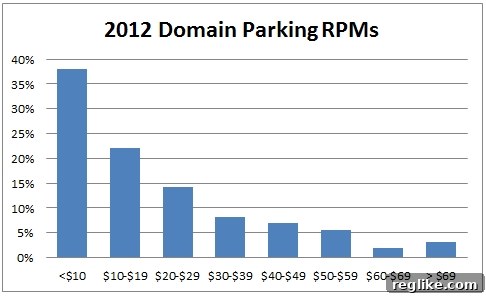
The survey data paints a sobering picture, revealing that 38% of domain owners reported earning less than $10 per 1,000 page views in 2012. This figure highlights the ongoing struggle for many investors to generate substantial income from their parked portfolios. The reasons behind these low RPMs can be multifaceted, including declining quality of “type-in” traffic, increasing competition from developed websites for advertising spend, evolving search engine algorithms that de-prioritize parked pages, and general economic pressures affecting advertiser budgets. Such low returns compel domainers to continuously re-evaluate their strategies, exploring alternatives to traditional parking or focusing intensely on acquiring only the highest-quality, most monetizable traffic.
The implications of persistently low RPMs are significant for domain investors. It means that to achieve a meaningful return on investment, a substantial volume of traffic is required, which can be challenging to sustain across a large portfolio of parked domains. This trend also emphasizes the importance of selecting a parking provider that can optimize ad placements, utilize high-paying advertisers, and leverage sophisticated algorithms to maximize the value of every single visitor. The visual representation of this data, as captured in the survey, provides a stark reminder of the hurdles faced by many in the industry.
Shifting Sands: Domain Parking Revenue Trends in 2012
Beyond the challenges of low RPMs, the industry also experienced significant shifts in overall revenue generation in 2012, painting a complex picture for domain investors. The survey data revealed a concerning trend: 42% of respondents indicated that their domain parking revenue was down compared to the previous year. More alarmingly, 15% of this group reported a dramatic drop of at least half, signaling substantial financial impact for a segment of domain owners.
This widespread decline in revenue can be attributed to several factors. The general economic climate often impacts advertising budgets, leading to lower payouts for publishers, including parked domains. Furthermore, changes in search engine algorithms, an increased focus on quality content sites over mere placeholders, and greater competition from other online monetization methods could also contribute to this downward trend. For many domainers, this revenue reduction necessitates a strategic pivot, either towards developing their domains into active websites or considering divestment.
However, the picture wasn’t uniformly bleak. The survey also highlighted areas of resilience and growth: 29% of respondents reported an increase in their domain parking revenue, indicating that some investors or platforms were successful in adapting to the changing market dynamics. Another 28% stated that their revenue remained flat, suggesting stability for nearly a third of the market. This divergence underscores the importance of effective domain management, portfolio quality, and the choice of parking provider in determining financial outcomes. Those who saw increases likely employed sophisticated optimization techniques, held premium domains with high-quality traffic, or benefited from their chosen parking platform’s advanced features.
The Outlook for 2013: Cautious Optimism or Growing Pessimism?
Looking ahead, domainers were not particularly optimistic about the prospects for 2013, reflecting a cautious, if not pessimistic, sentiment within the industry. A significant 34% of respondents predicted that parking revenue would continue its downward trajectory in the coming year. This outlook suggests a prevailing belief that the challenges of low RPMs and declining overall revenue would persist, further pressuring domain investors to reassess their monetization strategies.
In contrast, only 24% of survey participants predicted an improvement in parking revenue for 2013. This relatively low percentage indicates that while some investors foresee a rebound or continued growth, the majority are bracing for ongoing difficulties. The prevailing sentiment underscores the maturity of the domain parking market, where easy gains are becoming rarer, and strategic acumen is increasingly crucial. Factors influencing this outlook include the continuous evolution of online advertising, the ever-present threat of algorithm changes by major search engines, and the growing trend towards developing domain names into fully functional websites rather than merely parking them.
The modest optimism from a quarter of respondents might stem from a belief in specific niche markets, the potential for new parking technologies, or confidence in their ability to acquire and retain high-value traffic. However, the overall industry forecast points to a period requiring careful navigation, innovative approaches, and a potential shift in focus for many domain investors. The future of domain parking, while still a viable monetization method, appears to demand more sophisticated strategies and a deeper understanding of digital advertising trends to maintain profitability.
Maximizing Domain Monetization in a Challenging Environment
Given the prevailing trends of low RPMs and fluctuating revenues, domain investors are increasingly seeking strategies to maximize their domain monetization efforts. While InternetTraffic has emerged as a top choice, optimizing revenue involves more than just selecting a platform; it requires a holistic approach to domain portfolio management. Investors must focus on acquiring high-quality domains with strong “type-in” traffic potential or those that attract relevant search engine visitors. The quality of traffic directly influences RPMs, as advertisers are willing to pay more for highly targeted and engaged users.
Furthermore, continuous monitoring and optimization of parked pages are essential. This includes ensuring that the ad content displayed is relevant to the domain’s keywords, experimenting with different landing page layouts, and leveraging any analytics provided by the parking platform. Some advanced parking services offer features like dynamic content generation or integration with various ad networks to enhance revenue potential. For domains that consistently underperform, investors might consider developing them into content-rich websites, creating lead generation sites, or exploring alternative monetization models such as affiliate marketing or direct advertising sales. The decision to park, develop, or sell a domain should be driven by thorough market research and a clear understanding of its intrinsic value and traffic potential.
Conclusion: A New Era for Domain Parking with InternetTraffic at the Helm
The Domain Name Wire survey of 2012 served as a crucial barometer for the domain parking industry, highlighting both its enduring appeal and its inherent challenges. InternetTraffic’s swift ascent to the top, under the experienced guidance of Frank Schilling, marks a significant milestone, cementing its position as a leading choice for domain investors worldwide. This achievement is particularly noteworthy given the backdrop of widespread concerns regarding low RPMs and declining revenues, underscoring InternetTraffic’s ability to outperform competitors in a tough market.
While the industry faces an ongoing struggle with revenue generation and a cautious outlook for the future, the rise of platforms like InternetTraffic offers a beacon of hope. It demonstrates that with the right technology, strategic vision, and commitment to optimizing investor returns, domain parking can remain a viable and valuable component of a comprehensive digital asset strategy. As the internet continues to evolve, domain investors will need to remain agile, adapting their strategies and partnering with innovative platforms to navigate the complexities and unlock the full potential of their valuable domain portfolios.