
SmartName Revolutionizes Domain Parking: A Strategic Shift Towards Performance-Driven Templates
In the dynamic world of domain name monetization, strategic shifts are often necessary to adapt to evolving industry standards and user expectations. SmartName, a prominent player in the domain parking landscape and closely associated with Afternic, has recently announced a significant change to its operational strategy. Moving away from a broad array of design options, the company is now focusing its efforts on a select group of top-performing templates, marking a decisive step towards optimization and efficiency in domain parking.
The Evolution of Domain Parking Templates: From Quantity to Quality
For many years, the benchmark for domain name parking companies often revolved around the sheer number of templates they could offer. Providers would proudly showcase an extensive library of designs, each promising unique layouts, varied ad placements, diverse font choices, and, crucially, graphics tailored to the specific topic or industry suggested by the domain name itself. The underlying philosophy was simple: more choices meant a higher chance of matching a domain with an appropriate, visually appealing landing page, thereby theoretically maximizing visitor engagement and ad click-through rates (CTRs).
This approach, while seemingly logical, often led to a proliferation of templates where performance varied wildly. Many templates would languish, rarely selected or, if chosen, underperforming compared to others. The maintenance of such a vast collection also presented significant challenges, requiring resources to update, test, and ensure compatibility across an ever-growing number of web browsers and devices. The focus was on breadth rather than depth, often sacrificing peak performance for the illusion of abundant choice.
SmartName’s Bold Move: Embracing Performance and Responsiveness
It is against this historical backdrop that SmartName, in collaboration with Afternic, has made a particularly interesting and strategic decision. The company is actively scaling back its template offerings, moving from a large portfolio to a refined collection of just five core designs. This deliberate paring down is not a step backward, but rather a forward-thinking pivot driven by data and a commitment to superior user experience and monetization.
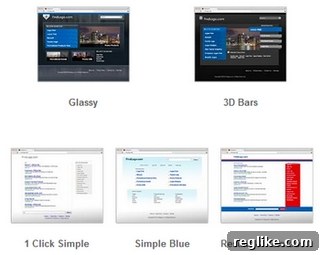 In a communication issued to its client base, SmartName clarified the rationale behind this streamlining. The five remaining templates have been rigorously identified as the “best performing” within their entire historical catalog. This isn’t an arbitrary selection; it’s a data-driven choice, backed by analytics that demonstrate these specific designs consistently generate higher engagement, better ad viewability, and ultimately, superior revenue for domain owners. By focusing on these proven winners, SmartName aims to ensure that every parked domain under its management has the highest possible chance of successful monetization.
Beyond raw performance metrics, another critical factor underpinning this decision is the responsiveness of these chosen templates. In today’s mobile-first digital landscape, where a significant portion of web traffic originates from smartphones and tablets, having pages that adapt seamlessly to various screen sizes is no longer a luxury but a fundamental necessity. These five templates are fully responsive, guaranteeing an optimal viewing and interaction experience whether a visitor accesses the parked domain from a desktop computer, a tablet, or a mobile phone. This ensures consistent performance and a positive user experience, regardless of the device used, aligning with modern web design best practices and search engine preferences.
Google’s Influence: Navigating Changes in Ad Integration
This strategic move by SmartName and Afternic may also be significantly influenced by ongoing changes in how Google handles advertising on parked domains. Google, as the dominant force in online advertising, continuously refines its policies and technical implementations, and these changes often have a ripple effect across the entire domain monetization ecosystem. Historically, Google would often provide a simple ad “feed” to its partners, allowing them considerable flexibility in how those ads were displayed within their proprietary templates.
However, recent shifts indicate Google is moving towards a more integrated ad serving model, where advertisements are often embedded via frames rather than just a raw data feed. This change has profound implications for domain parking providers. Integrating ads through frames means that maintaining a vast number of diverse templates becomes significantly more complex and resource-intensive. Each template would need to be meticulously tested and potentially re-engineered to ensure proper ad rendering and compliance with Google’s updated technical specifications and quality guidelines. This shift effectively places a higher burden on providers to ensure technical precision and consistent performance across their template portfolio.
By narrowing its focus to just five templates, SmartName can dedicate more resources to ensuring these specific designs are perfectly optimized for Google’s new ad integration methods. This reduces potential technical glitches, improves ad delivery, and minimizes the risk of non-compliance, which could negatively impact ad revenue. It represents a proactive adaptation to the evolving demands of Google’s advertising infrastructure, ensuring that SmartName remains at the forefront of effective domain monetization.
Tangible Benefits of SmartName’s Streamlined Approach
The decision to consolidate templates offers a multitude of benefits, resonating across SmartName, domain owners, and even the end-users who land on these parked pages.
- For SmartName: This strategy allows for unparalleled operational efficiency. Instead of spreading resources thin across dozens of templates, the development and quality assurance teams can focus intensely on perfecting just five. This leads to faster updates, more robust A/B testing, and a deeper understanding of what truly drives performance. It also simplifies troubleshooting and maintenance, resulting in a more stable and reliable service.
- For Domain Owners: The most significant benefit is the potential for increased monetization. By exclusively using templates proven to perform best, domain owners can expect higher effective CPM (cost per mille) or EPC (earnings per click). This eliminates the guesswork of choosing an effective template and ensures that every domain is given the best possible chance to generate revenue. It simplifies the management process, allowing owners to trust that SmartName is deploying the most optimal solutions automatically.
- For End-Users: Visitors to parked domains will experience a more consistent, professional, and user-friendly interface. These optimized templates are designed for clarity, speed, and intuitive navigation, reducing clutter and improving the overall experience. Responsive design ensures accessibility across all devices, contributing to less frustration and a better perception of the domain’s value, even if it’s currently parked.
SEO Advantages of Optimized Parking Pages
While parked domains typically don’t aim for high organic search rankings in the same way content websites do, the principles of good web design and user experience, which are central to SEO, still apply. SmartName’s move to responsive, high-performing templates brings several SEO advantages:
- Mobile-First Indexing: Google predominantly uses the mobile version of a website for indexing and ranking. Responsive templates ensure that parked pages are perfectly rendered on mobile devices, aligning with Google’s mobile-first indexing strategy and avoiding potential penalties for poor mobile experience.
- Improved User Engagement Signals: Faster loading times, cleaner layouts, and intuitive navigation offered by optimized templates lead to better user engagement. This translates to lower bounce rates, longer time on page, and increased ad interactions – all positive signals that search engines value as indicators of a quality user experience. While these signals might not directly rank a parked domain, they contribute to the overall quality and legitimacy recognized by algorithms.
- Page Speed: Speed is a confirmed ranking factor. Streamlined templates typically have less code and fewer elements, leading to faster loading times. This not only pleases users but also satisfies search engine performance criteria.
- Reduced Technical Debt: A smaller, well-maintained set of templates is less likely to suffer from technical issues that could hinder crawling or indexing, ensuring that even parked pages are technically sound from an SEO perspective.
The Future Landscape of Domain Monetization
SmartName’s strategic decision is more than just an internal adjustment; it signals a broader trend within the domain monetization industry. The era of quantity over quality is definitively waning. Future success in domain parking will increasingly rely on sophisticated analytics, data-driven optimization, and a relentless focus on the end-user experience. This move positions SmartName as a leader in adapting to these evolving standards.
Other domain parking providers will likely observe SmartName’s success closely, potentially influencing them to adopt similar strategies. The industry as a whole is moving towards a more mature, performance-oriented model that closely mirrors best practices in general web development and digital marketing. Domain parking is no longer just about displaying ads; it’s about intelligent, optimized ad delivery within a user-centric design framework.
Conclusion: A New Era for Domain Parking
SmartName’s bold decision to condense its template portfolio to five top-performing, responsive designs represents a pivotal moment in the domain parking industry. It underscores a commitment to data-driven performance, cutting-edge user experience, and proactive adaptation to crucial changes in advertising integration dictated by industry giants like Google. This strategic shift is set to benefit all stakeholders: SmartName through increased efficiency, domain owners through enhanced monetization, and end-users through a superior browsing experience. As the digital landscape continues to evolve, SmartName’s move solidifies its position as an innovator, setting a new benchmark for quality and effectiveness in the competitive world of domain monetization.