
AIRY GreenTech’s Unsuccessful Bid to Acquire Airy.com Leads to Reverse Domain Name Hijacking Finding
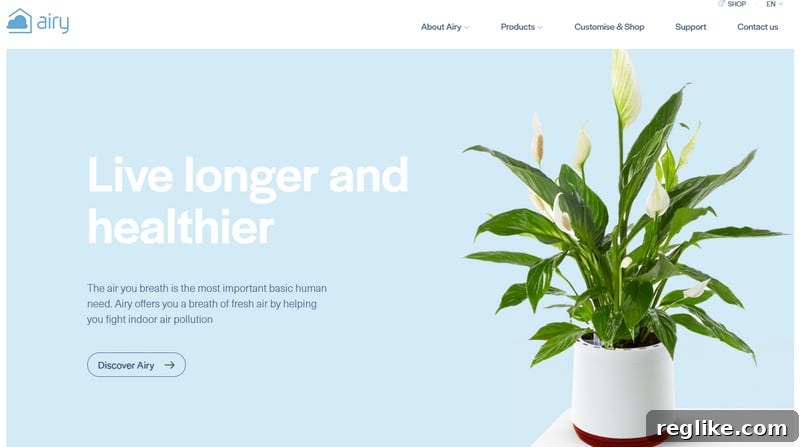
In a notable domain name dispute that underscores the importance of due diligence and ethical conduct, a WIPO panel has ruled that AIRY GreenTech GmbH attempted Reverse Domain Name Hijacking (RDNH) for the highly sought-after domain name Airy.com. This case highlights a company’s ill-advised attempt to secure a premium domain through a cybersquatting complaint, only to have its actions deemed as an abuse of the Uniform Domain Name Dispute Resolution Policy (UDRP).
The respondent in this case, the owner of Airy.com, is an Indonesian travel business that has been severely impacted by the global pandemic, leading to the suspension of its operations. The circumstances surrounding this dispute are particularly poignant, painting a picture of a large corporation attempting to seize a valuable asset from a struggling small business during an unprecedented global crisis. This complex saga serves as a cautionary tale for companies contemplating UDRP actions without a solid foundation.
The Contenders: AIRY GreenTech vs. Airy.com
AIRY GreenTech GmbH is a company that specializes in innovative plant systems designed to purify indoor air. For its online presence, the Complainant utilizes the domain name airy.green. The company clearly harbored aspirations for a more prestigious, generic Top-Level Domain (gTLD) and had its sights set on Airy.com, which is considered a desirable, single-word .com domain.
The history of AIRY GreenTech’s interest in Airy.com dates back to 2015 when it first attempted to purchase the domain. During these negotiations, AIRY GreenTech’s highest offer reportedly reached $40,000. However, the then-owner of Airy.com was firm on a price of $80,000, and the deal ultimately fell through.
The narrative took a significant turn in 2017 when the current Respondent, an Indonesian travel company operating under the brand AiryRooms.com, acquired Airy.com for a substantial sum of $150,000. Following this acquisition, the Respondent seamlessly integrated Airy.com into its business operations by directing it to AiryRooms.com, thus enhancing its brand visibility and accessibility within the travel industry. This investment clearly demonstrated the Respondent’s legitimate interest and significant commitment to the domain as a core asset for its business.
A curious detail emerged concerning a follow-up from a Uniregistry domain broker to AIRY GreenTech after the Respondent’s purchase. While this interaction might have caused some confusion for AIRY GreenTech, the panel ultimately determined that it did not excuse the Complainant’s subsequent actions in pursuing a UDRP complaint.
The UDRP Filing: Arguments and Absurdity
Despite the clear forwarding of Airy.com to a well-established travel website, AIRY GreenTech proceeded to file a UDRP complaint against Airy.com in May, alleging cybersquatting and bad faith on the part of the Respondent. The Complainant’s arguments, as presented, struggled to connect with reality, raising eyebrows with their convoluted logic.
AIRY GreenTech asserted that the redirection of Airy.com to the travel website demonstrated the illegitimacy of the Respondent’s interest and use in bad faith. The Complainant further argued that the Respondent was attempting to mislead internet users into believing an association existed between AIRY GreenTech’s trademark and the hotel booking services offered on the redirected site. According to the Complainant, this alleged deception would cause users searching for air purification systems to mistakenly land on a travel website, thereby allowing the Respondent to commercially benefit from traffic intended for AIRY GreenTech. Moreover, the Complainant suggested that the Respondent registered Airy.com specifically to prevent AIRY GreenTech from using its trademark, citing this as further evidence of bad faith.
The fundamental flaw in AIRY GreenTech’s argument quickly became apparent: how could users searching for indoor air quality solutions be confused by a website offering Indonesian travel bookings? The two businesses operate in entirely distinct sectors, making any claim of consumer confusion or malicious intent to divert traffic highly improbable. As the panel would later implicitly confirm, the notion that a travel company was attempting to trick customers looking for air purifiers into buying hotel rooms stretches credulity to its breaking point.
Panel’s Scrutiny and the Revelation of Legitimate Interests
The UDRP process is designed to be a relatively swift and cost-effective method for resolving domain name disputes, primarily targeting instances of clear cybersquatting where a domain name is registered in bad faith to profit from another’s trademark. However, it also places a significant burden of proof on the Complainant, requiring them to demonstrate three key elements:
- The domain name is identical or confusingly similar to a trademark in which the complainant has rights.
- The respondent has no rights or legitimate interests in respect of the domain name.
- The domain name has been registered and is being used in bad faith.
In this particular case, even if the first element might have been superficially met due to the similarity of “Airy” to the Complainant’s mark, the subsequent elements proved to be insurmountable hurdles for AIRY GreenTech, particularly concerning the Respondent’s legitimate interests and the alleged bad faith.
Crucially, once the initial complaint was filed, the Registrar verification process revealed critical information about the Respondent, including their personal name and an email address directly linked to “airyrooms.com.” This information should have served as an immediate red flag for AIRY GreenTech, clearly indicating a legitimate connection between the Respondent and the business to which Airy.com was directing traffic. This disclosure alone strongly suggested that the Respondent had bona fide rights and legitimate interests in the disputed domain name, directly contradicting the Complainant’s assertions.
Despite this compelling new evidence, AIRY GreenTech failed to conduct any reasonable investigation into the Respondent’s identity or business activities. Had they done so, it would have been unequivocally clear that the Respondent was affiliated with a legitimate travel business that had been actively using Airy.com in connection with a genuine offering of goods and services. Instead of withdrawing the complaint, the Complainant incongruously chose to continue, initially against a privacy service (which was the original registrant on the public WhoIs record) and then, remarkably, referred to the newly disclosed Respondent in its amended complaint.
The panel found this lack of diligence and persistence particularly egregious. The Complainant’s failure to investigate, coupled with its continued pursuit of the case in the face of contradictory evidence, showcased a profound disregard for the facts and the spirit of the UDRP process.
The Verdict: Reverse Domain Name Hijacking
Panelist Andrew Lothian delivered a decisive verdict, concluding that AIRY GreenTech’s case was a clear example of “Plan B” Reverse Domain Name Hijacking. This term describes a scenario where a company, after failing to acquire a desired domain name through negotiation, resorts to filing a UDRP complaint as an alternative, abusive tactic.
Lothian’s findings were scathing, pointing out multiple critical failures on the part of the Complainant, even when represented by legal counsel:
Fundamentally, the Complainant’s failure to consider the dictionary word nature of the disputed domain name, the history of the disputed domain name and the background to its acquisition of rights in the AIRY trademark caused it to overlook multiple weaknesses in its case. Thereafter, the Complainant’s failure to make reasonable investigations as to the nature of the Respondent’s identity and business activities resulted in it failing to appreciate the nature of the Respondent’s rights and legitimate interests in the disputed domain name. These failures are all the more concerning given that the Complainant is represented by legal counsel.
The Panel concludes that this is a Complaint which was destined to fail and should never have been brought. In these circumstances, it is particularly regrettable that the Complainant’s actions have caused the Respondent to invest considerable time and resources in preparing and submitting a substantial Response at a time when, as it notes, it is also having to deal with the sudden detrimental effect of the current global pandemic upon its business.
The panel’s conclusion emphasized that the complaint was “destined to fail and should never have been brought.” This strong language underscores the lack of merit in AIRY GreenTech’s arguments and the clear abuse of the UDRP process. The panel also highlighted the deeply regrettable fact that the Complainant’s actions forced the Respondent to expend significant time and resources defending itself, particularly at a time when its business was already struggling immensely due to the global pandemic.
Understanding Reverse Domain Name Hijacking (RDNH)
Reverse Domain Name Hijacking (RDNH) is a critical concept within the UDRP framework. It serves as a deterrent against abusive trademark holders who attempt to unfairly seize a domain name from a legitimate registrant. An RDNH finding occurs when a panel determines that a complainant brought a UDRP case in bad faith, for example, to harass a domain name holder, to unfairly obtain a domain name, or with knowledge that it could not establish the necessary elements of a UDRP claim.
In essence, RDNH acts as a check and balance, protecting legitimate domain owners from being bullied by larger entities using legal mechanisms improperly. The finding against AIRY GreenTech in this case clearly demonstrates that the UDRP is not a tool for domain acquisition when negotiation fails, nor can it be used to disrupt a legitimate business, especially one that has made a significant investment in its domain.
Lessons Learned: Ethics, Due Diligence, and Brand Strategy
This case offers several crucial lessons for businesses and legal professionals navigating the complex world of domain names and intellectual property:
- The Importance of Due Diligence: Before filing any UDRP complaint, extensive research into the respondent’s identity, business activities, and the history of the domain name is paramount. The failure to conduct even basic investigations, especially after new information came to light, was a critical misstep for AIRY GreenTech.
- Legitimate Interests vs. Brand Aspirations: A UDRP is not a mechanism for upgrading a company’s domain portfolio simply because a better domain is desired. Legitimate rights and interests of the domain owner must be respected and thoroughly considered. Owning a trademark does not automatically grant rights to every domain name containing that mark, especially if the domain is a common dictionary word and used legitimately by another party.
- Ethical Conduct and Good Faith: The panel’s strong language regarding the timing of the complaint, especially given the Respondent’s pandemic-induced struggles, highlights a significant ethical lapse. Pursuing a meritless case against a struggling business demonstrates a lack of empathy and professional integrity.
- The Perils of “Plan B” Tactics: Attempting to acquire a domain through legal means after failing in direct negotiations (the “Plan B” strategy) is a risky and often ill-fated endeavor under UDRP. Panels are keenly aware of such tactics and are likely to find bad faith on the part of the complainant.
- Consequences of RDNH: An RDNH finding carries significant reputational risks for the complainant and its legal counsel. It signals to the wider domain and legal communities that the complainant engaged in abusive practices, which can undermine future credibility and even lead to sanctions in other jurisdictions.
It is particularly striking to consider the irony of the situation. Given that the domain owner’s business has ceased operations due to the pandemic, now might have been an opportune moment for AIRY GreenTech to renegotiate the purchase of Airy.com, potentially at a more favorable price. However, by taking the “low road” and pursuing a baseless UDRP complaint, AIRY GreenTech has likely soured any future negotiation prospects, making a cooperative purchase far more challenging, if not impossible.
AIRY GreenTech was represented by Office Freylinger S.A. of Luxembourg, while Fusion Law of Indonesia represented the domain owner. This case serves as a stark reminder that while domain names are valuable assets, their acquisition and dispute resolution must always be conducted within the bounds of due diligence, legitimate grounds, and ethical considerations. The UDRP is a powerful tool for brand protection, but it is not to be wielded as a weapon for opportunistic domain snatching.