
.App Domain: A Blueprint for a Thriving Top-Level Domain in a Crowded Digital Landscape
In the vast and ever-expanding digital realm, the landscape of top-level domains (TLDs) has undergone a dramatic transformation over the past decade. With the introduction of hundreds of new generic TLDs (gTLDs), the internet has become a more diverse, albeit sometimes confusing, space for establishing an online presence. Amidst this proliferation, the .app domain stands out as a shining example of a truly healthy, stable, and reputable top-level domain, setting a new standard for how TLDs should be managed and perceived.
The journey of new TLDs has been fraught with challenges and misinterpretations. For too long, the success of a TLD was primarily judged by the sheer volume of registrations it accumulated. This metric, however, often proved to be misleading, obscuring the underlying health and stability of the domain space. Many registries engaged in various aggressive tactics, such as offering domains for free or at heavily discounted rates for the first year, solely to inflate their registration numbers. While this strategy might create an initial surge, it rarely translates into long-term value or sustained growth. In fact, it often leads to what the industry refers to as “junk drops” – massive cancellations when renewal prices kick in, exposing the fragility of these artificial booms. This short-sighted approach has unfortunately plagued many new gTLDs, making it difficult for businesses and individuals to discern genuine opportunities from fleeting fads.
Beyond Registration Numbers: Redefining TLD Success
The traditional method of evaluating TLD success, which primarily focused on the total number of registered domains, has proven to be an incomplete and often deceptive indicator. While a high volume of registrations might initially suggest popularity, it frequently masks underlying issues related to sustainability and genuine user adoption. Many registries, eager to climb the leaderboard, resorted to unsustainable business models, distributing domains at rock-bottom prices or even giving them away for free. This strategy, while effective in generating immediate registration spikes, rarely fosters a community of serious, long-term domain holders. The inevitable outcome for many of these domains is a significant drop-off in registrations once the heavily discounted introductory periods expire, leading to instability and a diminished perception of value within the TLD.
This cycle of aggressive promotion followed by mass cancellations, often referred to as “junk drops,” has created a volatile market for many new gTLDs. It underscores the critical need for a more nuanced understanding of TLD health, one that transcends mere quantitative metrics. A truly successful top-level domain should demonstrate consistent, organic growth, a stable renewal rate, and a user base that genuinely values its digital identity. It should also actively contribute to a safer and more credible online environment, rather than becoming a haven for transient or malicious activities. The focus must shift from simply acquiring registrations to cultivating a thriving ecosystem where domain holders feel confident in their investment and can build lasting online presences.
Google’s Strategic Vision: The Foundation of .App’s Stability
The story of the .app domain begins with a significant and strategic investment by one of the world’s leading technology giants. In 2015, Google paid a staggering $25 million for the exclusive rights to the .app top-level domain. This substantial financial commitment was not merely an acquisition; it was a clear statement of intent, signaling Google’s long-term vision and serious dedication to fostering a high-quality domain space. Unlike many other registries that rushed to market, Google demonstrated remarkable patience and strategic foresight, deliberately waiting until 2018 to officially launch the domain. This three-year observation period allowed the company to meticulously analyze market trends, understand user needs, and craft a launch strategy designed for sustained success rather than fleeting numbers.
Affordable, Yet Premium Pricing: Striking the Right Balance
Upon its launch, Google implemented a pricing strategy that thoughtfully balanced accessibility with perceived value. Instead of resorting to the ultra-cheap, often unsustainable introductory offers prevalent among many other new TLDs, .app domains were priced affordably but not cheaply. With current annual prices generally ranging between $15 and $20, Google positioned .app as a premium, yet accessible, option. This mid-range pricing strategy deterred speculative registrations by those merely looking for freebies, instead attracting individuals and businesses genuinely committed to building a credible online presence. This deliberate pricing helped to filter out low-quality registrations, contributing to a healthier and more engaged user base from the outset.
The Mandatory SSL Requirement: A Game-Changer for Trust and Security
Perhaps the most distinctive and impactful aspect of Google’s management of .app is its stringent requirement for all websites using the domain to install and maintain an SSL (Secure Sockets Layer) certificate. This mandate ensures that all data transmitted between a user’s browser and a .app website is encrypted, providing a secure connection. The benefits of this requirement are manifold: it significantly enhances user trust and online security, as visitors can be confident that their interactions with .app sites are protected. Furthermore, the presence of SSL is a recognized ranking factor by search engines like Google itself, contributing to better search visibility for .app websites.
Beyond security and SEO, this mandatory SSL installation acts as a crucial deterrent against nefarious activities. The additional step of obtaining and configuring an SSL certificate adds a layer of complexity that discourages individuals or organizations looking to quickly set up phishing sites, malware distribution platforms, or other illicit ventures. By making security a fundamental prerequisite, Google has effectively raised the bar for legitimacy within the .app namespace, establishing it as a trusted corner of the internet where users can engage with confidence. This proactive approach to security is a cornerstone of .app’s healthy ecosystem and a powerful differentiator in the crowded TLD market.
Quantifiable Health: Examining .App’s Growth and Distribution
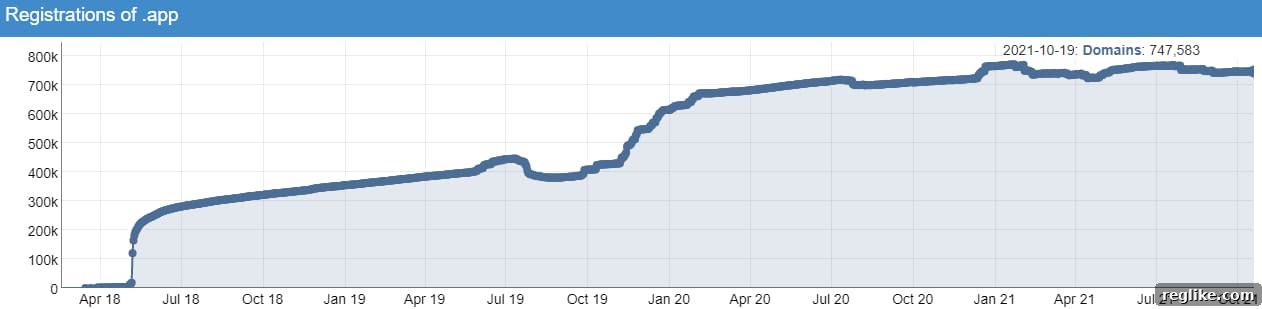
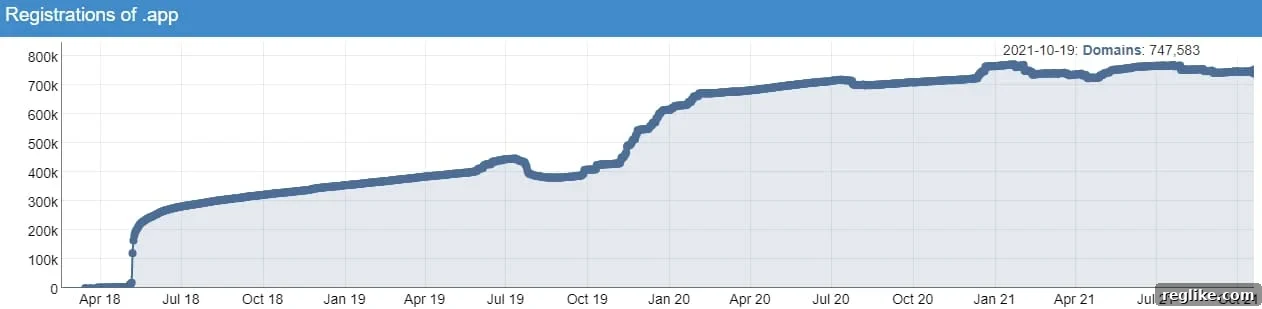
The true measure of a TLD’s health lies not just in its initial launch, but in its sustained performance and organic growth over time. The .app domain has consistently demonstrated these vital characteristics. According to nTLDStats, a reputable source for domain statistics, there are approximately 750,000 .app domains registered today. More importantly, the growth chart for .app registrations exhibits a remarkably healthy and steady upward trajectory, indicating genuine demand and consistent adoption rather than artificial spikes.
The “Junk Drop” Resilience: A Stark Contrast to Other TLDs
A significant indicator of .app’s stability is its resilience during the dreaded “junk drop” anniversaries that plague many other TLDs. A “junk drop” typically refers to the mass expiration and non-renewal of domains one year after a heavily discounted introductory registration period. Many TLDs experience sharp, dramatic dips in their registration numbers as these initially free or nearly free domains are allowed to lapse. However, the .app domain experienced only a small, almost negligible dip during its first major renewal cycle, as noted around the time of the “junk drop” anniversary. This minimal impact underscores the success of Google’s pricing strategy and the quality of its registrants, who are more likely to be long-term holders rather than opportunistic short-term users.
Growth was particularly strong in late 2019, which saw some promotions, but crucially, these were nothing akin to the “dollar sales” or massive giveaways offered by other registries. The key takeaway is that despite any promotional activity, there was no commensurate drop in registrations a year later, confirming the underlying value perceived by its users. This pattern of sustained growth, unmarred by the typical volatility of the new gTLD market, cements .app’s status as a robust and reliable domain extension.
Diversified Registrar Landscape: Indicative of Genuine Demand
Another strong signal of a healthy TLD is the distribution of its registrations across various registrars. A domain heavily concentrated with a single registrar, especially one known for aggressive discounting, can be a red flag. In the case of .app, the distribution among registrars is commendably healthy. While GoDaddy, the world’s largest domain registrar, holds a significant share at around 57% of the .app namespace, this is largely a positive sign. It’s expected that the biggest registrar would naturally attract the most registrations, and crucially, GoDaddy has not been known for deep discounting of .app domains in the same way it might for some other TLDs. This indicates that the registrations obtained through GoDaddy are driven by genuine demand rather than fire-sale prices.
Beyond GoDaddy, the top five registrars are rounded out by other reputable names such as Google Domains (naturally), NameCheap, Key-Systems, and Name.com. This diversified landscape suggests broad market appeal and genuine interest from a wide array of users, rather than reliance on a single channel or promotional partner. Such a healthy distribution further reinforces the organic growth and stable demand for .app domains, contributing to its overall credibility and long-term viability.
The Aftermarket Perspective: Value Beyond Speculation
Aftermarket sales, where previously registered domain names are bought and sold, often serve as an indicator of a TLD’s perceived value and speculative potential. While aftermarket activity for .app domains hasn’t been “particularly strong” in the same way some older, more generic TLDs might see daily high-value transactions, its story is different. The value of .app is more deeply rooted in its utility and brand association than in speculative trading. This doesn’t mean high-value sales are absent; rather, they tend to be strategic acquisitions by companies looking to leverage the domain’s brand power for specific projects.
A notable example is Shopify’s acquisition of shop.app for an impressive $200,000. Shopify subsequently launched a dedicated shopping and payments service through this domain, perfectly aligning the domain’s name with its intended function. This is a clear illustration of a strategic purchase, where the brand fit and immediate utility far outweigh mere speculative interest. Beyond this headline sale, at least 8 other .app domains have been publicly reported to have sold for at least $15,000. These publicly disclosed sales, while not exhaustive of all private transactions, underscore that real value is exchanged for premium .app assets.
It’s crucial to reiterate, however, that a booming aftermarket, driven purely by speculation, is not the primary sign of health for a top-level domain like .app. Its strength lies in its ability to provide a secure, relevant, and trustworthy online identity for application developers, tech companies, and digital innovators. The value is intrinsically linked to its direct and obvious association with “apps” – a ubiquitous term in today’s digital lexicon. For a TLD aiming for stability, credibility, and real-world utility, consistent, quality registrations and strategic high-value acquisitions by end-users are far more indicative of success than a volatile speculative aftermarket.
.App’s Impact: Shaping a More Secure and Credible Web
The strategic decisions behind the .app domain have had a profound impact not just on its own success, but on the broader internet ecosystem. By mandating SSL certificates for all .app websites, Google has inherently fostered a more secure and trustworthy online environment. This commitment to security translates directly into enhanced user confidence, as visitors know they are interacting with encrypted sites, safeguarding their personal information and online activities. This elevates the entire namespace, establishing .app as a bastion of online credibility in an era where cyber threats are constantly evolving.
The inherent relevance of the “.app” extension itself holds immense appeal for a diverse audience. Developers find it intuitive and perfectly aligned with their creations, whether they are building mobile apps, web applications, or desktop software. Businesses leveraging application-based services can brand themselves clearly and effectively with a .app domain, immediately conveying their core offering to potential customers. Startups, often seeking short, memorable, and descriptive domain names, discover an ideal solution in .app, helping them to carve out a distinct digital identity in a crowded market. This strong semantic connection ensures that .app domains are not merely addresses but powerful branding tools that instantly communicate purpose and professionalism.
In essence, the .app domain has become a vital component of the app-centric digital ecosystem. It provides a dedicated, secure, and easily recognizable space for innovation and digital delivery. Its success story demonstrates that with thoughtful planning, a focus on user trust, and a commitment to security, new TLDs can indeed contribute significantly to a safer, more navigable, and more credible web. It stands as a testament to the idea that quality and strategic foresight ultimately trump aggressive, unsustainable growth tactics.
A Model for Future TLD Launches: Lessons from Google’s Approach
The journey and success of the .app top-level domain offer invaluable lessons for the management of existing TLDs and, crucially, for the upcoming rounds of top-level domain expansion. Few companies possess the financial wherewithal to invest $25 million in a TLD and then exercise the patience and deliberation that Google displayed in launching and marketing it. However, the principles behind Google’s strategy are universally applicable and deserve to be held out as an exemplary model.
Firstly, the importance of patience and strategic planning cannot be overstated. Rushing a TLD to market with insufficient preparation often leads to short-term gains at the expense of long-term stability. Google’s three-year observation period before launch allowed for a meticulously crafted strategy that ensured sustainable growth. Secondly, the commitment to responsible management, particularly through a balanced pricing structure, is vital. Avoiding the race to the bottom with deeply discounted domains prevents the influx of low-quality registrations and the subsequent “junk drops” that destabilize a TLD.
Perhaps most significantly, the mandatory SSL requirement for .app domains underscores the critical role of security and trust in the modern digital landscape. Integrating robust security features from the outset not only protects users but also builds immense credibility and legitimacy for the entire namespace. This proactive approach helps to establish a TLD as a safe and reliable choice, attracting serious users and deterring malicious actors.
The .app story encourages a move away from a “land grab” mentality, where the focus is simply on accumulating the highest number of registrations, towards a more quality-driven, user-centric approach. As the internet continues to evolve and new TLDs are introduced, Google’s management of .app provides a compelling vision for how future domain spaces can be developed: with integrity, foresight, and a steadfast commitment to fostering a secure and trustworthy online environment for everyone. It serves as a powerful reminder that genuine value and sustained success are built on strong foundations, not fleeting promotions.
Conclusion: .App as a Benchmark of TLD Excellence
In conclusion, the .app domain has unequivocally demonstrated its status as a benchmark for excellence in the crowded and complex world of top-level domains. Its trajectory serves as a compelling counter-narrative to the often-volatile experiences of many new gTLDs. By prioritizing stability, security, and genuine user value over mere registration numbers, Google has cultivated a domain space that is both robust and reputable. From its strategic acquisition and patient launch to its intelligent pricing and groundbreaking mandatory SSL requirement, every aspect of .app’s management reflects a commitment to long-term health and credibility.
The domain’s consistent, organic growth, its resilience against common industry pitfalls like “junk drops,” and its balanced distribution across major registrars all underscore its inherent strength. While aftermarket sales, though present, may not dominate headlines, the true value of .app lies in its utility and its unequivocal association with the thriving application ecosystem. It is a domain that instills trust, clearly communicates purpose, and actively contributes to a safer internet. The .app domain is more than just an address; it is a testament to what a top-level domain can and should be: a stable, secure, and highly relevant digital asset that genuinely serves its community and sets a high standard for all future innovations in the domain name industry.