
The Case of Fixtures365.com: A Suspension Due to a Missed Whois Verification
In the digital landscape, maintaining an active and accessible online presence is crucial for businesses and organizations of all sizes. However, even established entities can face unexpected disruptions. A prime example is the temporary suspension of Fixtures365.com, a sports betting site, due to a seemingly minor oversight: failing to respond to a Whois verification email.
While not as widely known as e-commerce giants like Amazon, Fixtures365.com is part of a significant ownership chain that ultimately leads to British Sky Broadcasting (BSkyB), a prominent media company. The suspension highlights the importance of adhering to domain registration regulations and the potential consequences of neglecting these requirements.
The issue stemmed from the 2013 Registrar Accreditation Agreement (RAA) implemented by the Internet Corporation for Assigned Names and Numbers (ICANN). This agreement mandates that domain name registrars must verify the contact details of domain registrants. To comply, most registrars send a confirmation email to the registrant’s email address. The registrant is then required to click a link or take another specified action to confirm receipt and validate their contact information.
The purpose of this verification process is to ensure the accuracy and currency of Whois data, which is a publicly accessible database containing information about domain name registrants. Accurate Whois data is vital for various reasons, including:
- Combating online fraud and abuse: By verifying contact information, registrars can help prevent malicious actors from using fake or misleading details to register domains for fraudulent purposes.
- Enforcing intellectual property rights: Accurate Whois data allows trademark holders and copyright owners to identify and contact domain registrants who may be infringing on their rights.
- Resolving technical issues: In cases of technical problems or network disruptions, accurate contact information allows network administrators to reach the domain registrant and resolve the issue efficiently.
- Maintaining accountability: Accurate Whois data promotes accountability and transparency in the domain name system, making it easier to identify and contact domain owners for legitimate purposes.
The suspension of Fixtures365.com served as a stark reminder of the importance of these verification procedures. It demonstrated that even seemingly small details, such as responding to a confirmation email, can have significant consequences for online operations. The incident underscores the need for domain registrants to pay close attention to communications from their registrars and promptly address any verification requests.
Prior to the incident, experts had predicted that the 2013 RAA provision would eventually ensnare an operating website. The Fixtures365.com case proved to be a high-profile example of this prediction coming to fruition. The incident sparked discussions within the domain name industry about the effectiveness and potential drawbacks of the Whois verification process.
While the intention of the RAA is to improve the accuracy of Whois data and combat online abuse, some argue that the verification process can be burdensome for domain registrants, particularly those who manage multiple domains. Others raise concerns about the potential for legitimate websites to be suspended due to inadvertent errors or missed communications.
Following the suspension, Fixtures365.com was quickly reinstated, presumably after the owner clicked the verification link. However, the incident served as a valuable lesson for domain registrants and highlighted the importance of staying informed about domain registration regulations and promptly responding to verification requests.
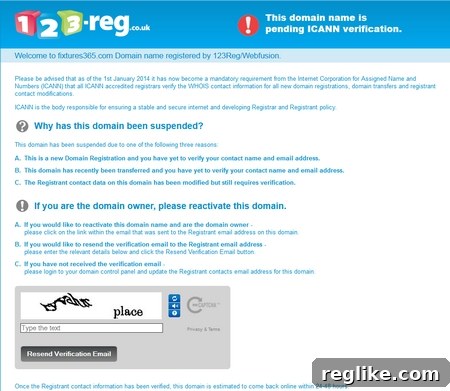
The Fixtures365.com suspension illustrates several key takeaways for anyone involved in managing domain names:
- Monitor your email regularly: Pay close attention to emails from your domain registrar, especially those related to domain verification and renewal.
- Respond promptly to verification requests: Don’t delay in clicking verification links or taking other required actions to validate your contact information.
- Keep your contact information up-to-date: Ensure that your Whois contact information is accurate and current. Update it promptly if there are any changes.
- Understand the domain registration regulations: Familiarize yourself with the rules and policies of your domain registrar and ICANN.
- Consider using a domain management service: If you manage multiple domains, a domain management service can help you track expiration dates, verification requests, and other important information.
The internet continues to evolve, and so do the regulations governing its operation. Staying informed and proactive is essential for maintaining a successful online presence. The Fixtures365.com incident is a reminder that even seemingly minor details can have significant consequences, and that vigilance is key to avoiding disruptions and ensuring the long-term viability of your online endeavors.
In conclusion, the suspension of Fixtures365.com due to a missed Whois verification email serves as a crucial case study in the importance of adhering to domain registration regulations. While the incident was quickly resolved, it underscores the need for domain registrants to be vigilant in monitoring their email, responding promptly to verification requests, and keeping their contact information up-to-date. By taking these precautions, businesses and organizations can minimize the risk of unexpected disruptions and ensure the continued availability of their online presence. The ever-evolving landscape of internet governance demands constant awareness and adaptation to maintain a strong and reliable digital footprint. As Michele noted, this situation highlights a critical aspect of domain management in the modern internet age.
Furthermore, the Fixtures365.com case prompts a broader reflection on the balance between security measures and user experience in the digital realm. While the Whois verification process is intended to enhance security and combat online abuse, it can also create friction for domain registrants. Striking the right balance between these competing interests is essential for fostering a healthy and sustainable online environment. As the internet continues to evolve, ongoing dialogue and collaboration between stakeholders, including ICANN, registrars, and domain registrants, will be crucial for refining domain registration policies and procedures to meet the challenges of the future.