
The platform has logged interest in 313 unique strings, including 41 with competing applicants.
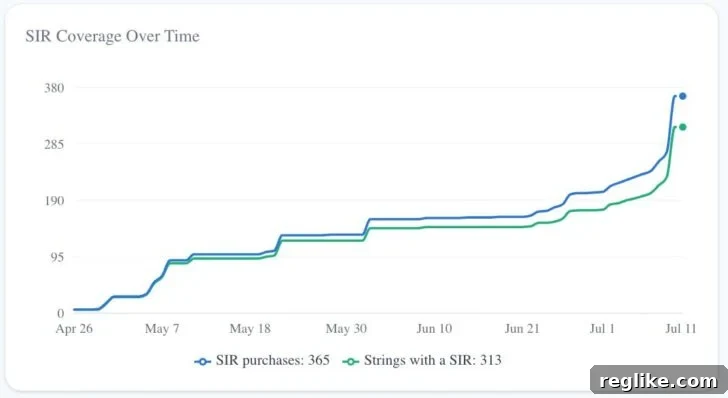
Early Warning Report, a platform designed to help top-level domain (TLD) applicants avoid contention sets, has seen a notable increase in activity in recent weeks. The service allows prospective applicants to formally record interest in specific TLD strings ahead of the official application reveal, with the goal of enabling early negotiations and reducing the likelihood of competitive disputes once applications are publicly disclosed.
As of July 11, the platform recorded 365 String Interest Reports (SIRs). A String Interest Report represents a company’s registered expression of interest in a single top-level domain name, and the recent spike in SIR submissions highlights growing engagement from entities preparing to participate in the upcoming TLD round.
These 365 reports correspond to 313 distinct top-level domain strings. Within that set, 41 strings have attracted interest from more than one applicant, producing overlapping or competing interest. Those 41 contested strings were submitted by a total of 93 distinct entities, indicating that while many strings have only a single interested party, a meaningful subset already shows potential contention.
The distinguishing purpose of Early Warning Report is to surface those overlapping interests early. By revealing which strings have multiple interested parties before the official application reveal, the platform creates an opportunity for applicants to negotiate, form partnerships, withdraw interest mutually, or otherwise arrange for contention avoidance. The aim is to minimize the number of formal disputes and auctions that would otherwise occur once ICANN publishes the list of applicants.
Under ICANN’s applicant guidebook, applicants are restricted from coordinating on claims and resolving contention after ICANN publishes its list of applications. Early Warning Report operates within that regulatory framework by enabling discussions and arrangements before the official reveal date. This pre-reveal window is the period when parties can transparently negotiate and document their intentions without violating post-reveal coordination restrictions.
With the formal TLD application deadline approaching in roughly a month from the July 11 snapshot, many organizations are moving from nominal interest to concrete applications. In addition to String Interest Reports, applicants can submit Contention Avoidance Reports (CARs), which indicate that an entity has progressed beyond expressing interest and has formally applied for the string. CARs reflect a firmer commitment and often signify that applicants have already engaged in negotiations or resolved competing claims prior to filing their formal applications.
The pattern of activity on the platform suggests that the TLD applicant community is actively using these pre-application tools to reduce friction. Recording interest early, identifying overlapping claims, and pursuing contention avoidance strategies can reduce costly disputes and the uncertainty that comes with contested TLDs. For applicants, this process can streamline planning and help determine whether to pursue alternative strings or seek cooperative arrangements.
As the application closing date approaches, monitoring platforms that log interest and contention avoidance moves will remain important for applicants, consultants, and other stakeholders in the domain name ecosystem. Early Warning Report’s current figures—365 SIRs, 313 unique strings, and 41 overlapping strings involving 93 entities—offer a snapshot of activity and the degree to which applicants are attempting to preempt contention before official disclosures are required.