
Unlocking Digital Potential: How Holiday Sales Catalyzed a Surge in New TLD Registrations
The annual holiday shopping frenzy, spanning from Black Friday to Cyber Monday, has long been a pivotal period for retail industries. However, its influence now extends far beyond traditional consumer goods, profoundly impacting the digital landscape, particularly for new Top-Level Domains (TLDs). A recent report from a prominent new TLD company underscores this trend, revealing a significant boost in registration volume directly attributed to strategic holiday sales campaigns.
Radix Leads the Charge with Impressive Holiday Performance
Leading new Top-Level Domain name registry, Radix, emerged as a standout performer during this critical sales window. The company successfully amassed an impressive 35,000 new domain registrations over a concentrated four-day period, a testament to the efficacy of its targeted promotional strategies and the increasing appetite for modern, relevant domain extensions.
This surge in registrations highlights a growing trend: businesses and individuals are actively seeking distinctive online identities that resonate with their brand or personal mission. New TLDs offer a refreshing alternative to the saturated .com space, providing greater availability and the opportunity for more descriptive, memorable web addresses.
The Strategic Power of Deep Discounts: A Catalyst for Adoption
A core component of Radix’s success lay in its aggressive pricing strategy. The company initiated deep discounts across its portfolio of domain names, making them incredibly accessible to a broad audience. Many leading registrars participated, offering Radix’s domain names for as little as 99 cents during the Black Friday to Cyber Monday sales event. This aggressive pricing strategy served multiple purposes:
- Driving Mass Adoption: Ultra-low prices significantly lower the barrier to entry for potential domain owners, encouraging impulse purchases and first-time registrations.
- Increasing Brand Awareness: By making new TLDs highly visible and affordable, Radix effectively expanded awareness of its offerings among a diverse consumer base.
- Stimulating Experimentation: The minimal cost encourages users to experiment with new TLDs, perhaps acquiring a domain they wouldn’t consider at full price, thereby expanding the market.
- Competitive Advantage: In a crowded market, deep discounts can draw attention away from competitors and established TLDs.
The specific pricing tiers further illustrate Radix’s nuanced approach to market penetration. While domains like .website, .space, and .site were offered for a compelling $1.00, more specialized and perceived-value TLDs such as .Tech and .Online were available for approximately $5.00. This tiered pricing allowed Radix to cater to different segments of the market, offering both highly affordable utility domains and slightly higher-priced, premium-feeling extensions.
Beyond Price: The Indispensable Role of Registrar Exposure and Marketing Synergy
While attractive pricing was undoubtedly a major draw, Radix’s success was amplified by synergistic marketing efforts across various domain name registrars. The company greatly benefited from heightened exposure, both directly on registrar websites and through strategic email campaigns aimed at informing customers about the ongoing sales.
Registrars act as critical intermediaries, connecting registries like Radix with end-users. Their platforms and marketing channels are instrumental in driving awareness and facilitating sales. During the holiday period, this collaboration became particularly potent:
- Onsite Prominence: Registrars prominently featured new TLD deals on their homepages, dedicated landing pages, and search results. This ensured that visitors searching for domain names were immediately presented with these attractive offers.
- Targeted Email Campaigns: Extensive email marketing campaigns were deployed, directly reaching millions of existing and potential customers. These emails often highlighted the limited-time nature of the discounts, creating a sense of urgency and encouraging immediate action.
- Cross-Promotional Strategies: The collaboration extended to showcasing multiple new TLDs from various registries, creating a vibrant marketplace of options for consumers. This broader industry effort indirectly benefited individual registries like Radix by increasing overall interest in the new TLD space.
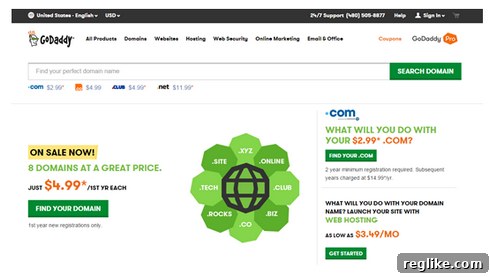
A prime example of this collaborative marketing in action was seen on platforms like GoDaddy. An illustrative image from the period showcased an array of domain names from multiple registries, including Radix, XYZ, .Club, Rightside, and Neustar, all advertised at a competitive price point of $4.99 per year. This kind of unified promotion not only boosted individual sales but also reinforced the legitimacy and growing prevalence of new TLDs in the broader digital ecosystem.
The Evolving Landscape of Top-Level Domains: Why New TLDs Matter
The advent of new TLDs has been a transformative development in the world of online identity. Launched to expand the limited supply of generic domain names like .com, .org, and .net, new TLDs offer a far greater variety of choices, allowing for more specific, brandable, and available domain names. For instance, a tech startup might prefer a .tech domain, while an online store could opt for .store or .shop, creating an immediate connection with its audience.
Despite their clear advantages, new TLDs initially faced challenges related to awareness and adoption. Many internet users were (and some still are) accustomed to the traditional .com extension. Marketing and promotional events, especially those leveraging high-traffic periods like Black Friday and Cyber Monday, are crucial for overcoming this inertia. They serve as educational opportunities, showcasing the value proposition and creative possibilities that new TLDs unlock.
The value proposition of new TLDs extends beyond mere availability. They provide:
- Enhanced Branding: Domains like .Tech or .Online instantly communicate the nature of a website.
- Memorability: A unique and descriptive TLD can make a website address easier to recall.
- Global Reach with Local Relevance: While many new TLDs are generic, others can cater to specific industries or communities.
- Innovation: They represent the continued evolution of the internet’s naming system, fostering creativity in online identity.
Looking Ahead: Sustaining Growth Beyond Holiday Spikes
While the immediate impact of holiday sales on new TLD registrations is undeniable, the long-term success of registries like Radix hinges on sustaining this growth. The 35,000 registrations over four days represent a significant influx of new users, but the ultimate measure of success will be their renewal rates and continued engagement. Registries and registrars must work collaboratively to demonstrate the ongoing value of these new domains, ensuring that users not only register but also actively build and maintain their web presence using their chosen new TLDs.
Strategies for sustaining growth include:
- Value-Added Services: Offering integrated website builders, email hosting, and security features that enhance the domain’s utility.
- Community Building: Fostering communities around specific TLDs (e.g., .Tech for tech enthusiasts) to increase loyalty and perceived value.
- Ongoing Marketing and Education: Continuously educating the market about the benefits of new TLDs beyond just promotional pricing.
- Partnerships: Collaborating with web development platforms and digital marketing agencies to integrate new TLDs into broader online strategies.
In conclusion, the recent holiday sales period served as a powerful testament to the potential of new TLDs. Radix’s achievement of 35,000 registrations in just four days, driven by strategic discounting and widespread registrar exposure, underscores the effectiveness of well-executed digital marketing during peak consumer activity. As the internet continues to evolve, new TLDs will play an increasingly vital role in shaping online identities, offering businesses and individuals fresh avenues to establish their digital footprint and connect with their target audiences.