
Unlocking Domain History: How Namecheap is Revolutionizing the Domain Search Experience
In the vast digital landscape, securing the perfect domain name is often the first, crucial step toward establishing an online presence. Whether you’re a budding entrepreneur, a seasoned web developer, or an individual looking to launch a personal blog, the domain search process can be fraught with frustration. Typically, when a desired domain is already taken, the searcher is met with a curt, uninformative “not available” message, forcing them to move on with little understanding of why or by whom the domain is held. This common scenario leaves many feeling helpless and disconnected from the deeper workings of the domain market.
However, leading domain registrar Namecheap is taking a significant leap forward in empowering its users by introducing an innovative feature designed to transform this opaque process into an educational and insightful journey. By providing rich context and historical data for registered domains, Namecheap is not just offering an alternative search result; it’s fostering a more informed and aware community of domain users. This initiative promises to shed light on the often-mysterious world of domain ownership, offering valuable insights that extend far beyond a simple availability check.
Beyond “Not Available”: A New Era of Domain Transparency
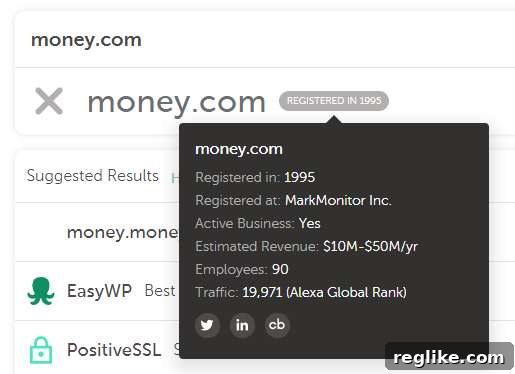
The traditional domain search offers minimal information, often leading to a dead end. Imagine searching for a brilliant domain idea, only to be told it’s “taken,” with no explanation. This can be disheartening, leading many to believe they were simply too late or that their idea wasn’t original enough. Namecheap’s new feature directly addresses this pain point. When a domain name is already registered, instead of just displaying a generic unavailability message, Namecheap now provides the exact date the domain was initially registered. This seemingly small addition offers immense context to the searcher.
For instance, discovering that a domain was registered in 1995, as shown in the example of Money.com, immediately changes a user’s perspective. It clarifies that the domain wasn’t just snatched up yesterday by a competitor, but rather it has been a long-held digital asset, likely an established online identity for decades. This simple piece of information can shift the user’s focus from mere disappointment to an understanding of the domain’s legacy and inherent value. It helps users appreciate that some domains are prime digital real estate, owned and maintained over long periods, rather than just recently claimed. This newfound transparency fosters a more mature understanding of the domain ecosystem, educating users about the age and stability of various online properties.
Diving Deeper: Unveiling the Domain’s Full Story
Namecheap doesn’t stop at just showing the registration date. The true power of this feature lies in its interactivity. Users can click on the displayed registration date to reveal even more comprehensive information about the domain. This action typically leads to a more detailed WHOIS lookup, providing critical data such as the domain’s current registrar, its expiration date, and sometimes even anonymized details about the registrant, depending on privacy settings and regional regulations. This level of detail offers a complete snapshot of the domain’s status and ownership, equipping users with valuable intelligence.
Understanding these details is crucial for several reasons. Knowing the expiration date, for example, might offer a glimmer of hope for acquiring the domain in the future if it’s not renewed. Identifying the current registrar can sometimes provide clues about the domain’s history or potential for aftermarket acquisition. This comprehensive view demystifies the domain ownership process, allowing users to make more informed decisions about their next steps, whether that’s exploring alternative domain names or considering the aftermarket.
The Future is Here: Integrating Sales Data for Enhanced Value Assessment
Looking ahead, Namecheap CEO Richard Kirkendall has shared exciting plans for further enhancements. The company intends to integrate historical sales data into these search results. This forthcoming feature promises to be a game-changer for anyone interested in the true market value of domain names. When available, Namecheap will display the sales price if a domain name has previously changed hands on the secondary market. This is an unparalleled move towards market transparency that could fundamentally alter how users perceive and interact with domain names.
The addition of sales data will provide invaluable insights for domain investors, entrepreneurs, and businesses alike. Imagine being able to see that a generic, high-value keyword domain previously sold for a substantial sum. This information immediately establishes a benchmark for its worth, helping potential buyers understand what similar domains command in the market. It can help validate why a particular domain is considered “premium” and why its original acquisition might have been a strategic move. For those new to the domain world, this data will serve as a powerful educational tool, illustrating the real-world financial implications and investment potential of domain names. It shifts the perception of a domain from a mere web address to a tangible, valuable digital asset that appreciates over time.
Empowering End Users: Education and Aftermarket Awareness
All these features cumulatively contribute to a significant increase in awareness and education for end-users searching for domains. No longer will they blindly navigate a market where they feel disadvantaged. Instead, they will become better educated about the intricate dynamics and inherent value of domain names. This increased understanding is crucial for bridging the gap between the primary domain registration market and the robust, yet often intimidating, domain aftermarket.
Many users are unaware that domain names can be bought and sold much like physical property or stocks. The domain aftermarket is where registered domains are traded, often at prices significantly higher than initial registration fees, reflecting their true market value. By exposing users to registration dates and future sales data, Namecheap is subtly nudging them to explore and understand this secondary market better. They will begin to grasp why certain domains are expensive, why a domain’s age can be a valuable attribute, and how a desirable, taken domain might still be acquired, albeit through a different channel.
This initiative helps democratize knowledge that was once primarily confined to experienced domain investors and industry insiders. Small businesses, in particular, stand to benefit enormously. Understanding the potential value of their own domain names can help them make better branding decisions, protect their digital assets, and even capitalize on their online identity should they choose to sell it in the future. For aspiring domain investors, this feature serves as an excellent starting point for market research, allowing them to analyze trends and identify potentially lucrative opportunities.
The Broader Impact: Fostering a Healthier Domain Ecosystem
Namecheap’s move isn’t just about improving individual user experience; it has broader implications for the entire domain industry. Increased transparency fosters a healthier, more competitive, and fairer market. When buyers are more informed about a domain’s history and value, it can lead to more equitable transactions and reduce instances of misinformed purchases or sales.
This kind of innovation often sets a precedent that other registrars may eventually follow, leading to industry-wide improvements in domain search functionality and data accessibility. Over time, this could lead to a more standardized approach to displaying domain information, ultimately benefiting everyone involved in the domain lifecycle—from registrants and buyers to sellers and domain service providers. The clearer the market, the more confidence consumers will have in making strategic decisions regarding their online identities and investments.
Furthermore, understanding domain history and value can also subtly inform search engine optimization (SEO) strategies. While domain age alone is not a direct ranking factor for Google, an older domain often indicates a longer operational history, potentially with established backlinks and content, which can be beneficial. While Namecheap’s feature won’t directly reveal a domain’s past content, knowing its age can prompt further investigation into its prior usage, offering a more holistic view of its potential digital equity.
Conclusion: A Smarter Way to Secure Your Digital Future
Namecheap’s introduction of historical registration data and its commitment to integrating future sales data represent a significant advancement in the domain industry. This feature moves beyond the simplistic “taken” message, transforming the domain search experience into an educational and empowering process for every user. By shedding light on domain history and market value, Namecheap is not only simplifying the often-complex journey of finding a perfect web address but also cultivating a more informed generation of domain owners and investors.
This commitment to transparency and user education underscores Namecheap’s dedication to providing superior service and fostering a more knowledgeable online community. As the digital landscape continues to evolve, tools that empower users with information and context will become increasingly vital. Namecheap is leading the charge, ensuring that securing your online identity is not just a transaction, but an insightful step towards building a successful digital future.