
Proactive Malware Defense: The Power of Flagging Newborn Domain Names
In our hyper-connected digital world, the threat of phishing and malware attacks looms larger than ever. Every day, countless individuals and organizations receive emails containing insidious links designed to compromise systems, steal data, or deploy malicious software. While traditional cybersecurity measures like blacklists and antivirus programs offer essential protection, they often operate reactively, struggling to keep pace with the dynamic tactics employed by cybercriminals. But what if there was a simple, yet profoundly effective, way to get ahead of these threats? What if we could identify and neutralize dangerous links before they even have a chance to inflict harm, simply by examining the age of the domain name they point to? This innovative approach, centered on flagging newly registered or “newborn” domains, represents a promising frontier in proactive malware defense.
The Persistent Challenge: Why Attackers Love New Domains
Cybersecurity is an ongoing arms race. As defenses evolve, so do the methods of attack. One of the most common threads linking a vast majority of phishing and malware campaigns is their reliance on recently registered domain names. Attackers gravitate towards these “fresh” domains for several compelling reasons:
- Evasion of Blacklists: Traditional URL blacklists are invaluable, but they are inherently reactive. A domain must first be identified as malicious, reported, analyzed, and then added to a blacklist. This process can take hours or even days. During this window, a newly registered malicious domain can wreak havoc before it’s recognized. Malware networks are often programmed to churn through thousands of new domain registrations precisely to stay one step ahead of these blacklists, discarding compromised domains as soon as they are flagged and replacing them with new ones.
- Cost-Effectiveness: Registering new domain names is relatively inexpensive and can be automated at scale. This low barrier to entry makes it an attractive strategy for large-scale campaigns.
- Brand Spoofing: New domains can be rapidly set up to mimic legitimate websites (e.g., “amaz0n-login.com” or “paypal-support.info”), making them difficult for an average user to distinguish from authentic sites, especially in a hurry.
- Short-Lived Campaigns: Many phishing and malware campaigns are designed to be short-lived, extracting maximum value in a minimal timeframe before being detected. New domains perfectly suit this “hit-and-run” strategy.
The sheer volume and rapid turnover of these malicious domains make it nearly impossible for conventional, signature-based security systems to maintain a comprehensive and up-to-date defense. This critical vulnerability highlights the urgent need for a more proactive and predictive approach.
Boeing’s Ingenious Solution: Flagging “Newborn” Domains
Amidst this challenging landscape, a major global enterprise known for its innovation in complex systems, Boeing (NYSE:BA), has conceptualized a refreshingly straightforward yet highly effective solution. As a prime target for sophisticated cyberattacks, Boeing understands the critical importance of robust security measures. The company outlined its vision in a patent application (pdf) filed last year and subsequently published by the U.S. Patent and Trademark Office. This patent application details a system designed to flag links within emails that point to what it aptly calls “newborn” domains.
The core concept is remarkably simple: rather than waiting for a domain to appear on a blacklist, the system proactively assesses its age. Here’s how it works:
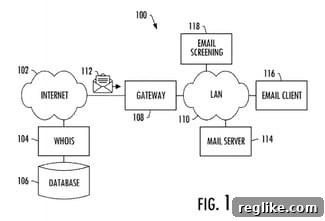
- Real-Time Domain Age Verification: When an email arrives at a server, a dedicated service intercepts and scans any embedded links. For each domain name identified within these links, the service initiates a lookup to verify its registration date. This verification typically involves querying public WHOIS databases, which contain information about domain registrations.
- Defining “Newborn”: The system is configured with a predefined timeframe that determines what constitutes a “newborn” domain. This period could be anything from a few hours to several weeks or even months, depending on the organization’s risk tolerance and threat intelligence.
- Automated Risk Remediation: If a linked domain falls within this “newborn” threshold, the email server can then take immediate, pre-programmed actions to mitigate the potential risk. These actions are highly flexible and can include:
- Disabling the Link: The most direct approach is to render the malicious link inactive, preventing recipients from accidentally clicking it.
- Providing a Warning: The email could be delivered to the recipient, but with a prominent, clear warning indicating that the link points to a newly registered domain and advising extreme caution.
- Quarantining or Not Delivering the Email: For higher-risk scenarios, the server might choose to quarantine the entire email, move it to a spam folder, or simply refuse to deliver it to the recipient’s inbox altogether.
This approach moves beyond reactive measures, offering a proactive layer of defense that can catch threats before they have a chance to establish a reputation, good or bad. Its beauty lies in its elegant simplicity and potential for widespread commercial application.
Technical Underpinnings and Implementation Insights
Implementing a system for flagging newborn domains involves several technical considerations to ensure efficiency, accuracy, and minimal disruption to legitimate communications:
- Integration with Email Gateways: The domain age verification service would ideally integrate seamlessly with an organization’s existing email gateway or mail transfer agent (MTA). This allows for real-time scanning of inbound emails before they reach end-users.
- WHOIS Database Access: The reliability of this system heavily depends on consistent access to WHOIS data. While WHOIS databases provide public information, privacy regulations (like GDPR) have impacted the availability of registrant details. However, domain creation and expiration dates generally remain accessible, which is the crucial information for this system.
- Caching Mechanisms: To prevent performance bottlenecks caused by frequent WHOIS lookups for every email, an intelligent caching system would be essential. Once a domain’s age is verified, that information could be stored locally for a set period, reducing the need for repeated external queries.
- Handling False Positives: A significant challenge lies in differentiating legitimate new websites from malicious ones. Many legitimate businesses, startups, and marketing campaigns frequently register new domains. The system would need mechanisms to minimize false positives, such as:
- Whitelisting: Allowing administrators to manually whitelist known legitimate new domains.
- User Reporting: Providing a feedback mechanism for users to report legitimate emails that were incorrectly flagged.
- Behavioral Analysis: Combining domain age with other indicators, like sender reputation, email content analysis, or geographical origin, to build a more comprehensive risk score.
- Scalability: For large organizations processing millions of emails daily, the system must be highly scalable, capable of performing rapid lookups and actions without introducing significant latency.
The robustness of such a system would likely evolve, potentially incorporating machine learning algorithms to dynamically adjust the “newborn” threshold based on evolving threat patterns and to refine the identification of truly malicious domains versus benign new sites.
Significant Benefits of This Proactive Defense
The adoption of a domain-age-based filtering system offers a multitude of benefits for both individuals and enterprises:
- Superior Proactive Protection: This method allows organizations to detect and neutralize threats before they become widely known or blacklisted. It shifts the defense paradigm from reactive cleanup to proactive prevention.
- Reduced Attack Surface: By disabling links or quarantining emails from suspicious new domains, the system significantly reduces the potential attack vectors available to cybercriminals, minimizing exposure to novel and zero-day threats.
- Enhanced User Safety and Awareness: Users are less likely to fall victim to sophisticated phishing attempts if malicious links are disabled or clearly flagged with warnings. This also helps educate users about common indicators of suspicious emails.
- Cost Savings in Incident Response: Preventing successful attacks inherently reduces the time, resources, and financial costs associated with incident investigation, data recovery, and reputational damage control.
- Complementary Security Layer: This system doesn’t replace existing security measures; rather, it augments them, providing an additional, vital layer of defense that specifically targets a common attack vector often missed by traditional tools. It acts as a powerful early warning system.
- Improved Operational Resilience: By mitigating the risk of malware infections and data breaches, organizations can maintain greater operational continuity and protect their critical assets and intellectual property.
In essence, this proactive approach transforms the domain registration process, which attackers leverage for speed and anonymity, into a potential weakness they can be exploited for defense.
Challenges and Future Outlook
While the concept is powerful, its real-world implementation faces some challenges that need careful consideration:
- False Positive Management: As mentioned, preventing legitimate new domains from being unfairly blocked is paramount. Advanced heuristics, user feedback loops, and integration with trusted domain lists will be crucial.
- WHOIS Data Accessibility: Changes in data privacy regulations, such as GDPR, have restricted access to some WHOIS information. However, domain creation dates generally remain public, which is sufficient for this specific application. Continuous monitoring of WHOIS policy changes will be necessary.
- Adversarial Adaptations: Attackers are resourceful. They might adapt by registering domains and letting them “age” for a few weeks before launching attacks. While this adds a layer of cost and delay for them, it’s a potential evolution that future systems would need to consider, perhaps by combining domain age with other suspicious indicators.
- Industry-Wide Adoption: For maximum effectiveness, widespread adoption across email service providers and enterprise email systems would be beneficial, creating a more uniform defense against these types of attacks.
It’s worth noting that Boeing isn’t alone in recognizing the potential of this strategy. On the very same day Boeing filed its patent application, Cisco also filed a patent (pdf) for a similar system aimed at detecting domain names registered as part of these malicious networks. This parallel development from two cybersecurity-focused giants underscores the significant value and timeliness of this defensive concept.
Conclusion: A Simpler, Smarter Defense for the Digital Age
The simple idea of flagging “newborn” domain names as a primary indicator of potential malicious activity is a testament to the power of innovative thinking in cybersecurity. In an era where cyber threats are increasingly sophisticated and evasive, sometimes the most effective solutions are the ones that leverage fundamental, easily verifiable data points. Boeing’s patent application outlines a method that could significantly disrupt the operational flow of malware distributors and phishing campaigns, providing a much-needed layer of proactive defense.
The potential for this concept to move from patent to widespread commercial use is exciting. Imagine a future where the registration date of a domain automatically triggers a careful evaluation, turning a common attacker tactic into their undoing. This kind of predictive security, combining simplicity with profound impact, offers a beacon of hope in the ongoing battle against cybercrime, making our digital interactions safer and more secure.