
Take-Two Interactive asks World Intellectual Property Organization (WIPO) to order transfer of GTA.tv.
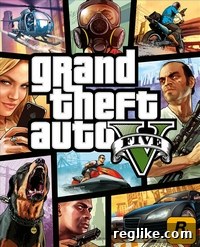 In the ever-evolving digital landscape, the intersection of intellectual property rights and domain name registration frequently sparks legal battles. One such recent case involves gaming giant Take-Two Interactive Software, Inc., the esteemed creator of the globally acclaimed Grand Theft Auto video game series. Take-Two has initiated a dispute with the World Intellectual Property Organization (WIPO) against the registrant of the domain name GTA.tv, alleging cybersquatting. This move prompts a critical question: Is this a clear-cut case of intellectual property infringement, or does it represent an ambitious attempt to claim a highly desirable, short domain name?
The Digital Frontier: Protecting Trademarks in the Domain Name Era
As the internet grew into an indispensable part of daily life and commerce, so too did the potential for disputes over domain names. For major brands, a domain name is not just an address; it’s a critical component of their identity, marketing, and consumer trust. The practice of “cybersquatting”—registering, trafficking in, or using a domain name with the bad-faith intent to profit from the goodwill of someone else’s trademark—became a significant concern for trademark holders worldwide. To address this, the Internet Corporation for Assigned Names and Numbers (ICANN) developed the Uniform Domain-Name Dispute-Resolution Policy (UDRP) in 1999, providing an administrative, arbitration-like procedure for resolving such conflicts without the need for traditional court litigation.
Understanding the UDRP: A Framework for Resolution
The UDRP is a streamlined, relatively inexpensive alternative to court proceedings for trademark owners seeking to recover domain names. It offers a structured approach to combat abusive domain name registrations that exploit existing trademarks. To succeed in a UDRP complaint, the complainant (in this case, Take-Two Interactive) must satisfy three cumulative criteria, demonstrating that:
- The domain name is identical or confusingly similar to a trademark or service mark in which the complainant has rights;
- The registrant (the current owner of the domain) has no rights or legitimate interests in respect of the domain name; and
- The domain name has been registered and is being used in bad faith.
Each of these criteria carries specific legal nuances and requires compelling evidence. The burden of proof rests entirely with the complainant, making these cases often complex and dependent on the unique circumstances surrounding each domain registration. A failure to prove even one of these elements will result in the denial of the complaint, highlighting the meticulous nature of UDRP proceedings.
Take-Two Interactive and the GTA Phenomenon: A Brand’s Digital Footprint
Take-Two Interactive Software, Inc. stands as a powerhouse in the interactive entertainment industry, boasting a portfolio of some of the most critically acclaimed and commercially successful video game franchises. Its most prominent franchise, Grand Theft Auto (GTA), is not merely a game; it’s a cultural phenomenon that has redefined open-world gaming. Launched in 1997, the series has consistently delivered critical acclaim and unprecedented commercial success, selling hundreds of millions of copies worldwide across various platforms.
The acronym “GTA” itself has become intrinsically linked with the game series, instantly recognizable to millions of players and the general public alike, signifying a strong and distinctive brand identity. This immense global recognition and commercial value form the bedrock of Take-Two’s trademark claims, making any domain name incorporating “GTA” potentially valuable for legitimate branding or, conversely, a prime target for cybersquatters aiming to capitalize on its fame and goodwill. Protecting this digital footprint is crucial for maintaining brand integrity and consumer trust.
The GTA.tv Dispute: Specifics and Challenges of a Cybersquatting Claim
In the current dispute, Take-Two Interactive has filed its UDRP complaint against iCity Corp, the current registrant of the domain name GTA.tv. According to publicly available records, iCity Corp registered the domain name in 2010. A review of historical internet archives, such as Archive.org and Screenshots.com, reveals no captured content for the site since its registration by iCity Corp, and the domain does not currently resolve to an active website. This prolonged period of inactivity is often a red flag in UDRP cases, suggesting that the registrant may lack a bona fide use for the domain.
Further investigation, as noted in Take-Two’s filing, indicates that the domain GTA.tv was previously registered to a different party. During that prior ownership, the domain was used as a parked page, displaying advertisements specifically related to the Grand Theft Auto video game. This past activity strongly suggests an intent to profit from the game’s popularity by a previous registrant. However, in UDRP proceedings, it is crucial to establish whether the *current* registrant, iCity Corp, inherited or themselves demonstrated such bad faith. UDRP panels typically focus on the actions and intentions of the *party against whom the complaint is filed*.
Applying the UDRP Criteria to the GTA.tv Case: A Detailed Examination
Let’s delve into how Take-Two might argue its case under each of the three UDRP framework criteria for GTA.tv and the potential challenges it faces:
1. Identity or Confusing Similarity to Trademark: “GTA” as a Strong Mark
Take-Two holds robust and internationally recognized trademark rights to “Grand Theft Auto” and its widely recognized acronym “GTA.” Given the immense global recognition, cultural impact, and commercial success of the franchise, a UDRP panel would almost certainly acknowledge “GTA” as a distinctive and strong trademark firmly associated with Take-Two’s video game series. The addition of the generic Top-Level Domain (gTLD) “.tv” typically does not negate confusing similarity, particularly when the core second-level domain (SLD) component, “GTA,” is clearly linked to a prominent mark. Therefore, Take-Two’s argument for confusing similarity between its “GTA” mark and “GTA.tv” is likely to be strong and straightforward to prove.
2. Lack of Rights or Legitimate Interests: The Inactive Domain
The fact that GTA.tv has been continuously inactive since its registration by iCity Corp in 2010 weighs heavily against the registrant being able to demonstrate legitimate interests. Under UDRP policy, legitimate interests can include using the domain for a bona fide offering of goods or services, being commonly known by the domain name, or making legitimate non-commercial or fair use. An inactive domain, especially one that has been dormant for over a decade without any apparent development or use, typically provides no such evidence. Unless iCity Corp can present a compelling, verifiable reason for its registration and subsequent inactivity that is entirely unrelated to the Grand Theft Auto brand, this criterion will likely favor Take-Two. The burden here is on the complainant to show a *prima facie* case, and then the burden shifts to the registrant to prove legitimate interests.
3. Registration and Use in Bad Faith: The Decisive Factor
This third criterion often proves to be the most challenging to satisfy, especially for short, acronymic domains like “GTA.tv.” Take-Two must demonstrate that iCity Corp *registered* GTA.tv in bad faith and has *used* it in bad faith. While the previous registrant’s parking of the domain with GTA-related ads is strong evidence of bad faith for *that particular registrant*, linking this directly to iCity Corp’s actions in 2010 can be complex.
If iCity Corp merely acquired the domain from that previous registrant, Take-Two would need to show that iCity Corp *knew* of Take-Two’s rights and intended to exploit the “GTA” mark upon its own registration. Bad faith can be inferred from several circumstances, including:
- Offering to sell the domain to the trademark owner or a competitor for a profit exceeding out-of-pocket costs.
- Registering the domain primarily to prevent the trademark owner from reflecting the mark in a corresponding domain name.
- Registering for the primary purpose of disrupting a competitor’s business.
- Using the domain to intentionally attract users for commercial gain by creating a likelihood of confusion with the complainant’s mark.
The long period of inactivity, coupled with the immense fame of the “GTA” trademark, could lead a panel to infer “passive holding” in bad faith, particularly if no plausible legitimate use by iCity Corp is presented. However, without direct evidence of iCity Corp’s specific intent to sell the domain to Take-Two or to actively use it to mislead consumers, proving bad faith for a short, un-used domain can still be a contentious point. The panel must be convinced that the domain was *registered* in bad faith by the current registrant, not just *held* in bad faith.
Take-Two’s History with “GTA” Domain Disputes: A Pattern of Success, Yet Different Contexts
Take-Two Interactive has a well-documented history of successfully leveraging the UDRP to secure domain names containing “GTA.” Their proactive approach to brand protection online has yielded numerous transfers of domains that clearly capitalized on the Grand Theft Auto franchise. This consistent success underscores the strength of their “GTA” trademark in the gaming industry. However, many of these previous victories featured additional elements that unequivocally linked the domain to the game, providing clearer evidence of bad faith intent.
For instance, disputes involving domains like “GTA-beta.com” or “GTA[version number].com” (e.g., GTA5.info) presented much clearer cases of cybersquatting. The inclusion of terms like “beta” or specific version numbers leaves little room for ambiguity regarding the domain’s intended association with the Grand Theft Auto series. Similarly, in a UDRP case that was pending against GTAV.com, the domain owner had established a blog specifically dedicated to Grand Theft Auto, which served as overt and compelling evidence of targeting Take-Two’s trademark for commercial gain. Such direct evidence significantly strengthens a complainant’s case under the bad faith criterion, making the UDRP process more straightforward.
The “GTA.tv” Anomaly: A Shorter, More Ambiguous Case?
The GTA.tv domain, being a mere three characters plus a common TLD, presents a somewhat different scenario compared to Take-Two’s past successes. While “GTA” is undeniably and strongly associated with Grand Theft Auto in the minds of the public, it is also an acronym for numerous other entities or concepts (e.g., Georgia Tech Alumni, Grand Teton Aviation, Government Technology Agency, etc.). The question arises: without additional clarifying words, active exploitation, or direct evidence of specific intent, is “GTA.tv” inherently targeting the Grand Theft Auto brand to the extent required for a UDRP transfer?
Given the immense fame and widespread recognition of the game, a panel would likely lean towards the association, especially in light of the “.tv” TLD which could imply “Grand Theft Auto TV.” However, the lack of a website actively exploiting the brand makes direct “use in bad faith” harder to prove compared to the GTAV.com blog example. The “stretch” argument mentioned in the original text highlights this specific challenge. While Take-Two’s “GTA” trademark is incredibly strong, claiming rights to a very short, acronymic domain without clearer, more direct evidence of specific targeting could be perceived as overreaching by some. The outcome hinges on whether the WIPO panel finds sufficient evidence that iCity Corp registered and held GTA.tv specifically to profit from or impede Take-Two’s trademark, even through passive holding, considering the domain’s history and its current dormant state.
Conclusion: The Evolving Landscape of Digital Intellectual Property
The dispute over GTA.tv underscores the ongoing complexities of intellectual property enforcement in the digital age. For companies like Take-Two Interactive, vigilant protection of their brand assets, including domain names, is paramount to safeguard their investments and maintain their market position. The UDRP serves as an essential tool in this endeavor, offering a structured and efficient mechanism to combat clear instances of cybersquatting.
However, cases involving short, acronymic domains like GTA.tv often walk a fine line, requiring a nuanced understanding of trademark law and domain name dispute policies. While the “GTA” mark undeniably belongs to Take-Two in the context of video games, the intent behind a short, general-looking domain’s registration by a third party can be harder to definitively prove as bad faith, especially when there’s no active website. The WIPO panel’s decision in this specific case will be significant, potentially setting a precedent or reaffirming the evidentiary standards required for UDRP complaints involving highly valuable, yet acronymic, brand terms.
Ultimately, this case serves as a crucial reminder for both trademark holders and domain registrants about the critical importance of due diligence, clear intent, and robust evidence in the ongoing battle for digital real estate. The judgment will clarify whether Take-Two Interactive’s claim over GTA.tv represents a deserved victory against cybersquatting or a test of the boundaries of trademark protection in the vast and rapidly expanding expanse of the internet.