Adapting my domain investing — How I’m
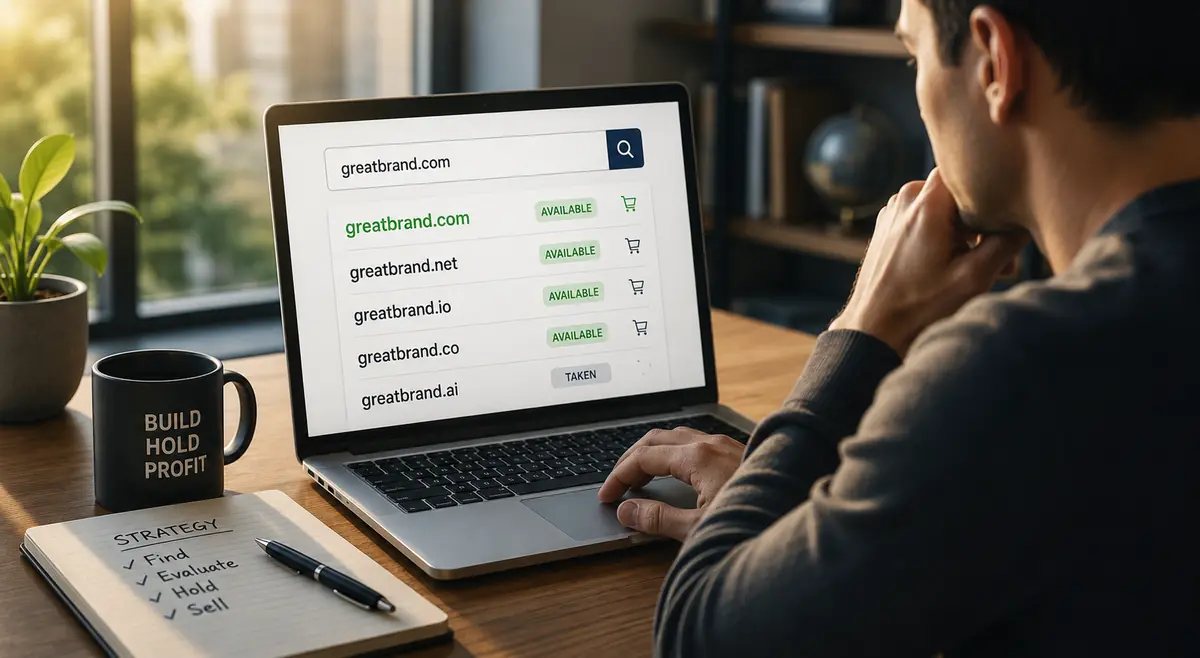
I’m focusing more on hand registration and repricing my tech domains.
I’ve recently made significant changes to how I acquire and price domains, and the shift is by now paying off. In fact, year to date, 2026 is shaping up to be my best year yet in domain investing.
Here is a look at how I’ve pivoted my strategy, the framework I’m using to find hidden gems and validate my acquisitions, and how a recent wake-up call completely changed my approach to retail pricing.
Adding more hand registrations to the mix
On the buyout side, I’m pulling back on my purchases of expired domains, counting GoDaddy closeouts and DropCatch discount orders. Prices are climbing across the board, making it increasingly difficult to find quality domains at margins that make sense. Frustratingly, a larger number of my DropCatch discount orders are being preempted by partners.
Instead, I’m shifting heavily toward hand registrations. (On a number-of-registrations basis, not money spent.)
To some investors, focusing on fresh registrations in 2026 sounds crazy. But I’ve been encouraged by other investors who are finding success with it. By leveraging AI, I’ve been able to spot “holes” in the existing .com namespace that still present opportunities.
My approach borrows heavily from the playbooks shared by past podcast guests. I took Josh Reason’s strategy from DNW Podcast Episode 579 and Phil Davis’ advice from Episode 585, and used AI to scale their concepts. Over the past 12 months, I’ve hand-registered more than 750 .com domains, with the vast majority of those registered this year.
I am consistently finding unregistered domains that are superior to the names available for less than $100 (and sometimes more) in the expiry market.
I’ve by now sold a couple of these fresh names, effectively covering my first-year registration costs for the entire batch.
Leveraging the Afternic data loop
As these domains approach their renewal dates, I’ll analyze the data tied to each “theme” or keyword to evaluate their performance. But you don’t have to wait a full year for actionable data.
While sales and inbound inquiries are the ultimate metrics, you can capture some data almost immediately. Afternic provides 365 days of exact-match search history from GoDaddy. If you hand-register a fresh domain and add it to Afternic, the historical data will populate within a day or two. (Domain Discount Club Pro is required to get this data.)
It might seem counterintuitive that an available $10 domain would have an existing search history. As domain investors, we often think: “If it was sitting there for $10 and no one registered it, can it really be that good?”
But that is investor logic, not end-user logic. Think regarding how a typical business owner hunts for a domain. They brainstorm a list of options, check availability, and ultimately settle on the one they like best.
Rethinking pricing
I’m also changing prices on some of my domains.
Earlier this year, a broker reached out to me regarding an AI-related domain, asking if I’d be willing to come down a bit on the price. When I looked into it, I realized I had sold the domain a few years ago for $5,000. The fresh owner is now asking well into six figures, and the inquiry suggests they could easily sell it for a low six-figure price.
That was an eye-opener. As a result, I am reviewing all my tech-focused domains and applying “moonshot” pricing to those with massive upside.
The key here is being intentional regarding the buyer profile.
I’m not raising prices across the board. I’m not going to slap a moonshot price on a domain that would only appeal to a local service business. But for domains targeting high-capital, high-growth tech sectors? Raise the roof.
Pruning the portfolio
This pricing shift goes hand in hand with churning through the rest of my existing portfolio a bit faster, which is another lesson learned from some of my podcast guests. If a domain no longer fits my current investment thesis, I’m letting it go or trying to liquidate it.
To that end, I posted close to 200 domains at wholesale prices the prior week. All remaining names in that batch are priced at just $50 if you’re interested.
Some of these are names I originally paid hundreds of dollars for. They aren’t bad names, as evidenced by the many investors who have purchased some. They just don’t fit into my long-term plan anymore.
I paid hundreds of dollars for some of these domains. It’s hard to sell at a loss, but I think it makes sense for me.
So, this is a bit regarding what I’m doing differently now. I’m sure it will change, and that’s a key point: the only way to lose in domain investing is to not adapt with the times.