
In the vast and ever-expanding digital landscape, the quest for absolute brand protection often leads companies down a path of diminishing returns. The reality is stark: organizations cannot possibly register every single domain name that could potentially be used to attack or criticize them. This fundamental limitation creates a significant vulnerability that, as history has shown, can be powerfully exploited by critics and consumer advocates alike.
The Unwinnable War: Why Exhaustive Defensive Domain Registration is Futile
In the digital age, a company’s online presence is inextricably linked to its reputation. Brands invest heavily in building trust and loyalty, but this hard-earned goodwill can be instantly eroded by negative publicity, misinformation, or pointed criticism spread across the internet. One common strategy companies employ to combat this threat is defensive domain registration – proactively acquiring domain names that might be used by detractors.
This tactic involves registering variations of a brand’s name, common misspellings, or even overtly derogatory terms combined with the brand name (e.g., “brandscam.com,” “brandexposed.com”). The intention is clear: to prevent others from using these domains to launch websites critical of the company, spread negative information, or even engage in brandjacking or cybersquatting. While seemingly logical, this approach faces an insurmountable challenge: the sheer infinitude of potential “attack” domains.
The Intuit TurboTax Saga: A Case Study in Flawed Domain Strategy
A high-profile example that perfectly illustrates the limits of defensive domain registration is the case involving Intuit, the company behind the popular tax preparation software TurboTax. Several years ago, Intuit found itself under intense scrutiny following widespread reports and investigative journalism uncovering its questionable business practices related to its “free” tax filing options. Public sentiment began to turn, highlighting the company’s efforts to steer eligible users away from truly free tax services.
Reports detailed how Intuit had allegedly lobbied the government against creating its own free, direct-to-consumer tax filing software, instead promising to provide a robust free option through TurboTax. However, investigations revealed that Intuit then deliberately obscured access to this free option, making it difficult for consumers to find. Tactics included burying the free file links deep within their website, utilizing search engine optimization (SEO) techniques to push paid versions higher in results, and even reportedly blocking search engines like Google from indexing the truly free versions of their service. This created a situation where many Americans, eligible for free filing, were unknowingly funneled into paying for tax preparation.
In response to this growing public relations crisis and the potential for widespread backlash, Intuit reportedly embarked on an aggressive defensive domain registration spree. The company sought to preemptively control critical narratives by acquiring domain names that directly attacked its brand. Examples of domains reportedly registered by Intuit included:
f*ckintuit.comturbotaxscam.comintuitexposed.com- And countless other variations aimed at capturing negative sentiment.
The goal was to control the narrative, to prevent disgruntled customers or activist groups from creating websites on these highly relevant critical domains. However, this strategy, while appearing comprehensive, overlooked a crucial aspect of internet dynamics and public expression.
The Infinite Attack Surface: Why Defensive Registration Will Always Fail
The fundamental flaw in an exhaustive defensive domain registration strategy is the sheer, boundless creativity of human language and the ever-expanding digital landscape. While companies can register hundreds or even thousands of domain names, they can never register them all. The possibilities for combining a brand name with derogatory, critical, or humorous terms are practically limitless. Consider the following:
- Lexical Variations: Beyond obvious terms like “scam” or “exposed,” there are myriad other critical adjectives and verbs – “sucks,” “rip-off,” “fraud,” “abuse,” “hate,” “worst,” “problems,” “fail,” “lies,” “deception,” and many more. Each of these can be combined with a brand name.
- Typos and Misspellings: Intentional or unintentional, slight variations in spelling can create entirely new domains.
- Puns and Wordplay: Clever or sarcastic combinations of words can bypass keyword lists.
- New Top-Level Domains (gTLDs): The domain name system is no longer limited to .com, .net, or .org. Hundreds of new gTLDs have been launched (e.g., .online, .tech, .app, .xyz, .site, .money, .tax, .guru). Registering a brand name across every single relevant gTLD is a financial and logistical impossibility, opening up countless new avenues for critical websites.
- Country Code Top-Level Domains (ccTLDs): Even country-specific domains (e.g., .co.uk, .de, .fr) offer further registration possibilities, even if the brand isn’t directly targeting those markets.
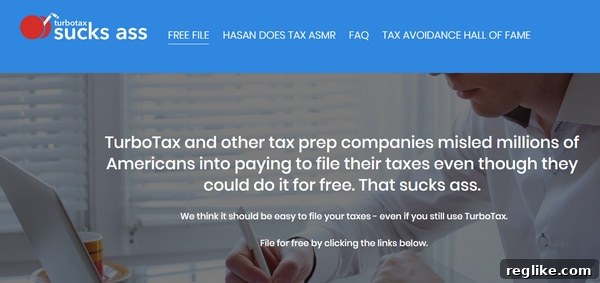
This reality was powerfully demonstrated in the Intuit case. Despite registering a significant number of “attack” domains, Intuit missed a glaringly obvious one that perfectly encapsulated public frustration: TurboTaxSucksAss.com. This oversight proved to be a critical vulnerability, which was swiftly leveraged by a prominent voice in consumer advocacy.
The Power of Public Advocacy: Hasan Minhaj and Patriot Act
The comedian and political commentator Hasan Minhaj, through his acclaimed Netflix show “Patriot Act,” seized upon this very opportunity. Known for his in-depth investigations and sharp critiques of corporate and political malpractices, Minhaj dedicated an entire episode to exposing the tactics of tax preparation companies, with a significant focus on Intuit’s TurboTax.
To amplify their message and create a direct point of interaction for viewers, the “Patriot Act” team registered and utilized the domain TurboTaxSucksAss.com. This website served as an informational hub, drawing direct attention to the often-hidden free file options that tax preparation companies, including TurboTax, had allegedly worked to conceal from the public. By doing so, Minhaj and his team not only highlighted Intuit’s alleged practices but also exposed the fundamental weakness in their defensive domain strategy.
The impact of this move was multifaceted:
- Consumer Awareness: It dramatically raised public awareness about the availability of free tax filing options and the alleged efforts by companies to obscure them.
- Corporate Accountability: It held Intuit publicly accountable for its lobbying efforts and its user experience design choices.
- Demonstrated Futility: It served as a real-world, tangible example that even aggressive defensive domain registration cannot cover all bases, especially when public sentiment is strong and justified.
- Media Leverage: It showcased how media and advocacy groups can effectively use the internet to counter corporate narratives and empower consumers.
The “Patriot Act” episode resonated widely, sparking conversations across social media and contributing to increased pressure on tax preparation companies to be more transparent. It underscored the idea that true brand defense comes not from hoarding domain names, but from earning and maintaining public trust through ethical business practices.
You can watch the pivotal episode covering TurboTax below, which vividly details the issues discussed:
Beyond Defensive Domains: A Holistic Approach to Brand Reputation
The lesson from the Intuit TurboTax case is clear: a company’s online reputation cannot be fully protected by merely registering a multitude of domain names. While registering key brand domains and common misspellings is a prudent first step to prevent outright cybersquatting or phishing, an exhaustive defensive strategy against criticism is largely an exercise in futility. Instead, companies should adopt a more holistic and proactive approach to brand reputation management:
- Prioritize Ethical Business Practices: The most robust defense against negative sentiment is a genuinely ethical and transparent business model. Companies that prioritize customer welfare, fair pricing, and clear communication are less likely to face widespread criticism that necessitates “attack” domains.
- Transparent Communication: Engage directly and honestly with customers. When issues arise, acknowledge them, explain the situation, and outline steps for resolution. Avoiding transparency often fuels suspicion and discontent.
- Robust Customer Service: Empowering customer service teams to resolve issues effectively and empathetically can diffuse potential crises before they escalate into widespread public outcry.
- Active Online Monitoring and Engagement: Regularly monitor social media, review sites, and news outlets for mentions of the brand. Engage with feedback, both positive and negative, in a constructive and timely manner. Addressing concerns publicly and politely can turn detractors into advocates.
- Proactive Content Strategy: Create and disseminate positive, informative, and engaging content that authentically represents the brand’s values and mission. This builds a strong positive online footprint that can naturally mitigate negative narratives.
- Strategic Legal Action (for genuine abuse): While fighting legitimate criticism is ill-advised, companies should still be prepared to use legal recourse (like the Uniform Domain-Name Dispute-Resolution Policy, or UDRP) against clear cases of cybersquatting, trademark infringement, or phishing attempts that genuinely deceive consumers. This is distinct from trying to silence valid criticism.
Ultimately, a brand’s strongest shield against online attacks is its integrity and the positive experiences it consistently delivers to its customers. When a company’s actions align with its stated values, the need for extensive defensive domain registration diminishes, as there is less legitimate fuel for criticism. The Intuit TurboTax scenario serves as a powerful reminder that in the court of public opinion, genuine goodwill outweighs any attempt to control the narrative through sheer domain acquisition.
In an age where information spreads instantaneously and consumer voices are amplified like never before, companies must understand that true brand protection is an ongoing commitment to transparency, fairness, and customer satisfaction, far beyond merely owning a list of domain names.