
Cybersquatting Trends: WIPO Reports Record Cases, But Domain Numbers Tell a Different Story
The World Intellectual Property Organization (WIPO), the leading global authority on intellectual property matters, has recently released its annual report detailing the number of cybersquatting cases handled under the Uniform Domain Name Dispute Resolution Policy (UDRP) and similar mechanisms. While the headline figures point to a record number of cases filed, a closer examination reveals a more nuanced picture of the cybersquatting landscape.
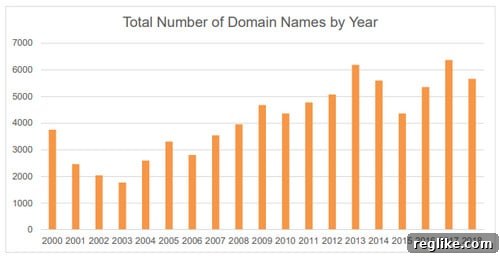
According to WIPO’s official statement, the organization processed a record number of 3,447 cases. This represents a significant workload for WIPO’s arbitration and mediation center, which serves as a crucial resource for resolving domain name disputes efficiently and cost-effectively.
However, the total number of domain names involved in these cases, amounting to 5,665, was not the highest on record. In fact, it ranked third highest, suggesting that while the frequency of cybersquatting disputes is increasing, the scale of individual disputes, measured by the number of domains involved, may be decreasing.
Understanding Cybersquatting and UDRP
Cybersquatting, also known as domain name grabbing, involves registering, selling, or using a domain name with the intent to profit from the goodwill of a trademark belonging to someone else. This practice can harm brand reputation, divert customers, and create confusion in the marketplace. The UDRP provides a streamlined and relatively inexpensive legal framework for trademark holders to reclaim domain names that have been registered and used in bad faith.
It’s essential to avoid simplistic interpretations of these statistics. Headlines proclaiming a new peak in cybersquatting based solely on the number of cases can be misleading. WIPO is just one of several providers authorized to administer UDRP proceedings. Its market share has grown over time, but the overall volume of cybersquatting activity must be assessed across all UDRP providers, not just WIPO.
Furthermore, the number of cases filed does not necessarily directly reflect the actual prevalence of cybersquatting. Filing a UDRP complaint involves a legal process and strategic decision-making on the part of the trademark holder. Factors such as the cost of litigation, the likelihood of success, and the potential return on investment all influence the decision to pursue a formal complaint.
The Impact of GDPR on Cybersquatting Disputes
Looking ahead, there are reasons to anticipate a continued rise in UDRP filings. One potential driver is the implementation of the General Data Protection Regulation (GDPR). GDPR, designed to protect the privacy of individuals’ personal data, has made it more challenging for trademark holders to investigate domain name registrants and determine whether they have legitimate rights or interests in a domain.
Prior to GDPR, it was often possible to access the contact information of domain name registrants through publicly available WHOIS databases. This information could be used to assess the registrant’s identity, history, and potential connection to the trademark in question. With GDPR, much of this information is now redacted or anonymized, making it more difficult for trademark holders to build a case for cybersquatting.
The inability to readily identify and investigate domain name registrants may lead some trademark holders to file UDRP complaints as a precautionary measure. Faced with uncertainty about the registrant’s intentions and legitimacy, they may prefer to initiate a formal dispute rather than risk potential brand damage or customer confusion.
Breakdown of Domain Name Types
The WIPO report also provides a breakdown of the types of domain names involved in cybersquatting disputes. Of the 5,665 domains in question, 5,022 were generic top-level domains (gTLDs) such as .com, .net, and .org, while 633 were country-code top-level domains (ccTLDs) representing specific countries.
Unsurprisingly, .com, .net, and .org remain the most frequently disputed gTLDs. Their widespread recognition and commercial significance make them attractive targets for cybersquatters seeking to capitalize on established brands. Among ccTLDs, .nl (Netherlands), .co (Colombia), and .se (Sweden) led the way in terms of disputes, reflecting the popularity and economic importance of these domains within their respective national markets.
Reverse Domain Name Hijacking
While the UDRP is designed to protect trademark holders from cybersquatting, it also includes safeguards to prevent abuse of the system. Reverse Domain Name Hijacking (RDNH) occurs when a trademark holder attempts to use the UDRP to improperly seize a domain name from a legitimate registrant.
According to RDNH.com, a website dedicated to tracking RDNH cases, WIPO found 28 instances of reverse domain name hijacking last year. This figure underscores the importance of carefully considering the merits of a UDRP complaint and ensuring that there is a genuine basis for alleging cybersquatting before initiating a formal dispute.
The Evolving Landscape of Cybersquatting
The data released by WIPO offers valuable insights into the evolving landscape of cybersquatting. While the number of cases filed is on the rise, the overall picture is more complex than simple headlines suggest. Factors such as the impact of GDPR and the prevalence of reverse domain name hijacking must be taken into account when assessing the true extent and nature of cybersquatting activity.
As the internet continues to grow and evolve, cybersquatting will likely remain a persistent challenge for trademark holders. Staying informed about the latest trends and legal developments, and working with experienced legal counsel, are essential steps for protecting brand reputation and preventing online abuse.
The increase in UDRP filings at WIPO could also point to a greater awareness among trademark holders about the availability and effectiveness of the UDRP process. As more companies become familiar with the UDRP and its advantages over traditional litigation, they may be more inclined to use it to resolve domain name disputes.
Furthermore, the rise of new gTLDs (generic top-level domains) may also be contributing to the increase in UDRP filings. With hundreds of new domain extensions now available, trademark holders may be facing a greater need to monitor and protect their brands across a wider range of online spaces. This increased monitoring could lead to the discovery of more instances of cybersquatting and, consequently, more UDRP filings.
In conclusion, while WIPO’s report highlights a record number of cybersquatting cases, it’s crucial to interpret these figures within the broader context of the evolving domain name landscape. The interplay of factors such as GDPR, new gTLDs, and increased awareness of the UDRP process are all shaping the trends we see in cybersquatting disputes. By understanding these dynamics, trademark holders can better protect their brands and navigate the challenges of the online world.