
Revolutionizing Communication: Namecheap’s Vision for Voice Over Domain Names
In a groundbreaking move that could redefine how we connect online, leading domain name registrar Namecheap has officially filed a U.S. patent application for an innovative “domain communication system.” This ambitious initiative proposes a novel method for individuals and businesses to initiate contact using a domain name instead of traditional phone numbers, opening up a new era of digital interaction seamlessly integrated with one’s online identity.
The core concept, detailed in the extensive patent application (PDF), revolves around enabling direct communication through a domain name. Imagine visiting a website and, instead of searching for a contact number, simply clicking a button or link that initiates a call or message directly to the domain owner. This system aims to create a streamlined, intuitive communication channel, fundamentally altering how businesses and individuals manage their online interactions and customer engagement. While Namecheap has not yet launched a product based on this patent, the application suggests a significant shift in their strategic focus, hinting at a future where domain names serve as comprehensive digital communication hubs.
Addressing the Limitations of Traditional Telephony
Namecheap’s patent application meticulously outlines the shortcomings of current communication systems, particularly the Public Switched Telephone Network (PSTN), which has been the backbone of voice communication for over a century. The document highlights several critical issues that its “domain communication system” seeks to overcome, demonstrating a clear vision for a more integrated and user-friendly communication landscape in the digital age.
Public switched telephone network (PSTN) has been in use for more than a century. A traditional PSTN enables a first user to call a second user using a telephone. The telephone call is routed through a public switching exchange. The first user needs to remember the digital phone number of the second user which can be ten digits or more in length. With newer cell phone devices, the users can access a directory to search and call other users. However, traditional telephonic communications have various limitations. For example, it is often difficult to separate the business and personal lines using a single telephone device. For business users, such separation is very useful to attend to the needs of their clients in a timely manner and balance the needs of their business with their privacy. It is also difficult to provide additional features using traditional telephone systems. Features such as call back and knowing the reason of the call can be useful for business owners to efficiently serve their clients. With most businesses using online presence in the world wide web, it is desired to provide a communication solution that can provide a seamless data, voice, and video communication mechanism to domain name owners.
The Challenge of Remembering Numbers and Privacy Concerns
One of the most apparent issues flagged by Namecheap is the reliance on numerical phone numbers. In an era where digital identities are increasingly tied to memorable domain names, remembering a string of ten or more digits for every contact feels archaic. This challenge is compounded for businesses, where a dedicated phone number might be necessary but can also blur the lines between professional and personal life if managed on a single device. The patent stresses the importance of separating business and personal communications, a growing concern for entrepreneurs, freelancers, and small business owners who often juggle multiple roles. A domain-centric communication system could provide this much-needed distinction, enhancing privacy and professionalism without requiring multiple physical devices or complex call-forwarding setups.
Unlocking Advanced Communication Features
Traditional telephone systems, while reliable for basic voice calls, are notoriously limited in their ability to integrate advanced features that modern businesses and consumers expect. Namecheap’s proposed system aims to bridge this gap by enabling functionalities such as “call back” and the ability to “know the reason for the call” before answering. Imagine a customer initiating a call from your website, and you instantly see not only their name but also the specific product page they were viewing or the support topic they selected. This context-rich communication could dramatically improve customer service efficiency, allowing businesses to prioritize and prepare for calls, ultimately leading to more personalized and effective interactions. Beyond these, the potential for features like integrated scheduling, rich media sharing during a call, or even CRM (Customer Relationship Management) integration becomes significantly more feasible within a domain-based web environment.
Seamless Data, Voice, and Video Integration for Digital Presence
Perhaps the most compelling aspect of Namecheap’s vision is the desire to provide a “seamless data, voice, and video communication mechanism to domain name owners.” In today’s digital landscape, businesses primarily operate online. Their websites are their storefronts, their branding, and their primary point of contact. Integrating all communication channels – text chat, voice calls, and video conferencing – directly into this online presence, accessible through their domain name, represents a logical evolution. This unified approach would eliminate the need for visitors to navigate away from a website to find an email address or dial a separate phone number, creating a truly integrated customer journey. For domain owners, it means consolidating their digital identity and communication tools under one roof, simplifying management and enhancing their online professionalism.
The Transformative Benefits of Domain-Based Communication
The implications of Namecheap’s “domain communication system” extend far beyond mere convenience, offering a multitude of benefits for both domain owners and their audience.
For Domain Owners and Businesses: Enhanced Engagement and Professionalism
For businesses, a domain-based communication system could be a game-changer. It offers an unparalleled opportunity to enhance customer engagement directly on their owned digital property. By reducing friction in the communication process, businesses can expect higher conversion rates and improved lead generation. Prospects are more likely to reach out when it’s as simple as clicking a button on a familiar website. Furthermore, the system would project an image of professionalism and innovation, distinguishing businesses that adopt it. The ability to manage business communications more effectively, separate from personal lines, offers invaluable privacy benefits and helps maintain a clear work-life balance for entrepreneurs. Analytics derived from such a system could also provide deeper insights into customer behavior and communication patterns, enabling continuous improvement in service delivery. Moreover, such a system inherently offers a global reach, as domain names are universally accessible, unlike geographically restricted phone numbers.
For Users and Customers: Simplicity, Trust, and Convenience
From a user perspective, the system promises unparalleled simplicity and trust. Instead of deciphering international dialing codes or worrying about unexpected charges, users can confidently initiate contact with a known and trusted digital identity – the domain name. This direct link fosters a sense of security and reduces the psychological barrier to reaching out. The ease of access, combined with the potential for rich contextual information being shared with the business, means customers could receive faster, more relevant, and personalized support, ultimately leading to a superior user experience.
Namecheap’s Strategic Position and Future Outlook
Given Namecheap’s position as a leading domain name registrar, this patent application is a strategic move that aligns perfectly with their core business. Registrars are the gatekeepers of digital identity, and empowering domain owners with advanced communication capabilities directly linked to their domains would be a significant value-add. It could create a “sticky” ecosystem where customers not only register their domains with Namecheap but also rely on them for their entire communication infrastructure, fostering long-term loyalty and opening up new revenue streams.
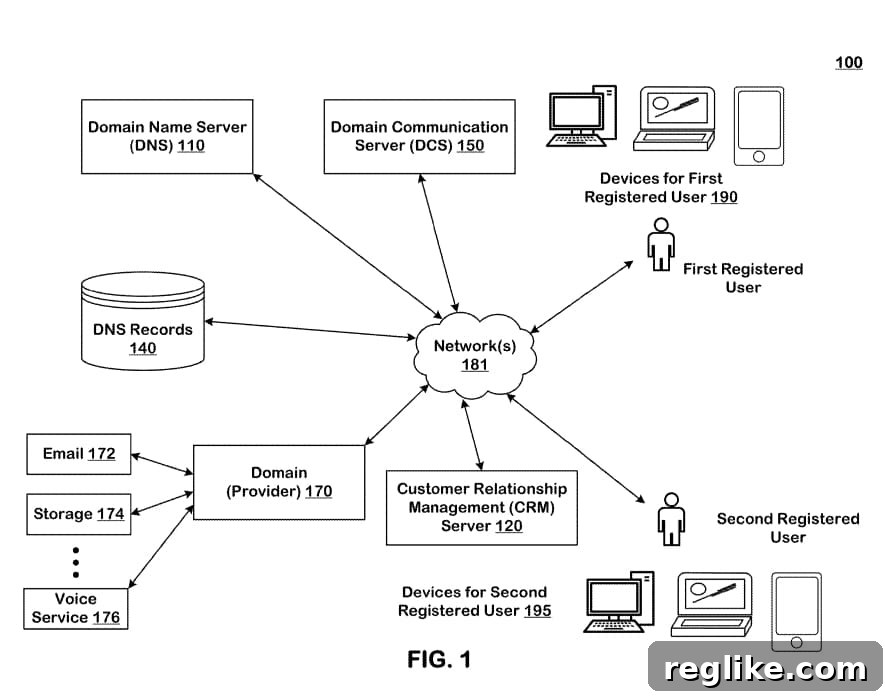
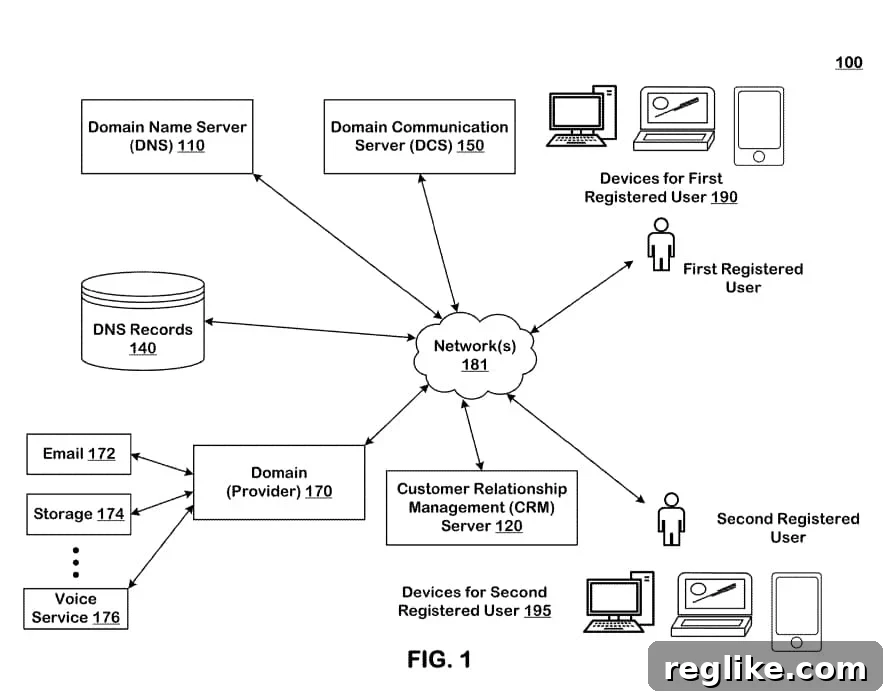
While the patent application doesn’t specify the underlying technologies, it’s highly probable that such a system would leverage modern web technologies like WebRTC (Web Real-Time Communication) for seamless browser-to-browser communication, integrated with DNS (Domain Name System) records to link communication endpoints to specific domain names. The challenges would lie in standardization, ensuring interoperability across different platforms, and robust security measures to prevent spam and ensure user privacy. However, the potential rewards in transforming online communication are immense.
The journey from patent application to a fully functional product can be long and complex, but the filing clearly signals Namecheap’s intent to innovate beyond traditional domain registration services. The company initially filed a provisional patent application in November 2021, followed by the current, comprehensive application in November 2022. The U.S. Patent and Trademark Office recently published the application, revealing its innovative approach to integrating communication directly with a domain name. As the digital landscape continues to evolve, the idea of a domain name becoming the central hub for all personal and business communications is not just futuristic; it’s a logical next step in our increasingly interconnected world, and Namecheap appears to be at the forefront of this exciting transformation.