
A unique legal battle is brewing in the heart of the American business landscape, highlighting the critical importance of brand identity and trademark protection. A Nevada-based company, long established in the field of underground drilling and excavation, finds itself embroiled in a challenging situation as it contends with the naming practices of one of the world’s most prominent entrepreneurs. This local entity, also known as “The Boring Company,” has reported an alarming influx of financial documents, including invoices and collection notices, all intended for Elon Musk’s renowned tunnel-building venture. This case underscores the profound confusion that can arise when two distinct businesses share identical, or strikingly similar, names, particularly when one operates on a significantly larger, more public scale.
The Genesis of Confusion: Two Companies, One Name
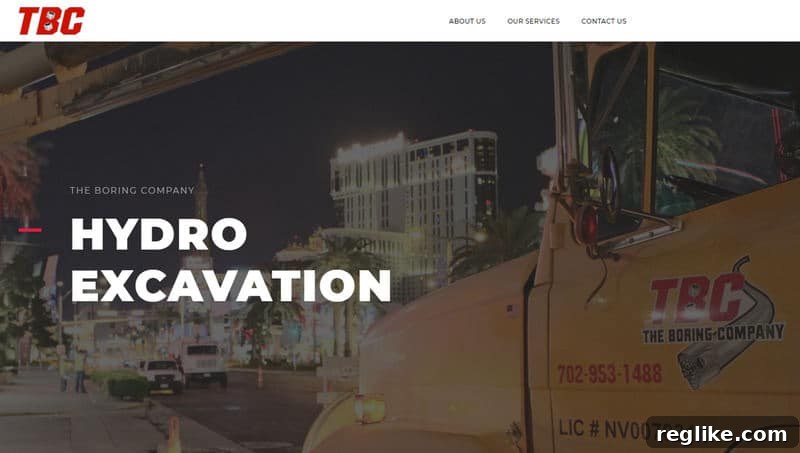
Imagine running a specialized service business in Las Vegas, Nevada, a company dedicated to essential underground work such as boring, trenching, and other forms of subterranean drilling. Your company has built a reputation over time, serving local clients and contributing to infrastructure development. For years, you’ve operated under the clear and descriptive name, “The Boring Company,” and effectively promoted your services via the corresponding domain name, TheBoringCompany.com. This identity has been central to your brand, customer recognition, and operational flow.
Then, the landscape shifts dramatically. Elon Musk, a figure synonymous with innovation and disruption, embarks on a new venture aimed at revolutionizing urban transportation through expansive underground tunnel systems. He christens his new enterprise with the exact same name: “The Boring Company.” Initially, his operations commence in California, far from your local market. However, the trajectory changes when Musk’s company secures a significant contract to construct a complex tunnel network directly beneath the bustling city of Las Vegas – your primary service area.
When Worlds Collide: Local Operations Meet Global Ambition
The convergence of these two entities in the same geographical market, bearing the identical name, has inevitably led to significant operational friction and brand confusion. For the Nevada-based “The Boring Company,” this has translated into tangible and highly problematic consequences. Their recent trademark infringement lawsuit vividly illustrates the severity of this overlap, detailing how their small business has become an unintended recipient of the larger entity’s financial responsibilities.
According to the legal documents filed yesterday, the original Nevada “The Boring Company” has been inundated with a cascade of misdirected correspondence. This includes “numerous invoices, past due statements, collection notices, and notices of intent to file liens” that cumulatively exceed $100,000.00. Crucially, none of these financial obligations pertain to the plaintiff; instead, they were mistakenly addressed to and/or named the Nevada entity instead of Elon Musk’s company. This isn’t merely an administrative inconvenience; it represents a significant operational burden and a potential threat to the smaller company’s financial standing and credit reputation.
The High Stakes of Mistaken Identity: Financial and Reputational Damage
The receipt of over $100,000 in erroneous bills, collection notices, and lien intentions is a stark illustration of the concrete dangers posed by trademark confusion. For a smaller, local business, such an administrative nightmare can quickly escalate into a crisis. Beyond the time and resources wasted in constantly redirecting or disputing these misaddressed documents, there are more insidious risks at play.
Firstly, the persistent flow of collection notices and past-due statements could inadvertently damage the Nevada company’s credit rating. Even if these are eventually resolved, the initial reporting to credit bureaus could negatively impact their ability to secure loans, forge new vendor relationships, or maintain favorable terms with existing suppliers. Secondly, the reputational harm is considerable. Suppliers or contractors of Elon Musk’s company, upon seeing a “The Boring Company” name associated with unpaid bills, might mistakenly assume the Nevada entity is responsible, leading to unwarranted skepticism or reluctance to engage in future dealings.
Furthermore, the confusion isn’t limited to financial paperwork. The Nevada firm likely faces misdirected inquiries, service calls, and general correspondence from individuals or businesses seeking Elon Musk’s enterprise. This diverts valuable time and resources, forcing them to act as an uncompensated redirect service for a much larger, unrelated corporation. Such scenarios undermine their operational efficiency and dilute their distinct brand identity within their specific market niche.
Legal Recourse: A Battle for Brand Identity
In response to these escalating challenges and the failure to reach an amicable resolution, the Nevada “The Boring Company” has taken decisive legal action. They have filed a comprehensive trademark infringement lawsuit against Elon Musk’s company, citing various claims beyond just the infringement itself. These often include allegations of unfair competition, which pertains to business practices that are deceptive or misleading and harm competitors.
The core of the lawsuit hinges on established principles of trademark law, particularly the concept of “likelihood of confusion.” This legal standard assesses whether consumers are likely to be confused about the source or affiliation of goods or services due to similar marks. Given the identical names and the geographic overlap in Las Vegas, the argument for a high likelihood of confusion is robust. The Nevada company, as the “senior user” (the one who used the mark first in that geographical market or for those services), typically holds stronger rights under common law, even if not explicitly federally registered.
The lawsuit details how the Nevada company had reportedly engaged in negotiations with Elon Musk’s “The Boring Company” for a significant period. The fact that these discussions failed to resolve the issue suggests a breakdown in communication or an inability to agree on a satisfactory outcome, leaving litigation as the last resort to protect the smaller company’s established brand and business operations. This underscores the difficulty small businesses face when their brand identity is inadvertently, or perhaps negligently, encroached upon by a global giant.
The Broader Implications for Brand Protection and Due Diligence
This case serves as a crucial reminder for all businesses, from burgeoning startups to established multinational corporations, about the absolute imperative of thorough due diligence in brand naming and trademark clearance. Before launching a new venture or expanding into new markets, comprehensive searches must be conducted across all relevant jurisdictions and registries to ensure that a proposed name does not infringe upon existing trademarks.
For high-profile individuals and companies like Elon Musk’s, the expectation for such diligence is arguably even higher, given their vast resources and the potential for their brand choices to overshadow and inadvertently harm smaller, pre-existing entities. The “boring” pun, while clever and memorable for Musk’s tunnel venture, clearly intersects directly with the literal services offered by the Nevada company, creating a potent recipe for confusion.
Moreover, the concept of “reverse confusion” is relevant here. This occurs when a newer, larger, and more prominent user of a mark overwhelms the market, causing consumers to mistakenly believe that the senior user (the original, smaller company) is actually infringing on the junior user’s mark, or that the senior user is an unauthorized licensee or offshoot of the junior user. This can be devastating for the original brand’s legacy and market position.
As this legal saga unfolds, it will undoubtedly draw attention to the complexities of corporate identity in an increasingly interconnected and globally branded world. The outcome will not only determine the future of “The Boring Company” name for these two distinct entities but will also send a powerful message about the protections afforded to smaller businesses when their established trademarks are challenged by more powerful newcomers. It’s a compelling narrative of local enterprise defending its ground against the vast reach of a tech titan, a testament to the enduring value of a name in the commercial sphere.