
The Battle for Scratch.org: A Deep Dive into a High-Stakes Domain Name Dispute
The digital landscape is often a battleground for valuable online real estate, and few conflicts exemplify this more clearly than the ongoing legal challenge surrounding the Scratch.org domain name. At its heart, this dispute pits a long-time domain owner, Ravi Lahoti, who asserts continuous ownership since 1998, against the Scratch Foundation, a prominent non-profit organization born out of MIT, striving to protect its globally recognized educational brand.
The Roots of Contention: Ravi Lahoti’s Enduring Ownership
Ravi Lahoti’s claim of registering Scratch.org in 1998 stands as a pivotal element in this legal saga. For more than two decades, Lahoti has maintained ownership of this valuable generic domain, long before the Scratch Foundation officially came into existence in 2007. This early registration date is the cornerstone of his defense, invoking the principle of “first-in-time, first-in-right,” a concept frequently debated in domain name disputes where trademark rights clash with prior registration.
The significance of a 1998 registration cannot be overstated. In the nascent days of the internet, domain names were often acquired speculatively or for general purposes, without the explicit intent to infringe on future trademarks that had yet to be conceived. Lahoti’s argument hinges on the idea that his acquisition was legitimate at the time, predating any association of “Scratch” with a specific educational program or foundation. What “Scratch” originally meant to Lahoti or the initial use of the domain remains less clear, but the longevity of his ownership grants a certain historical legitimacy that modern trademark holders often find challenging to overcome.
Scratch Foundation’s Stance: Protecting a Global Brand and Educational Mission
In contrast to Lahoti’s long-standing ownership, the Scratch Foundation emerged from the renowned Massachusetts Institute of Technology (MIT) Media Lab with a clear and compelling mission: to provide a free, visual programming language and online community for children and educators worldwide. The Scratch platform allows users to create interactive stories, games, and animations, fostering creativity and problem-solving skills. Launched as a project in the mid-2000s, the Scratch Foundation itself was established in 2007 to support and expand this invaluable educational initiative.
The Foundation’s concern regarding Scratch.org is multifaceted. They argue that the domain name is deceptively similar to their widely recognized trademark, leading to potential user confusion and dilution of their brand. Their mission is inherently non-commercial and focused on public benefit, making any association with commercial activities on Scratch.org particularly problematic. Earlier this year, the Scratch Foundation initiated an in remlawsuit against the domain name itself, alleging cybersquatting.
An in rem lawsuit is a legal action against a piece of property (in this case, the domain name) rather than against a person. This legal maneuver is typically employed when the domain owner’s identity or location is difficult to ascertain, or when the plaintiff wishes to seize the domain name directly. The Foundation’s complaint details their attempts to resolve the issue amicably, stating that they reached out to Lahoti in 2015 with an offer of under $5,000 for the domain. According to the lawsuit, Lahoti countered with a demand for $450,000. Significantly, shortly after this exchange, the Scratch.org website reportedly began displaying advertisements related to “credit repair,” a move that the Foundation likely views as evidence of bad faith intent and commercial exploitation, bolstering their cybersquatting claim.
Lahoti’s Defense Strategy: Prior Registration as a Shield Against Cybersquatting
Ravi Lahoti’s defense against the cybersquatting allegations centers squarely on his registration date of 1998. The Anticybersquatting Consumer Protection Act (ACPA), the primary U.S. law against cybersquatting, generally requires that a domain name be registered with a “bad faith intent to profit” from a trademark that existed at the time of registration or was clearly foreseeable. Lahoti’s legal team is likely to argue that it would have been impossible for him to have harbored such bad faith intent in 1998, as the Scratch Foundation and its trademark did not exist in their current form for nearly a decade after his registration.
Lahoti’s filing, as detailed in a recent response, emphasizes this chronological fact. While trademark law often grants superior rights to trademark holders, domain disputes are complicated by the “generic” nature of many domain names. The word “scratch” has numerous dictionary definitions and common uses unrelated to programming. Lahoti can argue that his use of the domain falls under these generic meanings, and therefore, does not infringe upon the Scratch Foundation’s specific trademark. The evolution of the domain’s content, particularly its recent updates, plays a crucial role in shaping this defense.
A Family Affair: The Lahoti Brothers and Domain Name Dynamics
Adding another layer of intrigue to this already complex case is the involvement of Ravi Lahoti’s brothers, David and Raj Lahoti, who are well-known figures in the domain name industry. David Lahoti owns and operates UDRPSearch.com, a prominent resource for information on Uniform Domain-Name Dispute-Resolution Policy (UDRP) cases. Raj Lahoti, another brother, is associated with DMV.org, a widely recognized portal for driver and vehicle information.
The family’s deep roots and experience in domain acquisition, management, and disputes are highly relevant. However, what makes this connection particularly noteworthy is a previous incident that suggests internal family friction. Last year, UDRPSearch.com, David Lahoti’s platform, controversially forwarded to information about a lawsuit filed against Ravi. This act was widely interpreted as David Lahoti taking sides with a plaintiff against his own brother, a move that sent ripples through the domain community. Such an apparent public siding could potentially introduce questions of credibility or motive, though its direct impact on the current Scratch.org case remains to be seen. Nevertheless, it highlights the high stakes and sometimes contentious nature of relationships within the domain industry, even among family members.
Strategic Maneuvers in the Courtroom: Jurisdiction and Content Updates
In a strategic legal maneuver, Ravi Lahoti recently requested that the Scratch.org lawsuit be transferred to California. Such requests are common in litigation and are often based on factors like the convenience of the parties, the location of evidence, or the perceived strategic advantages of a particular jurisdiction. Transferring a case can significantly impact costs, logistical challenges, and even the legal precedents applied. This move suggests Lahoti’s legal team is carefully weighing every tactical option available to them in defending the domain.
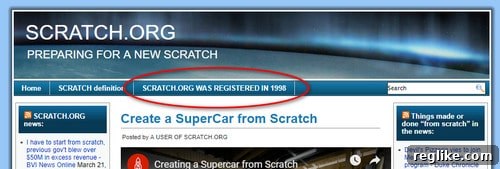
Parallel to these legal filings, Ravi Lahoti also made significant updates to the content of the Scratch.org website. The site now prominently features news articles and videos that incorporate the word “scratch” in various contexts. Crucially, it also includes a clear notice stating that the domain was registered in 1998, along with the dictionary definition of the word “scratch.” These updates are far from cosmetic; they represent a calculated effort to bolster his defense.
By filling the site with generic content related to the word “scratch” and explicitly stating the domain’s long-standing registration, Lahoti aims to demonstrate legitimate, non-infringing use of a common English word. The inclusion of the dictionary definition serves to reinforce the argument that “scratch” is a generic term, not solely associated with the Scratch Foundation’s trademark. This strategy seeks to counteract the Foundation’s cybersquatting claims by showing a lack of bad faith intent and emphasizing the domain’s generic utility, thereby challenging the premise that its primary purpose is to trade on the Foundation’s goodwill.
Broader Implications: Navigating Domain Disputes and Digital Assets
The Scratch.org dispute is more than just a clash between two parties; it encapsulates the broader challenges of managing and protecting intellectual property in the digital age. It highlights the complex interplay between early domain registrations, the evolution of trademarks, and the ever-present threat of cybersquatting. For non-profit organizations and educational institutions like the Scratch Foundation, protecting their brand identity is paramount, as their reputation directly impacts their ability to secure funding, attract users, and fulfill their mission. Confusion caused by similar domain names can erode trust and divert users, undermining years of effort in brand building.
Conversely, the case also underscores the rights of early domain registrants who acquired generic terms without any malicious intent. Striking a balance between protecting established trademarks and respecting prior legitimate domain ownership is a perpetual challenge for legal systems worldwide. Cases like Scratch.org set crucial precedents that influence how digital assets are valued, contested, and ultimately resolved, affecting both individual domain investors and global corporations.
The Road Ahead: What to Expect in the Scratch.org Legal Battle
As the legal battle for Scratch.org continues, both sides have presented compelling arguments. The Scratch Foundation emphasizes the commercial exploitation of its brand, the substantial financial demand, and the potential for user confusion. Ravi Lahoti, on the other hand, stands firm on his 1998 registration date, asserting that his ownership predates the Foundation’s trademark and that his current use of the domain is generic and legitimate.
The outcome could have significant implications for how future domain name disputes are judged, particularly those involving generic terms and long-held registrations versus subsequently established trademarks. Whether this case will conclude with a settlement, a court ruling on the merits of the cybersquatting claim, or another twist in the legal journey, remains to be seen. What is clear, however, is that the Scratch.org saga serves as a compelling reminder of the intricate and often high-stakes nature of digital asset ownership in our interconnected world.