Unlocking Value: Exploring Effective Domain Name Parking Alternatives and Monetization Strategies
The landscape of domain name ownership has always been dynamic, but few shifts have been as impactful as the evolution away from traditional domain parking. For years, simply ‘parking’ a domain with basic pay-per-click (PPC) advertisements was a straightforward way to generate passive income from undeveloped web addresses. However, as the digital ecosystem matured, ad revenues began to dwindle, search engine algorithms grew more sophisticated, and user expectations for valuable content soared. This decline in profitability forced domain owners and investors to seek more robust and sustainable monetization strategies, leading to the emergence of innovative domain parking alternatives.
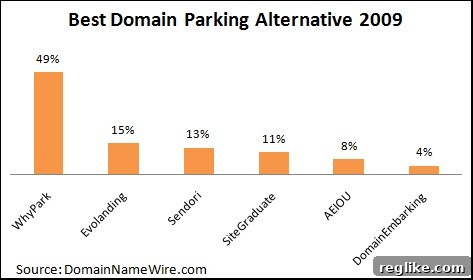
The need for more effective monetization became particularly apparent in the late 2000s, signaling a pivotal moment for the domain industry. In response to this pressing demand, various services began to pop up, each offering unique approaches to develop domain names or monetize them without sole reliance on the diminishing returns of generic PPC ads. To gauge the industry’s sentiment and identify leading solutions, the 2009 Domain Name Wire Survey posed a critical question to domain professionals: “Which domain parking alternative is best?” The results of this pioneering survey shed light on the initial frontrunners and the strategies that were beginning to define the future of domain monetization.
The Shift from Passive Parking to Active Development
Traditional domain parking involved little more than pointing a domain to a service that would display a page filled with contextually relevant ads. The domain owner earned a small fee each time a visitor clicked on one of these advertisements. While seemingly simple and hands-off, this model suffered from several inherent weaknesses. Ad click-through rates (CTRs) were often low, especially for domains with minimal direct traffic. Furthermore, the quality of ads could be inconsistent, and search engines began to de-emphasize parked pages, often viewing them as low-value content farms rather than useful resources. This created a vicious cycle where less traffic led to fewer clicks, which in turn led to even lower revenue.
Recognizing these challenges, a new wave of services emerged, advocating for a more proactive approach: domain development. Instead of merely displaying ads, these platforms aimed to transform dormant domain names into functional, content-rich websites. The goal was to provide genuine value to visitors, improve search engine visibility, and ultimately create more diverse and sustainable revenue streams. This paradigm shift marked the beginning of modern domain monetization, moving beyond mere “parking” towards strategic “development.”
Leading Domain Monetization Alternatives from the 2009 Survey
The 2009 Domain Name Wire Survey provided a snapshot of the innovative solutions gaining traction among domain investors. The results clearly indicated a preference for services that empowered owners to build more substantial online presences rather than just ad placeholders.
WhyPark: The Survey’s Top Contender for Easy Site Development
Emerging as the clear favorite, **WhyPark** captured a significant 49% of the vote in the survey. WhyPark’s appeal stemmed from its promise to simplify the often-complex process of website development and content creation. It offered an intuitive platform that allowed domain owners to quickly establish mini-sites or niche content hubs, transforming basic parked pages into valuable online assets. This service wasn’t about simply displaying ads; it was about building a foundation for sustainable traffic and engagement.
WhyPark operated on a small fee per domain, positioning itself as an accessible solution for managing a portfolio of developed sites. Beyond its core site-building tools, it offered crucial add-on services designed to boost a site’s visibility and content quality. These included professional content writing services, which helped populate new sites with engaging and keyword-rich articles, and search engine submission services, which were vital for getting these newly developed sites indexed and ranked by major search engines. By combining ease of use with essential marketing support, WhyPark provided a compelling proposition for domain owners looking to actively develop their properties and capture organic search traffic.
DevHub (formerly Evolanding): The Free, Revenue-Sharing Platform
Securing the second position in the survey was **Evolanding**, which soon after rebranded and evolved into **DevHub**. This platform offered a distinct model by providing its services for free, opting instead to share advertising revenue with site owners. This approach significantly lowered the barrier to entry for domain investors, allowing them to experiment with development without upfront costs for the platform itself.
DevHub distinguished itself by focusing on ease of use and rapid site creation, allowing users to build attractive, functional websites with minimal technical expertise. A new version of its platform was released shortly after the 2009 survey period concluded, demonstrating its commitment to continuous improvement and innovation. This ongoing evolution suggested that DevHub was poised to become an even stronger competitor in the years that followed, potentially gaining ground on leaders like WhyPark by offering a powerful, no-cost alternative for site development and monetization through ad-sharing. Its model appealed particularly to those looking to leverage ad revenue without the associated platform fees.
Alternative Monetization Models: Beyond Clicks and Into Views and Custom Content
While WhyPark and DevHub focused on developing sites for click-based ad revenue or affiliate sales, other services presented different monetization strategies, catering to specific niches or higher-value domains.
Sendori: Monetizing by Views, Not Clicks
**Sendori**, a service that later caught the attention of internet giant IAC (InterActiveCorp) and was subsequently acquired, introduced an intriguing alternative: paying domain owners based on views rather than clicks. This model shifted the focus from direct advertising engagement to broader audience reach and impression volume. For domains generating significant traffic but perhaps lower click-through rates, Sendori’s approach offered a potentially more stable and predictable revenue stream. It represented a departure from the traditional PPC model, highlighting the industry’s willingness to explore diverse compensation structures.
SiteGraduate and AEIOU: The Premium, Customized Development Route
For domain owners with more premium properties or those seeking a higher degree of customization and quality, services like **SiteGraduate** and **AEIOU** provided a more hands-on, bespoke development experience. These platforms moved beyond template-driven sites, offering fully customized services that included the creation of original, high-quality content tailored to the specific domain and its target audience. This approach was ideal for domains that warranted a more significant investment due to their inherent value, branding potential, or specific niche.
Naturally, this level of customization and original content came with a higher price tag, typically costing at least $150 per domain developed. This investment was justified by the creation of unique, authoritative websites designed to attract and retain visitors, build brand equity, and achieve superior search engine rankings. Such services targeted domain investors who prioritized quality, uniqueness, and long-term value over mass production, understanding that a well-developed, content-rich site could command significantly higher revenue and appeal. The author of the original article even noted personal experience with these services, promising an in-depth review of SiteGraduate, underscoring their significance in the premium domain development space.
Strategic Considerations for Domain Monetization Success
While the emergence of these domain parking alternatives offered promising new avenues for revenue, the industry was also quick to temper expectations. The consensus among experts, including the platforms themselves like WhyPark and DevHub, was clear: success in domain monetization, especially through development, is not a “walk in the park.”
Targeting Underutilized Domains and Leveraging Search Engines
These new services were generally best suited for domains that didn’t receive a significant amount of “type-in” traffic—that is, visitors directly entering the domain name into their browser. For such domains, the primary objective shifted from capturing direct navigation to achieving strong visibility within search engines. The goal was to develop content-rich mini-sites or niche portals that could rank for relevant keywords, thereby attracting organic search traffic. This strategy required a deep understanding of search engine optimization (SEO), including keyword research, on-page optimization, and content marketing.
Quality Over Quantity: The Challenge of Mass Production
A crucial lesson learned early on was that developing hundreds of low-quality, generic sites in the hope of passive income was largely an ineffective strategy. Search engines like Google continuously refined their algorithms to prioritize high-quality, relevant, and unique content. Sites that were mass-produced with thin or duplicated content quickly found themselves penalized or de-indexed. Therefore, the “set it and forget it” mentality that once defined traditional domain parking simply did not translate to successful domain development.
Instead, domain owners were encouraged to focus on creating fewer, but higher-quality, developed sites. This involved investing time and resources into genuine content creation, user experience, and ongoing SEO efforts. The emphasis shifted from simply having a domain ‘online’ to building a valuable digital asset that served a specific purpose or niche, attracted a targeted audience, and provided a positive user experience. This philosophical shift was fundamental to achieving sustainable success in the evolving world of domain monetization.
The Enduring Relevance of Early Domain Monetization Strategies
Although the Domain Name Wire Survey that highlighted these alternatives was conducted in 2009, the fundamental principles and strategies discussed remain remarkably relevant today. The core idea—moving beyond passive parking to active development and diverse monetization—has only solidified over time. Modern domain investors continue to employ sophisticated techniques to transform dormant domains into thriving online businesses, utilizing content marketing, affiliate programs, lead generation, and various advertising models.
The lessons learned from the early pioneers like WhyPark and DevHub underscore the importance of choosing the right strategy for each domain, understanding the effort required for content creation and SEO, and prioritizing quality over sheer volume. As the internet continues to evolve, the ability to adapt and innovate in domain monetization remains a critical skill for anyone looking to unlock the full potential of their domain name portfolios.
For those interested in the broader context and additional insights from that era, more results from the 4th annual Domain Name Wire Survey can be found by exploring historical archives and industry reports.