
The fierce competition in the domain parking industry reveals an astounding truth: companies are willing to invest hundreds, even thousands, of dollars to acquire a single customer. This aggressive pursuit underscores the immense profitability within the domain monetization sector, transforming idle digital assets into bustling revenue streams.
Have you ever noticed the proliferation of domain name parking services? This phenomenon is a direct consequence of a highly lucrative business model. Domain parking companies, driven by significant potential returns, exhibit a remarkable willingness to pay substantial sums to attract new clientele. This financial commitment is vividly illustrated by their aggressive bid prices on major advertising platforms, notably exemplified by Yahoo (NASDAQ: YHOO).
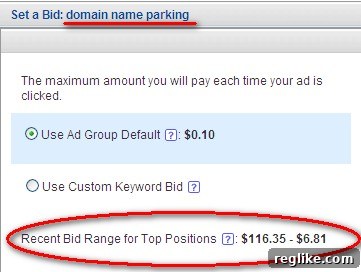
A recent experiment involving a campaign for “domain name parking” on Yahoo! Search Marketing highlighted the sheer intensity of this competition. When testing keywords like “domain parking” and “domain name parking,” Yahoo’s platform provided striking insights into the cost required to secure a top listing. The figures were anything but modest: bids ranged from an astonishing $6.81 to an eye-watering $116.35 per click. To put this into perspective, if a typical parking company successfully converts just one in ten visitors into a paying client, these bid prices translate to an effective customer acquisition cost ranging from $68.10 to an astounding $1,163.50 per user. These numbers are not for the faint of heart; they represent a serious investment in customer acquisition, reflecting the high value attributed to each new domainer bringing their portfolio to a parking service.
Understanding Domain Name Parking: Monetizing Unused Digital Real Estate
To fully grasp the dynamics of this market, it’s essential to understand what domain name parking entails. At its core, domain parking is a method of monetizing unregistered or undeveloped domain names. Instead of a domain pointing to an empty page or a full-fledged website, it directs users to a specially designed “parked page.” These pages typically feature a collection of pay-per-click (PPC) advertisements related to the domain’s keywords or general popular searches. When a visitor clicks on one of these ads, the domain owner (domainer) and the parking company share a portion of the ad revenue generated.
This ingenious model offers domain owners a hassle-free way to generate passive income from their dormant digital assets. Rather than letting valuable domain names sit idle, accumulating registration fees without yielding any returns, parking services transform them into active income generators. For parking companies, the business involves aggregating thousands, or even millions, of these parked domains, thereby creating a vast network of ad inventory that attracts significant interest from advertisers seeking targeted traffic.
The Lucrative Engine: Why Domain Parking Thrives
The profitability of domain parking stems from several key factors. Firstly, the internet is teeming with generic, descriptive, or keyword-rich domain names that receive a steady stream of “type-in” traffic from users directly entering them into their browser or from search engine queries. These domains, even without developed content, attract visitors with specific interests, making them prime real estate for contextual advertising.
Secondly, the operational overhead for parking companies is relatively low compared to traditional web businesses. They leverage automated systems for ad placement, revenue sharing, and reporting. Their primary investments lie in technology, marketing, and the aggressive pursuit of high-value domain portfolios. The scalability of the model is immense; once the infrastructure is in place, adding more domains often means increasing revenue with minimal incremental cost.
Thirdly, advertising networks like Google AdSense, Yahoo Gemini, and others provide a robust ecosystem for monetizing this traffic. These platforms connect parked domains with a vast pool of advertisers, ensuring a continuous flow of relevant ads and competitive bidding that maximizes revenue potential. The parking company acts as an intermediary, optimizing ad placement and managing the technical complexities, allowing domainers to focus solely on acquiring and managing their domain portfolios.
The High Stakes of Customer Acquisition: Unpacking the Bid Prices
The staggering bid prices for “domain parking” keywords on platforms like Yahoo underscore the intense competition among domain parking companies to attract new customers. These companies aren’t just buying clicks; they are investing in the acquisition of domain portfolios, which are long-term assets generating recurring revenue. A domainer with a valuable portfolio represents a continuous income stream for the parking service, making a high initial acquisition cost justifiable.
Decoding the Cost Per Click (CPC) and Cost Per Acquisition (CPA)
The original experiment revealed CPCs between $6.81 and $116.35. These figures are not arbitrary; they reflect the perceived lifetime value of a domainer customer. If a parking company can secure a domainer whose portfolio generates, say, $500 per month in ad revenue, paying a few hundred dollars to acquire that customer is a sound business decision. The calculation that leads to a customer acquisition cost between $68.10 and $1,163.50 per user is based on a common conversion rate assumption (1 in 10 visitors signing up). This high CPA is a testament to the belief that domain parking, when done effectively, is a significantly profitable endeavor for both the domainer and the parking company.
It’s worth noting that Yahoo, like other major ad platforms, incorporates “ad quality” into its calculation for necessary bid prices to achieve top positions. This means that simply bidding high isn’t enough; the ad copy, landing page experience, and relevance to the search query also play a crucial role. When testing various ad variations using actual parking companies’ URLs, the results consistently showed similarly high bid requirements, indicating that the market value for these keywords is genuinely elevated, driven by the inherent value of the customer being sought.
In contrast, the bid prices for the broader term “domain name” were considerably lower, ranging from $4.16 to $15.04. This difference highlights the specificity and intent behind the searches. Someone searching for “domain name” might be looking to register a new domain, sell a domain, or simply learn about them. A search for “domain parking,” however, indicates a clear intent to monetize existing domains, making those searchers highly valuable leads for parking companies.
Targeting the Top Domainers: The “Biggest Bang for the Buck”
While every domainer is a potential customer, parking companies understand that not all portfolios are created equal. The most desirable clients are “top domainers” – individuals or entities with large portfolios of high-value, high-traffic domain names. These are the domains that consistently attract significant type-in traffic and generate substantial ad revenue. Acquiring such a portfolio can single-handedly justify a high customer acquisition cost.
Therefore, parking companies strategically market to these top domainers, often through direct outreach, exclusive offers, premium revenue share percentages, and participation in industry events. They aim to get the “biggest bang for the buck” by focusing their high-cost acquisition efforts on those customers who promise the highest return on investment. A top domainer’s portfolio might include generic descriptive domains (e.g., “cars.com”), geographical domains (“londonhotels.com”), or highly brandable terms, all of which are highly coveted by advertisers and, by extension, by parking services.
Benefits for Domainers: Why Partner with a Parking Service?
For domainers, the decision to partner with a parking service offers numerous advantages:
- Passive Income Generation: Convert unused domains into a source of regular earnings without the need for website development or maintenance.
- Zero Development Cost: Avoid the time, effort, and expense of building a website for each domain.
- Maximized Monetization: Parking services often have sophisticated algorithms and relationships with ad networks to optimize ad placement and maximize revenue per click.
- Detailed Reporting: Access to comprehensive analytics on traffic, ad impressions, clicks, and earnings, allowing domainers to track the performance of their portfolio.
- Flexibility and Control: Easily switch domains between parking services or direct them to full websites as business needs evolve.
- Expertise: Leverage the expertise of parking companies in ad optimization, industry trends, and legal compliance.
Choosing the Right Domain Parking Partner
Given the abundance of parking companies, domainers must carefully evaluate their options. Key factors to consider include:
- Revenue Share: The percentage of ad revenue shared with the domainer is crucial. Higher percentages are often offered to premium portfolios.
- Reporting Tools: Transparency and detail in reporting are essential for understanding domain performance and earnings.
- Payment Terms: Frequency of payouts, minimum payout thresholds, and available payment methods.
- Ad Quality: The relevance and quality of ads displayed on parked pages can influence user experience and click-through rates.
- Customer Support: Responsive and knowledgeable support can be invaluable for resolving issues.
- Customization Options: The ability to customize page layouts, ad formats, and even add basic content can enhance monetization.
The Evolving Landscape of Domain Monetization
Domain parking is not a static industry; it continuously evolves to meet market demands and technological advancements. Beyond simple ad-based parking, many services now offer more sophisticated monetization options:
- Lead Generation Pages: Domains can be used to capture leads for specific industries or services.
- “For Sale” Landing Pages: Allowing domainers to list their domain names for sale directly from the parked page, often with a contact form or a “make offer” button.
- Mini-Sites or Micro-Sites: Some services offer templates for creating slightly more robust parked pages with a small amount of content, providing more value to visitors and potentially increasing ad relevance.
- AI and Data Analytics: Advanced parking platforms increasingly leverage artificial intelligence and big data analytics to optimize ad targeting, predict revenue, and personalize the user experience on parked pages, further boosting profitability.
Conclusion: A High-Stakes, High-Reward Industry
The domain name parking industry stands as a testament to the internet’s enduring capacity for innovation and wealth creation. The willingness of parking companies to invest hundreds, even thousands, of dollars per acquired customer is not merely an indication of aggressive marketing; it’s a clear signal of the profound profitability and strategic value embedded in domain monetization. From the high-stakes bidding wars for search keywords to the sophisticated strategies employed to attract top domainers, every facet of this business underscores its competitive and rewarding nature.
As the digital landscape continues to expand, the value of premium domain names and the need for effective monetization strategies will only grow. Domain parking services, by bridging the gap between idle digital assets and active revenue streams, remain a vital component of the internet economy, constantly evolving to offer domainers robust solutions for turning their portfolios into lucrative ventures. The staggering investment in customer acquisition merely reinforces a fundamental truth: in the world of domain parking, a single customer can indeed be worth their weight in digital gold.