
UDRP Decisions in 2025: Analyzing Trends and Provider Performance
The domain name landscape is constantly evolving, and understanding the trends in domain name dispute resolution is crucial for businesses and individuals alike. GigaLaw’s latest report offers a valuable perspective on the Uniform Domain Name Dispute Resolution Policy (UDRP) decisions in 2025. This report sheds light on key trends, provider performance, and the persistent issue of reverse domain name hijacking.
According to the report, there was a minor dip in the total number of UDRP decisions in 2025 compared to the previous year. While the decrease was not drastic, it warrants a closer look at the underlying factors that may have contributed to this trend. Understanding these factors is essential for anticipating future trends and making informed decisions regarding domain name management and dispute resolution strategies.
Slight Decline in UDRP Decisions: A Detailed Overview
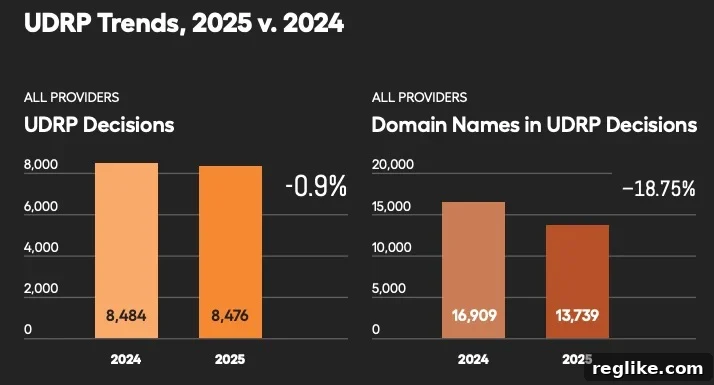
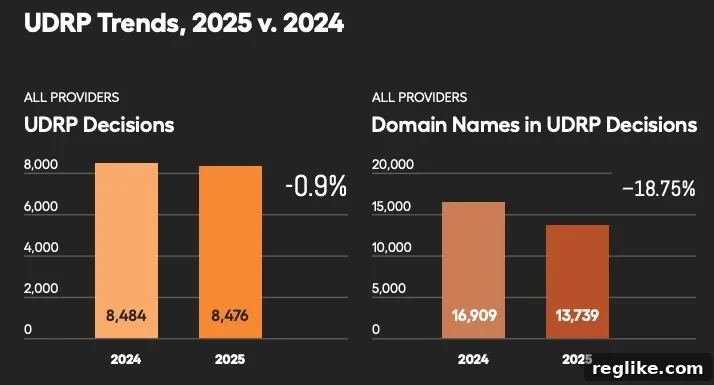
GigaLaw’s comprehensive Domain Name Dispute Digest meticulously analyzed the UDRP decisions across all five recognized UDRP providers. The findings revealed a 0.9% decrease in the total number of decisions, reaching 8,476 last year. While seemingly small, this decrease signals a potential shift in the dynamics of domain name disputes and warrants further investigation.
It’s important to note that the report focuses specifically on decisions rendered, rather than the initial filings of UDRP cases. This distinction highlights two significant caveats. Firstly, the dates presented are based on when the decisions were made, not when the cases were originally filed. Secondly, the report excludes cases that were settled or terminated before reaching a formal decision. These factors provide a more accurate representation of the outcomes of UDRP disputes, rather than simply tracking the volume of cases initiated.
The number of domains involved in UDRP decisions experienced a more substantial decline, dropping by 19%. Doug Isenberg of GigaLaw pointed out that the previous year saw several outlier cases involving unusually large numbers of domains, which may have skewed the overall figures. Taking these outliers into account provides a more nuanced understanding of the year-over-year changes in domain name dispute activity.
WIPO vs. GigaLaw: Contrasting Perspectives on Domain Disputes
While the World Intellectual Property Organization (WIPO) reported a record number of domain disputes handled in 2025, GigaLaw’s analysis presented a slightly different picture. WIPO’s figures indicated a significant increase in cases, while GigaLaw’s data showed a decrease in UDRP cases decided at the leading UDRP provider, with a drop of 3.7%. How can these seemingly contradictory findings be reconciled?
The key lies in the scope of the data being analyzed. WIPO’s reported numbers encompass not only UDRP cases but also other types of cybersquatting disputes, including those involving country code domains that have not adopted the UDRP. This broader scope naturally leads to a higher overall number of cases. Furthermore, as mentioned earlier, GigaLaw’s report focuses specifically on decisions rendered, excluding settled or terminated cases, while WIPO’s figures may include a wider range of case statuses. This difference in methodology can account for the contrasting trends observed in the two reports.
To gain a complete understanding of the domain name dispute landscape, it’s crucial to consider both WIPO’s overall statistics and GigaLaw’s focused analysis of UDRP decisions. By examining these different perspectives, stakeholders can develop a more comprehensive and accurate view of the challenges and trends in this dynamic field.
Provider Performance: Forum Experiences Growth
Beyond WIPO, other UDRP providers play a significant role in resolving domain name disputes. Forum, formerly known as the National Arbitration Forum, emerged as the second-largest UDRP provider in 2025. Notably, Forum experienced a 5.1% increase in its decisions, indicating a growing role in the UDRP process. This growth may reflect a shift in preference among complainants, or simply a greater capacity to handle an increasing volume of cases. Regardless of the underlying reasons, Forum’s performance underscores the importance of considering the various UDRP providers when assessing the overall landscape of domain name dispute resolution.
Reverse Domain Name Hijacking: A Persistent Threat
Reverse Domain Name Hijacking (RDNH) remains a significant concern within the UDRP framework. RDNH occurs when a trademark holder attempts to wrongly claim a domain name, often with the intention of stifling legitimate competition or acquiring a domain name that they are not rightfully entitled to. This practice can have serious consequences for domain name holders who are targeted by such frivolous claims.
GigaLaw’s report highlights the continued prevalence of RDNH, noting that 1.24% of decisions in the fourth quarter of 2025 resulted in a finding of reverse domain name hijacking. While this percentage may seem relatively small, it represents a significant number of cases where domain name holders were subjected to unwarranted legal pressure and potential financial losses. The persistent presence of RDNH underscores the need for vigilance and robust defense strategies for domain name holders facing UDRP challenges.
Mitigating the Risk of Reverse Domain Name Hijacking
To protect themselves against the threat of RDNH, domain name holders should take several proactive steps. First and foremost, it’s crucial to maintain accurate and up-to-date records of domain name ownership and usage. This documentation can serve as valuable evidence in defending against frivolous UDRP claims. Additionally, domain name holders should carefully monitor their domain names for potential trademark infringement issues and seek legal counsel if they believe they are being unfairly targeted.
Furthermore, it’s essential to understand the criteria for a successful UDRP claim. Complainants must demonstrate that the domain name is identical or confusingly similar to a trademark in which they have rights, that the domain name holder has no rights or legitimate interests in the domain name, and that the domain name was registered and is being used in bad faith. By understanding these requirements, domain name holders can better assess the validity of any UDRP complaints they may receive and develop an appropriate defense strategy.
Conclusion: Navigating the Complexities of UDRP
The UDRP landscape in 2025 presents a complex and evolving picture. While the overall number of UDRP decisions experienced a slight decline, the underlying dynamics of domain name disputes remain as relevant as ever. Understanding the trends in provider performance, the persistent threat of reverse domain name hijacking, and the nuances of UDRP procedures is essential for businesses and individuals seeking to protect their domain name rights.
By staying informed and proactive, domain name holders can navigate the complexities of the UDRP process and safeguard their valuable online assets. As the digital world continues to evolve, a thorough understanding of domain name dispute resolution is crucial for maintaining a strong and secure online presence.
This analysis of the UDRP landscape in 2025 provides valuable insights for anyone involved in domain name management and dispute resolution. By carefully considering the trends and challenges outlined in this report, stakeholders can make informed decisions and protect their online interests effectively. The UDRP remains a vital tool for addressing cybersquatting and other forms of domain name abuse, and a thorough understanding of its intricacies is essential for navigating the ever-changing digital landscape.
The future of domain name dispute resolution will likely continue to be shaped by factors such as the growth of e-commerce, the increasing importance of online branding, and the ongoing efforts to combat cybersquatting. By staying abreast of these developments and engaging with the UDRP process effectively, domain name holders can ensure that their online presence remains secure and protected.