
The Unfolding Labyrinth of New TLDs: Navigating Digital Identity in a Dot-Com World
The digital landscape is a constantly evolving frontier, where every click, every search, and every online interaction shapes our experience. At the heart of this landscape lies the humble domain name – our digital address on the internet. For decades, one name has reigned supreme: .com. It’s synonymous with online presence, a universally understood signifier of a website. However, the internet’s governance body, ICANN, introduced a massive expansion of Top-Level Domains (TLDs) in recent years, ushering in hundreds of new options like .app, .store, .live, .blog, and even custom brand TLDs. While intended to foster innovation and choice, this proliferation also introduces a unique set of challenges, particularly for user navigation and brand communication.
One striking example of the confusion that threatens to reign when new TLDs become commonplace appeared in a seemingly innocuous advertisement. This morning, while flipping through the print edition of The New Yorker, an ad for Vogue.TV, the popular magazine’s multimedia web site, caught my eye. Here’s the ad:
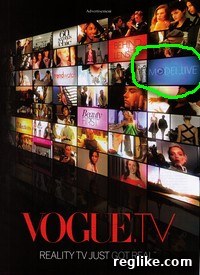
Upon closer inspection, a particular detail, circled in green, stands out. It’s quite small, so let’s zoom in for a clearer view:

The Blurring Lines: Branding vs. Web Addresses
What exactly are we looking at here? Does Vogue, a global fashion powerhouse, intend to launch a new top-level domain name like .live? Is this a subtle announcement of an innovative step into the domain name space? The answer, upon reflection, is almost certainly no. In this instance, the dot is purely a stylistic and branding choice for its reality model show, “Model.Live.” It’s an internal brand identifier, a creative way to present a program name. But this seemingly innocent use of a dot immediately throws into sharp relief the potential for widespread confusion once a slew of new top-level domain names are released and actively used in the coming years.
For decades, internet users have been conditioned to interpret a “dot” in a sequence of characters as a separator in a web address. Whether it’s “example.com,” “google.co.uk,” or “vogue.tv” (as seen at the bottom of the very same ad), the dot signals a digital destination. Our brains are hardwired to process this syntax. When we encounter “Model.Live,” the instinct for many will be to treat “.Live” as a potential TLD, prompting questions like: “Is this a web address?” or “Do I need to type ‘www.’ in front of it to access it?” This psychological conditioning creates a significant hurdle for marketers and brand strategists. If a company uses a dot within a brand name that mimics the structure of a domain, it risks misdirecting potential traffic or simply confusing its audience.
Consider the practical implications: if “Model.Live” were misinterpreted as a web address, users might try to navigate to it directly, only to find it doesn’t exist or leads them elsewhere. Conversely, if Vogue.tv, which is an actual web address, didn’t explicitly include “www.” or was styled in a way that mirrored a brand name, some users might hesitate, wondering if it’s indeed a clickable link. The clarity we once took for granted with the “.com” standard is now being challenged. Brands must now walk a tightrope, balancing creative marketing with unambiguous digital navigation instructions. The future of online marketing will demand not just engaging content, but also crystal-clear calls to action that leave no room for ambiguity regarding web addresses.
The Broader Impact of New TLDs: Opportunities and Obstacles
The introduction of hundreds of new TLDs by ICANN was a monumental shift in the internet’s naming architecture. Beyond traditional options like .org or .net, we now have industry-specific TLDs (.tech, .store), geographic TLDs (.nyc, .london), generic TLDs (.online, .site), and even highly specialized ones like .pharmacy or .bank, which often come with enhanced security features. The intent was noble: to provide more choices, enable more relevant domain names, and allow brands to own their identity more fully (e.g., .brand TLDs like .apple or .microsoft).
Navigating the Costs and Brand Protection Maze
However, this expanded choice comes with its own set of formidable challenges, especially for corporations. In related news on new TLDs, CFO Magazine published an article lamenting the high costs associated with these new top-level domains. The article delves into the complex decisions companies now face regarding their digital presence. Not only must they consider registering their own bespoke top-level domain – a significant investment in time, money, and ongoing management – but they also face the daunting task of protecting their brands across potentially hundreds of other new TLDs.
This “defensive registration” strategy is crucial to prevent cybersquatting, brand impersonation, or the dilution of trademarks by third parties. Imagine a scenario where “yourcompany.store” is snapped up by a competitor, or “yourcompany.sucks” is registered by a disgruntled former employee. The sheer volume of new TLDs means that simply securing the “.com” version is no longer sufficient for comprehensive brand protection. Companies must now meticulously evaluate which TLDs are most relevant to their industry, their target audience, and their global reach, then decide whether to register defensively, proactively, or risk potential headaches down the line. The financial burden and strategic complexity associated with this comprehensive approach are considerable, necessitating careful budgeting and foresight from financial officers and marketing teams alike.
Marketing and SEO in a Fragmented Domain Space
Beyond costs, the new TLDs introduce significant marketing and SEO considerations. How do you communicate a non-.com domain effectively to a broad audience? Will users remember “yourbrand.app” as easily as “yourbrand.com”? The traditional perception of authority and trust has long been associated with .com. While search engines like Google have stated that they treat all TLDs equally in terms of SEO ranking, user perception and click-through rates can indirectly influence search performance. A user might instinctively trust a .com address more, leading to higher engagement and better signals for search algorithms. Therefore, educating the audience about new TLDs and establishing their credibility becomes an integral part of modern digital marketing.
The strategic choice of a TLD can, however, offer advantages. A niche TLD like .store for an e-commerce business or .tech for a technology company can immediately signal the website’s purpose, potentially attracting a more targeted audience and improving brand relevance. However, this benefit must be weighed against the potential for reduced memorability or user confusion compared to the ubiquitous .com.
The Enduring Power of .Com and Future Outlook
Despite the proliferation of new TLDs and the opportunities they present for niche branding and digital identity, the legacy of .com remains incredibly strong. The last paragraph of the CFO Magazine article offers a compelling perspective:
Deutsch and others are hoping to work with ICANN to create simple remedies, even as they draw comfort from the idea that new TLDs could be a bust. “At the end of the day, ‘.com’ is still the one that global businesses aspire to,” says Peter Lamson, a senior vice president with NameMedia, which buys and sells domain names. CFOs can only hope it remains that way.
This sentiment resonates deeply within the industry. The .com TLD has built unparalleled trust, recognition, and brand equity over decades. For many, it’s not just a domain; it’s the internet. While new TLDs offer creative alternatives and specialized niches, dethroning .com from its position as the default, aspirational global business domain is an uphill battle. User habits are deeply ingrained, and the simplicity of remembering “just add .com” is a powerful force.
In conclusion, the era of new TLDs presents a fascinating dichotomy. On one hand, it’s an opportunity for unprecedented creativity, niche targeting, and stronger brand alignment. On the other, it introduces a complex maze of choices, potential for user confusion, and significant financial and strategic burdens for businesses aiming to protect their digital identities. The Vogue.TV example serves as a potent reminder that as the internet continues to evolve, the lines between branding and web addresses will blur, demanding greater clarity from marketers and a heightened awareness from users. While the landscape will undoubtedly become more diverse, the enduring power of .com, combined with the innate human desire for simplicity and familiarity, suggests that it will continue to play a pivotal role in our digital future. Companies must strategize wisely, balancing innovative digital branding with the timeless need for clear, unambiguous communication in a world rapidly filling with new dots.