Why you probably don’t need to worry regarding cybersquatting on fresh top level domains
The amount of cybersquatting won’t increase much with fresh top level domains coming to market.
One of the biggest worries trademark owners have regarding fresh top level domain names is that they’ll have to fight more cybersquatting battles as a result.
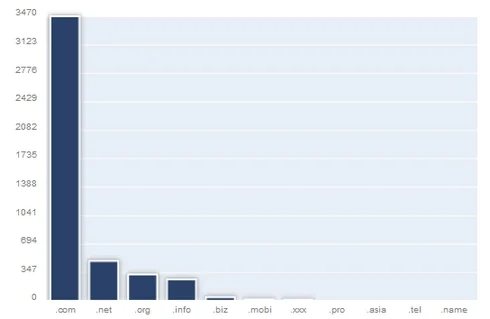
But this one simple graph from WIPO shows that history tells us not to worry so much regarding it:
This graph shows the breakdown of gTLD UDRP filings at WIPO last year. As you can see, almost all the action is in .com.
Now, you can point out that there are a lot fewer .info and .biz domains registered, and that’s why the numbers are skewed this way.
You’re right. In fact, the ratio of domains registered to UDRP’s filed in .com, .net, .org, and .info is right around 30,000 to 1. (.biz and .mobi have ratios closer to 50,000 to 1).
Yet that also kind of proves the point.
Most of these fresh top level domains will be modest.
If the domains don’t get much type in traffic (which they won’t) and aren’t in an identical field (like the oft mentioned example nike.shoes), there’s not much to worry regarding.
Ought to Nike worry regarding Nike.actor?
Nah.
“But what if someone starts selling fake Nike’s on it?”
That’s no harder than selling fakes on nike.somefreehost.com. The consumer doesn’t really realize the URL they’re visiting most of the time. That’s why phishing attempts just use similar looking domains to trick people.
I’m not saying there won’t be more tracking and enforcement necessary in the fresh age of hundreds of gTLDs. But it won’t be the end of the world.