
The Dual Narrative of the Faroe Islands: Tourism vs. Activism in a Domain Dispute
In the vast, often serene digital landscape of the internet, a subtle difference in a domain name can unveil two starkly contrasting realities. For the Faroe Islands, a remote archipelago nestled in the North Atlantic, this digital divergence brought to light a deep-seated conflict between promoting breathtaking natural beauty and confronting a deeply controversial cultural tradition.
This article delves into the fascinating cybersquatting dispute that pitted the official tourism board against a tenacious animal welfare activist group, highlighting the complexities of free speech, trademark protection, and the global debate surrounding traditional practices in a modern world.
The Tale of Two Domains: Picture-Perfect vs. Provocative Protest
The Official Gateway: VisitFaroeIslands.com
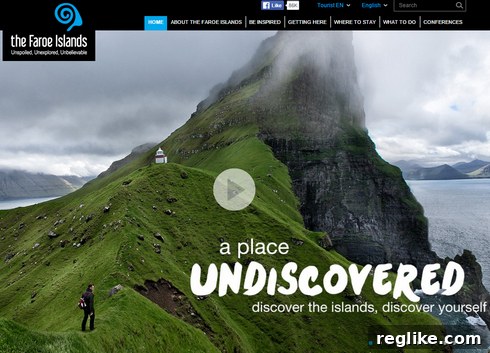
Type VisitFaroeIslands.com into your browser, and you are immediately transported to a digital postcard of undisturbed tranquility. The official tourism website, managed by the Faroe Islands’ tourism board, presents a meticulously curated image of an idyllic destination. Visitors are greeted with sweeping vistas of dramatic cliffs plunging into turquoise waters, emerald-green valleys dotted with sheep, charming turf-roofed houses, and a vibrant, unique culture.
It’s a powerful sales pitch designed to entice travelers seeking authenticity, pristine nature, and a peaceful escape. The imagery is carefully selected to evoke a sense of wonder and calm, reflecting the unspoiled beauty of these 18 volcanic islands. This online portal serves as the primary digital ambassador for the Faroe Islands, aiming to attract global tourism, which is an increasingly vital component of the islands’ economy.
The Activist’s Counterpoint: VisitTHEFaroeIslands.com
However, the addition of a seemingly innocuous three-letter word – “The” – transforms the online experience dramatically. Navigate to VisitTHEFaroeIslands.com, and the serene postcard image shatters, replaced by a much less pleasant, indeed shocking, reality. This alternative site, created by a South African animal welfare organization named “Save the Whales,” is a stark, graphic exposé of the Faroese traditional whale hunt, known as grindadráp.
Instead of verdant landscapes, visitors are confronted with disturbing images of blood-filled bays, pilot whales and dolphins being driven ashore, and islanders participating in the ancient practice. The site’s message is unflinching and confrontational, aiming to shed light on activities that conservationists worldwide deem cruel and unnecessary.
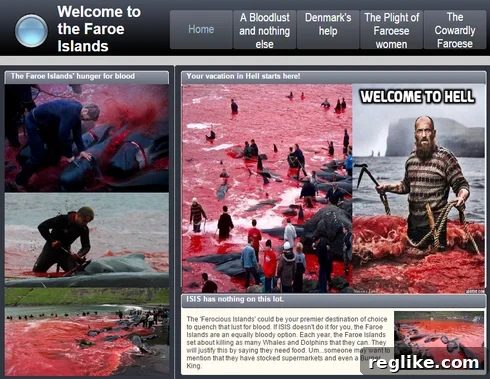
The language used on the activist site is deliberately provocative and accusatory, designed to shock visitors and ignite outrage. It starkly states:
“Welcome to the Faroe Islands Home A Bloodlust and nothing else Denmark’s help The Plight of Faroese women The Cowardly Faroese The Faroe Islands’ hunger for blood Your vacation in Hell starts here! ISIS has nothing on this lot. The ‘Ferocious Islands’ could be your premier destination of choice to quench that lust for blood. If ISIS doesn’t do it for you, the Faroe Islands are an equally bloody option. Each year, the Faroe Islands set about killing as many Whales and Dolphins that they can. They will justify this by saying they need food. Um…someone may want to mention that they have stocked supermarkets and even a Burger King.”
This incendiary rhetoric and graphic content are a direct challenge to the carefully crafted public image presented by the official tourism board. The intent is clear: to deter potential visitors and put international pressure on the Faroese authorities to cease the practice of grindadráp.
The Heart of the Controversy: Grindadráp
To fully grasp the intensity of this domain dispute, it’s essential to understand the practice at its core: the grindadráp (often shortened to “grind”). This traditional pilot whale hunt has been a part of Faroese culture and subsistence for centuries, dating back to the Viking age. The hunt involves driving pods of pilot whales and other small cetaceans into shallow bays, where they are then killed by hand.
For the Faroese, the grindadráp is not merely a hunt; it is a deeply ingrained cultural event, a communal activity that distributes meat and blubber among the community. Historically, it was a vital source of food for an isolated island nation with limited arable land. Proponents argue it is a sustainable form of harvesting, regulated by Faroese law, and that the whales are not endangered.
However, from the perspective of animal welfare organizations and a significant portion of the international community, the grindadráp is seen as barbaric, cruel, and unnecessary in the 21st century. Critics highlight the suffering of the animals, the large numbers killed, and the availability of modern food sources in the Faroe Islands, negating any perceived necessity for the hunt.
This clash of perspectives – cultural heritage and food security versus animal ethics and environmental conservation – fuels an intense global debate, with the Faroe Islands often finding itself at the center of international scrutiny.
The Legal Battle: A Cybersquatting Complaint
Unsurprisingly, the official tourism board of the Faroe Islands was deeply concerned by the existence of VisitTHEFaroeIslands.com. The graphic content and vitriolic language had the potential to severely damage the islands’ reputation, deter tourists, and undermine years of effort invested in promoting the destination. Facing this direct assault on their public image, the tourism board decided to take legal action.
The Complainant’s Case: Protecting a Brand and Reputation
The tourism board filed a cybersquatting complaint under the Uniform Domain Name Dispute Resolution Policy (UDRP) with the World Intellectual Property Organization (WIPO). Their core argument rested on trademark infringement, claiming that “VisitTHEFaroeIslands.com” was confusingly similar to their established mark, “VISITFAROEISLANDS,” and was registered and used in bad faith.
While acknowledging the fundamental right to freedom of speech and expression, the Complainant contended that the activist site crossed a line. They argued that “the right to freedom of expression is not unlimited,” particularly when it involved inflammatory accusations that were, in their view, unjustifiable and damaging:
“The Complainant acknowledges the freedom and right to criticize and exercising the right to freedom of expression, but the right to freedom of expression is not unlimited. Comparing the Faroe Islands and its people to radical terrorists and accusing them of incest are, in the eyes of the Complainant, unjustified.”
The tourism board emphasized that such extreme comparisons and accusations were not merely criticism but defamatory and harmful to the islands’ image, its people, and its burgeoning tourism industry. They sought the transfer of the domain name to prevent further damage and to protect their brand integrity.
The Respondent’s Defense: Upholding Free Speech and Activism
“Save the Whales,” the respondent in the dispute, vehemently defended their right to operate the website. Their defense centered on the principles of free speech and the legitimate use of a domain name for non-commercial protest and criticism. They argued that the domain was not registered to profit from the “VISITFAROEISLANDS” trademark, nor was it intended to confuse consumers into believing it was the official tourism site. On the contrary, its explicit purpose was to *counter* the official narrative and raise awareness about the grindadráp.
The activist group maintained that the addition of “THE” in the domain name, along with the starkly different content, was sufficient to distinguish their site as a critical voice rather than an impersonation. They asserted their public interest in exposing what they considered to be inhumane practices and that their website served as a platform for exercising their right to freedom of expression on a matter of global ethical concern.
The WIPO Decision: A Victory for Free Expression
The World Intellectual Property Organization (WIPO) panel, tasked with adjudicating the UDRP complaint (Case D2016-0110), carefully considered the arguments from both sides. WIPO’s Uniform Domain Name Dispute Resolution Policy is designed to combat cybersquatting – the abusive registration of domain names, typically for commercial gain or to unlawfully infringe on trademarks. It is not intended to suppress legitimate criticism or parody.
In its decision, the WIPO panel ultimately found in favor of “Save the Whales.” The panel determined that the activist group was indeed making a legitimate non-commercial use of the domain name. Key to their ruling was the finding that the domain was used for genuine protest and criticism, not for commercial exploitation or malicious impersonation.
The panel acknowledged the provocative nature of the content but concluded that the UDRP framework was not the appropriate mechanism to resolve disputes related to freedom of expression, even when that expression is harsh or offensive to the trademark holder. The threshold for bad faith under UDRP typically requires evidence of intent to disrupt the complainant’s business, to confuse internet users for commercial gain, or to unlawfully hold a domain for ransom. In this case, the panel found no such evidence.
This ruling meant that the domain VisitTHEFaroeIslands.com remained under the control of “Save the Whales,” allowing their critical message to persist. For the Faroese tourism board, this decision signified that they would have to explore alternative strategies if they wished to mitigate the impact of the activist site, as a UDRP complaint was not the solution.
Broader Implications and the Ongoing Debate
The WIPO decision in this case serves as an important precedent, reaffirming the principle that legitimate non-commercial criticism, even if highly critical and using a confusingly similar domain, generally falls outside the scope of cybersquatting under UDRP. It underscores the internet’s role as a platform for dissent and activism, protecting the ability of groups to voice strong opinions on controversial topics.
For destinations like the Faroe Islands, the dispute highlights the delicate balance between promoting tourism and managing a controversial cultural practice in an increasingly interconnected and ethically conscious world. While the grindadráp is defended as a vital part of Faroese heritage, it inevitably clashes with global animal welfare sentiments, leading to continuous scrutiny and pressure from international organizations and activists.
The incident also showcases the power of domain names as tools for advocacy. A minor alteration in a URL can completely flip a narrative, transforming a gateway to tourism into a portal for protest. As digital activism continues to evolve, similar domain disputes are likely to arise, forcing a continuous re-evaluation of how online expression interacts with trademark law and reputational management.
Conclusion
The case of “VisitFaroeIslands.com” versus “VisitTHEFaroeIslands.com” is more than just a domain dispute; it’s a microcosm of a larger global dialogue about culture, ethics, and the responsibilities that come with living in a transparent, digitally networked world. It demonstrates that while a nation may wish to present a polished, appealing image to the world, the internet offers a powerful platform for alternative narratives, especially when deeply ingrained traditions clash with evolving global standards of animal welfare.
The WIPO ruling, upholding the activist group’s right to free expression, reinforces the idea that the digital space is a battleground not just for commercial interests but also for ideas and ideologies. The Faroe Islands continues to grapple with the international perception of its traditional whale hunts, a challenge that persists both online and offline, shaping its identity in the eyes of the world.