Of commerce in the United States — The state
What he thought would happen two decades ago is happening now. It has big implications.
I was in college in the late 1990s during the dot.com boom. I was enthralled by the promise of the internet when it comes to commerce. One of my job offers upon graduation was with Amazon.com.
Back then, internet evangelists swore there would be a quick demise to bricks-and-mortar retailers. WebVan would destroy the grocery store. Amazon would destroy Wal-Mart.
The bubble burst and this talk dissipated. Sure, Amazon and other online retailers put a dent in offline retailer’s sales, but it was limited to certain categories. Certainly, pet food and consumer staples would always be the domain of bricks-and-mortar stores.
Now, nearly 20 years later, the move from offline to online commerce is quickly escalating.
A few weeks ago, Target disclosed lackluster sales. I’m not surprised.
I’m a Target fan. For many years, my wife and I would venture over to Target every couple weeks when we ran out of paper towels and soap. We’d enter the store for these low-margin “hardlines” but end up spending lots of money on high-margin “softlines” like t-shirts.
We rarely visit Target anymore, and ecommerce has a lot do with it.
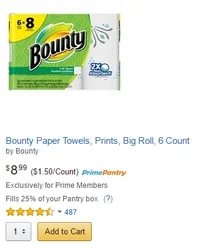
Amazon Prime lets us order most of the items we used to buy at Target and get them within a day or two with no shipping charge. Amazon Pantry makes it easy to get things like soap.
And if we need it today? Amazon now has same day shipping, or we can use Amazon Prime Now to get items delivered within an hour.
Now Wal-Mart is making this easy, too, with free two-day shipping on orders over $35. Why drive to Target to pick up toilet paper and paper towels when you can get them delivered in a couple days for the same price?
There’s also a shift happening offline that is hurting stores like Wal-Mart and Target: Grocery stores are learning to adapt to a changing reality.
Our local grocery store HEB is now offering most of the sundry items that Target offers for less money. We used to drive to Target for paper towels since grocery stores treated them as a convenience item and charged and arm and a leg. Now they are less expensive for key items.
Grocery stores are under attack at the same time but are doing a good job fighting back. They are under attack by Amazon Pantry and various food-in-a-box services like BlueApron and Freshly.
Our local Randalls grocery store offers cardboard box recycling. It’s a bit ironic when I drop off packaging from these food services in their recycling bin.
But HEB is adapting. They now offer lots of pre-packaged meals. Services like Freshly, which deliver prepared meals similar to Snap Kitchen, don’t stand much of a chance next to our grocery store’s offerings. The grocery store has cheaper prepared meals without all of the shipping waste.
Don’t have time to pick them up at the grocery store? Instacart will do it for you. Or open up Uber Restaurants to get Snap Kitchen delivered.
Having a hub in the local area is key to the future of online retail as clients expect goods now. Two days used to be considered fast. Now that seems like an eternity.
The next decade will be filled with the carnage of certain types of bricks-and-mortar stores. What we expected 20 years ago is now becoming reality.
Of course, this can mean good things for domain names. As goes internet growth, so goes the need for more domain names. Except when I order goods on my Amazon Echo.