
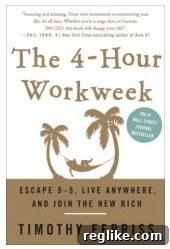
Timothy Ferriss’ groundbreaking book, The 4-Hour Workweek, offers a vision of freedom and efficiency that will undoubtedly resonate deeply with successful online entrepreneurs, particularly those in the domain industry. Its core principles of automation, outsourcing, and lifestyle design are not just theoretical; they are the very strategies many digital pioneers have intuitively adopted to achieve remarkable success and personal liberty. This book is more than a guide; it’s a manifesto for a new way of living and working, challenging conventional notions of employment and ambition.
When you first encounter Timothy Ferriss’ The 4-Hour Workweek, especially by reading its intriguing jacket, it might evoke a sense of déjà vu. The bold claims and promises of radical lifestyle transformation might feel reminiscent of the countless internet marketing ebooks that saturate the digital landscape. The back cover famously declares, with a stark warning:
WARNING: DO NOT READ THIS BOOK UNLESS YOU WANT TO QUIT YOUR JOB
This provocative statement is followed by tantalizing snippets of what readers can expect to learn, such as:
How to eliminate 50% of your work in 48 hours using the principles of a forgotten Italian economist (page 65)
Such specific, almost audacious claims, complete with page numbers, are a common tactic in sales letters for internet marketing products, designed to instill a sense of urgency and credibility. However, dismissing Ferriss’ work as just another “get rich quick” scheme would be a significant oversight. There is a fundamental difference that sets The 4-Hour Workweek apart from its digital counterparts.
Unlike ephemeral ebooks, Ferriss’s work is a legitimate hardcover book, published by a major house like Random House, and it quickly achieved the prestigious status of a New York Times bestseller. Crucially, it stands out for its substance over sensationalism. It isn’t merely a collection of exaggerated promises; it provides actionable strategies and a coherent philosophy for rethinking work and life.
Before delving into the book myself, I explored numerous reviews. A recurring sentiment among some critics was that the book’s propositions were unrealistic, even impossible, and that its vision rang hollow. Yet, for anyone who has experienced genuine success in dynamic fields like domain investing, Ferriss’s narrative rings profoundly true, not false. Consider the sentiment once shared by Frank Schilling at a Domain Roundtable conference in Seattle. He light-heartedly remarked that he earned $100 in pay-per-click revenue simply by exhaling. This humorous exaggeration encapsulates the essence of what Ferriss advocates: an automated business model. It speaks to a system so finely tuned that it generates income with minimal active intervention, a dream many entrepreneurs chase. Over the past decade, countless individuals stumbled into the world of domain names and, through astute investment and strategic management, built businesses robust enough to allow them to leave their traditional jobs behind. Their stories are living proof that Ferriss’s “impossible” is, in fact, achievable.
Timothy Ferriss, an entrepreneur in his late twenties when the book was published, primarily built his wealth through ventures like selling nutritional supplements. His book is a meticulous, step-by-step blueprint for identifying a lucrative market niche and subsequently constructing a “hands-off” business around it. But its scope extends far beyond mere business acumen. Ferriss also provides practical advice on how to embrace the life of a world traveler, how to meticulously test business ideas with limited capital, and, most importantly, how to drastically simplify one’s life. A prominent example he champions is the strategic outsourcing of mundane, time-consuming tasks to overseas personal assistants, thereby freeing up invaluable time and mental energy for more impactful pursuits.
While I wholeheartedly endorse the vast majority of principles Ferriss advocates, it’s worth noting that some of his suggestions verge on the extreme. For instance, he provocatively suggests curtailing one’s consumption of non-fiction materials, including magazines and business books—a recommendation that, ironically, would apply to his own work. Although Ferriss has achieved remarkable success, his entrepreneurial journey, by virtue of his relative youth, does not span a long history of consecutive home-run businesses. Many seasoned and successful entrepreneurs often credit extensive reading as a primary wellspring for their innovative ideas and strategic insights. However, the core of his argument holds merit: if one is currently overwhelmed by a monthly stack of ten magazines, drastically reducing that to just a couple could significantly enhance focus and productivity, eliminating information overload rather than valuable learning. It’s about selective engagement, not outright dismissal.
Even for those who have struck considerable wealth through domain name investments, a common pitfall is the feeling of being owned by one’s portfolio. The relentless anxiety surrounding renewal dates, the perpetual hunt for promising new domains, and the constant battle against potential trademark claims can transform a lucrative venture into a source of chronic stress. If these struggles resonate, then The 4-Hour Workweek offers a profoundly refreshing perspective. It serves as a potent reminder of life’s true priorities and provides actionable strategies for simplifying both one’s business and personal existence. Perhaps it’s time to strategically offload those typo domains that consistently invite cease and desist letters, thereby eliminating a daily source of dread when checking the mail. Or, consider optimizing your domain parking solutions to run on complete autopilot, enabling you to embark on a month-long, internet-free vacation with genuine peace of mind, knowing your passive income streams continue uninterrupted.
This brings us to another crucial distinction between The 4-Hour Workweek and the myriad of “get rich quick” marketing eBooks. Accessibility. Ferriss’ meticulously researched and impactful book is available for a modest price, typically around $11.97 on platforms like Amazon. This is often just a tenth of the cost of those fleeting, often disappointing, eBooks that promise instant fortunes. This price point alone underscores the book’s underlying philosophy: value delivered, not just hype. It offers a comprehensive framework for lifestyle design and business automation that has inspired millions to redefine their relationship with work, pursuing not just financial freedom but also geographic mobility, time abundance, and a profound sense of purpose. Whether you’re a seasoned domainer looking to optimize your portfolio for greater peace of mind or an aspiring entrepreneur dreaming of breaking free from the 9-to-5 grind, Ferriss’s insights provide a compelling roadmap to achieving a more fulfilling and liberated existence. It’s an investment in a new way of thinking that far outweighs its minimal cost.